b2o

The “Literature & Politics” project invites reviewers to consider how literary writers, writings and events elaborate the dynamics between political writing, the literary arts, and cultural intervention.

  • Peter Valente — The Body’s Prehistories (Review of Hervé Guibert’s Written in Invisible Ink)

    Peter Valente — The Body’s Prehistories (Review of Hervé Guibert’s Written in Invisible Ink)

    The Body’s Prehistories: On Hervé Guibert’s Written in Invisible Ink

    by Peter Valente

    One of the many pleasures of reading Hervé Guibert’s collection of stories, Written in Invisible Ink (Semiotext(e), 2020), is following his development as a writer from the earliest  stories in this volume, which date from the late 1970s, to the latest (which were collected in 1988’s Mauve Virgin). According to his widow Christine Guibert, he did not write any stories after 1988 and focused more on longer works such as the novel To The Friend Who Did Not Save My Life (1990).[1] Several of the stories published in this present volume have never been published before. Interestingly, the ones collected here, chosen by the translator Jeffrey Zuckerman, coincide with Guibert’s time as a journalist; many of the texts have the journalist’s attention for details that will capture a reader’s attention.

    The stylistic difference between Propaganda Death, the earliest of his books, and the later stories is between the raw passionate writing of the former and the more controlled prose of the latter. Guibert was one of first French writers of “autofiction,”: he used writing from his diary as well as memoir and fiction to complicate the narrative “I.” The writing in Propaganda Death is almost cinematic in its cataloguing of physical violence to the body mixed with an unbridled sexual urge: “My body, due to the effects of lust and pain, has entered a state of theatricality, of climax, that I would like to reproduce in any manner possible: by photo, by video, by audio recording” (27). Its scenes of the savage torturing and disemboweling of the human body, amidst slaughterhouses and hospitals, exhibit the frightening transparency of what lies beneath the skin, revealing its secrets: “no need for candles to brighten this night of the body; its internal transparency illuminates all” (27). In “Final Outrages” Guibert imagines himself as the young girl Ophelia, “stolen away in the bloom of youth by an ailment gnawing slowly at her interior (while making her exterior radiate!)” (81). In “Five Marble Tables”, he writes, imagining himself dead: “I won’t let go of my body, I cling to it, I push out everything I can inside but it all stops immediately, I’m clean forever now, my muscles tear apart, I can’t go back in myself anymore and I leave this deserted place, all the fight gone, all the fury slain” (70). Death in life is imagined as transformative; in a later work, Crazy for Vincent (Semiotext(e), 2017), published in 1989, a year after the latest stories in this volume, Guibert writes: “I struggle with the mystery of the violence of this love…and I tell myself that I would like to describe it with the solemnity of the sacred, as if it were one of the great religious mysteries…I don’t have too many sexual thoughts, of fucking or of defilement, violent hallucinations that would bring sex or lechery into play, but rather the suspended grace of bearing witness to a transfiguration” (85). The thrust of these stories is away from materiality, and toward a refiguring of the male body as a site for spiritual transformation.[2]

    Propaganda Death is also an ecstatic fantasy of destruction, desecration, and horror, calling for nothing less than the annihilation of the petit-bourgeois world through a complete reversal of cherished mores and customs, and its obsession with good hygiene, both physical and mental: “I’d like to smear my gonorrhea over the entire world, infect the planet, contaminate dozens of asses at a go, …my bed every morning is a field of carnage, a slaughterhouse” (51).  He continues: “Let’s open abscesses in all this stupid flesh!…Let’s love ourselves and hate them! Let’s orgasm as we pull our heads from our bodies!” (47). Wayne Koestenbaum writes:

    Filth is Guibert’s passport to infinity. Filth, as literary terrain, belongs to de Sade, but Guibert reroutes s/m through the pastoral landscape of religious interiority, as if ghosted by hungry Simone Weil, or by Wilde’s scarified, Christological denouement. (To skeptics, such spirituality might seem papier-mâché, but I’m a believer.) Guibert sees a cute young man at a party and “instead of imagining his sex or his torso or the taste of his tongue, in spite of myself it’s his excrement I see, inside his intestines.” (Kostenbaum 2020)[3]

    These passionate, anarchic early texts are difficult to read. They are unpolished, raw, unedited, obsessed with the violence of desire, and with orifices; but nevertheless, they are works of great intensity, written when Guibert was 21 years old, and likely to shock a reader into a recognition of his/her own body, and its impermanence, and the weakness of the flesh. They are performance, spectacle, and indeed, propaganda in defense of homosexuality and the violence of desire.

    Guibert seeks to “to uncover my body’s prehistories,” the traces of the animal inside the human. In the story, “Flash Paper,” he writes that while kissing Fernand, he imagines that “Out of the extended, warm pleasure of the kiss came other visions: we were two animals that had met on the terreplein, each from our own half of the forest, two horned beasts, two giant snails, two unhappy hermaphrodites” (Invisible Ink 230-31). And, continuing with this theme in the same story: “His wide-opened eye had awakened mine and did not leave it: we had become insects” (232). He and Fernand are, “two poor shameful animals” (233). Finally, he writes: “we danced like two spider crabs being boiled, destroying everything in their path” (234). The erotic charge of an encounter turns men into animals searching for their release. There is danger and excitement in the kill, the sexual energy of it: “If I fuck him, if I decide to fuck him, it’s first to annihilate him.”[4] This is “no simple sadism…no simple equation of fucking and killing, of penetrating and violating – instead, the wish to fuck or be fucked…is a sensation of being voided, chiseled, scalded, disemboweled. Is this consciousness a queer privilege? Is it shamanistic? Is it in fact not trans or queer or anything of the sort, but simply poetic?” (Kostenbaum 2014). Guibert could certainly be melodramatic, as well as poetic. Sex in his work is theatrical; he plays a game of hide and seek with a reader; but he doesn’t sugar coat desires that are complex or grotesque and this is what makes his work so valuable as a document of honest writing in a time such as ours when the line between truth and falsity has been blurred.                            

    In the section, “Personal Effects” Guibert examines objects rather than bodies and reveals their hidden meanings or forbidden histories. About the “Cat o’Nine Tails”, for instance, he writes: “The cat o’ nine tails has been hung, among the cobwebs dusters, from ceiling hooks, in the dim backroom of the hardware store. It carries within itself, in its unmoving straps, the screams of battered children, it exhales the pleasure of perverted lovers” (Invisible Ink 97). Gloves are a normal part of winter wear or when working in the garden, or in construction et cetera, but Guibert reminds us that “it should never be forgotten that the hands they’re keenest to help are those of thieves and stranglers” (103). With regard to the “vibrating chair,” he notes that the dukes of Pomerania found “extravagant” uses for it, including attaching a large dildo to its seat (107). This section of the book is representative of Guibert’s poetics. As a journalist, he was accustomed to examining the forbidden histories behind things which elude the eye of the observer. In “Newspaper Clipping,” he talks about certain facts concerning the death of a person and cautions about imaginatively reconstructing the scene. “Let’s come back to reality!,” he writes, concluding that “…everything, for now, remains purely hypothetical” (56). The secret will not reveal itself easily and it requires patient and research to reveal a truth perhaps stranger than fiction.

    In the world of these stories, love is essentially a complex power game, where the weak person is always at a disadvantage. Guibert is not a psychological writer, concerned with exploring in depth the subjective feelings of lovers. There is no utopian idea about love in these stories. Love is often deceptive, leading to betrayals and even violence. “For P. Dedication in Invisible Ink,” concerns a young writer who has complex desires toward an older, more established writer, and is called upon to help him write a book. At the end of the story, the young writer speaks of their erotic dynamic in the following way:

    The king of the jungle had been tamed, or maybe it was the lion that subdued its tamer, but one or the other, at his point of submission, attacked the other in hopes of breaking him, and these visits grew increasingly rare. The break-up happened over the course of the seventh year, bit by bit, as if by blows, and neither the assailant nor the stronghold, at risk of breaking their necks, wanted to bow down. (159)

    Love often begins with a kind of “tacit contract” that one or the other eventually betrays. In one of the central stories, “The Sting of Love,” love is imagined as a liquid that is injected in the lover. The story traces its various effects on those who have been “infected” and concludes:

    A happiness so great becomes unbearable unless one is shackled, or better yet, in bed, because the effect of this injected liquid doesn’t end with any climax, it persists all the way into sleep. It is impossible here to determine the specific link between consciousness and dreams. Anyone who wants to fight against this surreptitious transition with conscious effort, who is afraid because the dream, at first still just as wholly gentle, slowly turns into nightmare, flickering with swift animal shapes, anyone who wants to prolong this amorous stupor indefinitely with a second injection is struck with melancholy, as with a tarantula’s bite, and loses speech, nails, job. (135)

    Physical attraction is just as capricious and mysterious and not necessarily the result of erotic language: “We sat facing each other in the small, unlit kitchen, and I immediately felt within his physical presence a sense of elevation, adventure, freedom. The words he had said had nothing overtly erotic about them, but they suddenly, mysteriously had my penis swelling” (182). There is no attempt to seek a reason for his desire which would amount to a kind of defense; Guibert was open about his homosexuality and its relation to danger as well as pleasure. Furthermore, this physical excitement can suddenly turn into potential violence: “two years earlier, walking behind him, I had suddenly wanted to use all my force to hit the back of his neck with the heft of the camera hanging by a strap around my wrist” (178). In “For P. Dedication in Invisible Ink”, Guibert writes, “My feelings about this man were skewed: even as I could have said that I loved him, when I found myself before him, at long last, I wanted to go for his throat” (153).

    Danger extends to sexual encounters in the park. In “A Lover’s Brief Journal,” Guibert relates an incident in the Tuileries, where, after “a guy whispers the word cop,” he and another man get dressed, and leave the park; but Guibert is then assaulted: “the first one punches me in the face, another kicks me in the balls, right after a third guy takes a running start to headbutt me, I fall down, I get back up, I shout for help without thinking about it, they run off, I run in the other direction, I turn around, I see one of them hurrying to pick up the coins that fell out of my pocket, hungry, greedy” (48-49). The violence has as much to do with money as with sexuality: the link here is between capitalist greed and homophobia.  Though capitalism created the material conditions so that both men and women could lead independent sexual lives, it also, at the same time, imposed heterosexual norms on society to create an economic, ideological, and sexual regime, centered in the family. In the present time, when Trump, a symbol of capitalist greed, is seen as a spokesman for the white, heterosexual male, and encourages violence against marginalized groups on the basis of their skin color, religion or sexual preference, it is no surprise that we see a rise in violence against gay and trans men and women.

    For the narrator of “Flash Paper,” love is, “ a voluntary obsession, an unsure decision” (239). But Guibert writes of the man who died in “A Man’s Secrets,” “All the strongholds had collapsed, except for the one protecting love: it left an unchangeable smile on his lips, when exhaustion closed his eyes” (254). And the aging star in “The Desire to Imitate” says, “In this impossibility of love there will have been all the same a little love” (212). In these stories, love and cruelty are woven together; this unholy union was born of Guibert’s hatred of his own body, his self-pity, his anger, his theatricality, his passion for the grotesque. He is attacking bourgeoise values, and inherited ideas about morality, thus turning our assumptions about love and hate upside down. Men who knew him said he was cruel but he hated pity and charity; Marie Darrieussecq writes that he preferred real friendship and despised cowardly people (“Guibert’s Ghost” 2015). For Guibert, true love may be impossible, but all the same, he valued the love that was possible in genuine friendships. He sought the truth in himself by testing the limits of his body and of his desires. In a world where our freedoms are being assaulted by both far right conservatives and neoliberals, a writer like Guibert is necessary and should be read, because he questions our conventional ideas about the nature of sexuality, love and hate.

    Death hovers on the periphery of the stories in Written in Invisible Ink, and is often a central theme, and linked mysteriously with desire. In “Five Marble Tables,” Guibert imagines himself on a laboratory table, communing with other bodies, one of which is a young child. As I suggested earlier on, in the story Guibert feels in some way liberated: “I’m clean forever” (Invisible Ink 70). Guibert speaks of the dream, a kind of death-state in itself, as concealing, “a geography of pleasure, an itinerary with its impasses, its openings, its stairwells, its gulfs, its forbidden directions. Desire is there alone, idealized, freed of all materiality” (75). It can also contain, “desirable monsters,” such as the man whose “suffering was immense” because his “head is four times larger than his body” (129) and who believes the hand that gives him his food through a trapdoor is the hand of God. The monstrous, the forbidden, is a gateway to the spiritual.

    In this palace of desirable monsters are men with “dog’s or wolf’s heads” or with “scales or moss growing on their skin” (129, 128). The animal and the vegetal are mixed and the monstrous appears beautiful. A world based on reason, a human creation, gives over to the animal, the irrational, the monstrous. This space contains an alternate time that exists simultaneously with the real world. In “Posthumous Novel,” one of my favorite stories, Guibert writes of a space where, as a result of a “deatomization effort” in Holland, “countless words, incomplete sentences” are “hanging like clumps off of trees and, broken and sown over the ground” (143). Words are not necessarily attached to sentences but exist alone as fragments. In the story, Guibert writes that when one is travelling by train, one’s thoughts release, “more or less clouded and blinded” words into the air of the surrounding countryside and that they take root in the “roadside dust, a branch shaken by the wind, setting sun” (144). These words or sentences, cast into the world by the living, are “nourishment for the dead…a vital message of what happens in the hereafter” (144). By accessing these “sentences” through “x-raying” the “final trajectories” of the young writer in the story who committed suicide, the author is able to partly reconstruct the dead man’s novel (146). The narrator is like Orpheus, in Cocteau’s film, listening to the transmissions on the radio which are actually the voices of the dead. These words of the dead need to be remembered. History must be remembered in order not to repeat the same mistakes to the point of unconsciousness.

    It is in this forbidden space, this underworld that does not obey the laws of physics, that Guibert, a kind of Orphic figure, is able to imagine a language that is not bound to its materiality; it exists in the air, unrealized, incipient, spiritual, the image of a ghost. It is here where the monstrous, the aborted, the abject thoughts reside, and where the dead dwell. It is a land that “had never been described or transcribed on a map” (220). It is a forbidden and magical place, where one has the “courage to be oneself, to present oneself, and to liberate every secret, to invent them” (150). Guibert wrote this book in “invisible ink,” from that place, as if the stories themselves are only the visible traces of what lies behind them: the sexual encounters that produced them.[5]

    In January, 1988, Guibert was diagnosed with AIDS. As a result, he immediately found himself the focus of media attention and appeared on numerous talk shows. Early in his career, Guibert was openly gay and unashamed of his homosexuality and this, according to his translator Jeffrey Zuckerman, “was not meant as a provocation” but as “a quietly revolutionary stance in line with his particular brand of rebelliousness, in which, to quote a line from the end of “Ghost Image,” ‘secrets have to circulate” (“Translator’s Preface”13). Furthermore, Zuckerman writes, “When I began this project, all of Guibert’s translated novels were out of print – even To the Friend Who Did Not Save My Life. At the time, it felt symbolic yet saddening: if gay rights were moving so steadily forward toward equality with the broader population, why preserve this particular, liminal past? Indeed, such an unprecedented nationwide – and even global – sea change in attitudes toward gay marriage and adoption risked effacing the long struggle that came before it, from Oscar Wilde’s trials and Alan Turing’s cyanide-laced apple to the Stonewall riots and the ACT-UP movement” (“Translator’s Preface” 15). And for this reason, the stories in Written in Invisible Ink are a valuable addition to Guibert’s work in English, and a good starting point for the reader unfamiliar with his work.


    Peter Valente is the author of A Boy Asleep Under the Sun: Versions of Sandro Penna  (Punctum Books 2014), which was nominated for a Lambda award, The Artaud Variations (Spuyten Duyvil 2014), Let the Games Begin: Five Roman Writers (Talisman House 2015) and Catullus Versions (Spuyten Duyvil  2017). He has also published translations from the Italian, Blackout by Nanni Balestrini (Commune Editions 2017) and Whatever the Name by Pierre Lepori (Spuyten Duyvil 2017), Two Novellas: Parthenogenesis & Plague in the Imperial City (Spuyten Duyvil, 2017). He is the co-translator of the chapbook Selected Late Letters of Antonin Artaud, 1945-1947 (Portable Press at Yo-Yo Labs,2014), and has translated the work of Gérard de Nerval, Cesare Viviani, and Pier Paolo Pasolini. His poems, essays, and photographs have appeared or are forthcoming in journals such as Mirage #4/Periodical, First Intensity, Aufgabe, Talisman, Oyster Boy Review, spoKe, and Animal Shelter. His most recent book is a co-translation of Succubations and Incubations: The Selected Letters of Antonin Artaud (1945-1947). Forthcoming is a collection of essays, Essays on the Peripheries (Punctum 2020) and his translation of Guillaume Dustan’s Nicolas Pages (Semiotext(e) 2021).

    Works Cited

    Darrieussecq, Marie. “Guibert’s Ghost.” Tin House, 13 January, 2015: https://tinhouse.com/guiberts-ghost/

    Guibert, Hervé . 2020. Written in Invisible Ink. trans. Jeffrey Zuckerman. Los Angeles:  Semiotext(e).

    —-  2017. Crazy for Vincent. trans Christine Pichini. Los Angeles: Semiotext(e).

    Kostenbaum, Wayne. “The Pleasures of the Text.” Book Forum, June-August, 2014: https://www.bookforum.com/print/2102/herve-guibert-s-unbridled-eroticism-13298

    Zuckerman, Jeffrey. “Translator’s Preface” in Written in Invisible Ink. trans. Jeffrey Zuckerman. Los Angeles:  Semiotext(e), 2020, 1-15.


    Notes

    [1] Guibert married Christine in 1989, so that she could protect his estate and so that the royalty from the sale of his books would go to her children. The publication of the mentioned novel, in which Guibert told the world he had AIDS, caused a scandal because in it he disguised Michel Foucault, who had the same disease, under another name (Muzil). However, the public discovered that this was Foucault; he had been dead for six years (reportedly from cancer) at the time of the publication of Guibert’s book.

    [2] For Bataille, the indulgence in “perversity” also contained a strong drive for the metaphysical, for that which lies beyond the body.

    [3] I would also add Artaud to the list above in his researches into “fecality.”

    [4]Quoted in Kostenbaum, The Pleasures of the Text,” accessed on May 17, 2020, https://www.bookforum.com/print/2102/herve-guibert-s-unbridled-eroticism-13298

    [5] In “A Lover’s Brief Journal,” Guibert writes, “I got completely undressed, I write and that gets me hard, I jerk myself off with one hand…” Hervé Guibert, Written in Invisible Ink, 49.

  • Mikkel Krause Frantzen—No utopia, not now? (Review of Miguel Abensour’s Utopia from Thomas More to Walter Benjamin)

    Mikkel Krause Frantzen—No utopia, not now? (Review of Miguel Abensour’s Utopia from Thomas More to Walter Benjamin)

    by Mikkel Krause Frantzen

    “The situation is bad, yes, okay, enough of that; we know that already. Dystopia has done its job, it’s old news now, perhaps it’s self-indulgence to stay stuck in that place any more. Next thought: utopia. Realistic or not, and perhaps especially if not.

    Besides, it is realistic: things could be better.”

    (Kim Stanley Robinson)

    1. Da capo: The so-called death of utopia and other introductory remarks

    Utopia – if not now, when? If not today, tomorrow?

    There is a certain tiredness connected to the topic, before the investigation is even begun, a feeling of déjà dit, of having said it all before to the point of utter exhaustion, despair and self-hatred. Yet it seems imperative to continue anyway, to pursue the question once more: What is the fate of utopia today, in this day and age, where there really is no alternative, as Margaret Thatcher infamously declared, and history has (still) ended, as Francis Fukuyama just as triumphantly trumpeted in 1989?

    In the midst of economic and ecological crisis it does indeed appear as if the utopian spirit has vanished for good. As far as the (un)real economy is concerned, we are witnessing and living through a fully-fledged state of financialization,[1] characterized by ever more sophisticated forms of fictitious capital:  derivatives, futures, options and other products that are traded by algorithms with the speed of lightning (trades are reportedly made in 10 milliseconds or less). After the abolition of Bretton Woods by Nixon in 1971,[2] financial derivatives trading has long since surpassed $100 trillion, and is currently many times the size of the global GDP. Meanwhile, the levels of debt are through the roof. As German scholar Joseph Vogl states in an interview—in an inversion of the famous opening lines from the Communist Manifesto, which he has not only picked up from Don DeLillo’s 2003 novel Cosmopolis but also used as a title for one of his books:

    A spectre or an apparition is a present reminder that something has gone awry in our past. A debt has remained unpaid, or a wrong has not been righted. The spectre of capital works the other way around, signaling that something in the future will be wrong. It is a future of mounting debt that comes to weigh on the present. The ‘spectre of capital’ does not come out of the past, but rather as a memento out of the future and back into the present” (Vogl 2011).

    This specter of capital, which comes from the future rather than the past, haunts more than the world of finance, it also haunts society as such; the spectral tentacles of financialization reach far into everyday life. One concrete example would be the devastating state of chronic indebtedness that makes people suffer all over the world. Another and related example would be the fact that more and more people are getting depressed; globally no less than 300 million people are currently estimated to suffer from the mental illness according to WHO. And as I have shown elsewhere, depression is not only a personal problem but also and above all a political problem which manifests (or should I say conjures up) the alienation of the contemporary subject in its most extreme and pathological form.[4] It is the paradigmatic psychopathology of our time, and a symptom of a neoliberal world where the future is closed off, frozen once and for all.

    In this latest crisis in the cycles of capitalist accumulation, in this season of autumn, if not winter, the future is definitely not what it used to be.[5] As for the imminent ecological disaster, there literally is no future; very soon there is no tomorrow. At all. It should come as little surprise, then, that utopian impulses have seen better days. William Davies writes that there is no “enclave outside the grid” and no “future beyond already emerging trends,” concluding: “The utopia of neoliberalism is the eradication of all utopias” (Davies 2018: 20; 5). Even the harshest critics of neoliberalism and finance capital seem to be caught in a state of left or west melancholy, while other thinkers are all too delighted with having (finally!) arrived in the land of postcritical milk and postutopian honey.[6]

    To supplement the hypotheses of the end of history and the end of nature, then: The end of utopia. It is important to note, however, that this song has been sung before. Raymond Aron proclaimed the end of ideology, revolution and utopianism back in 1955, and very similar arguments were made by Judith N. Shklar in After Utopia: The Decline of Political Faith (1957)and Daniel Bell in The End of Ideology (1960), not to mention Christopher Lasch, a couple of decades later, in his bestseller The Culture of Narcissism: American Life in an Age of Diminishing Expectations from 1979. In 1989, Fukuyama’s article on the end of history was published, and in 1999 Russell Jacoby wrote The End of Utopia. Politics and Culture in an Age of Apathy, where he lays out this genealogy while at the same time describing how around the turn of the millennium he and his contemporaries “are increasingly asked to choose between the status quo or something worse. Other alternatives do not seem to exist,” how they have “little expectation the future will diverge from the present,” and how few “envision the future as anything but a replica of today” (Jacoby 1999: xi-xii).

    Yet there are those who sing a different tune and who insist on the value of utopian thinking (just as there are utopian practices out there).[7] Obviously, Fredric Jameson springs to mind here. In Archaeologies of the Future. The Desire called Utopia and Other Science Fictions from 2005, Jameson, following the work of Ernst Bloch, famously distinguishes between utopia as an impulse and utopia as a program in his general attempt “to reidentify the vital political function Utopia still has to play today”, specifically within the genre of science fiction (Jameson 2005: 21).[8] Also meriting consideration is the political philosopher Miguel Abensour, who passed away in 2017, but whose whole oeuvre was an ongoing analysis and discussion of the continued relevance of utopia in the late 20th and early 21st century through the historical method of revisiting canonical utopian texts, from Thomas More to Saint-Simon, from William Morris to Ernst Bloch. Persistent utopia, he called it in an article of the same name from 2006.

    However, it is the book with the no-nonsense title Utopia from Thomas More to Walter Benjamin, translated into English in 2017, which this review essay will orbit around. The questions probed by Abensour are the following ones: What does it mean to be a utopian animal in a postutopian age?[9] How do we think utopia in a time of crisis and in the face of danger? Can we find sites where utopia persists, and if so, how are we to interpret them? But the question that also animates my text is a question of historicization and periodization. As indicated above, however briefly, it stands to reason that our historical epoch goes back to the beginning of the 1970s, yet this does not mean that everything has remained the same ever since. So what are the continuities and discontinuities—not only between the age of More, the age of Benjamin and the contemporary age—but also between 2000, when Abensour’s book was originally published in French, and 2018, this year of grace (and here I am in particular thinking of the domains of economy and ecology, the transformations in and of finance and nature)? Let us in any case remember, as Abensour cautions us to do, that utopia precisely poses a question, rather than an answer or a solution (UBM: 10).[10]

    2. Between systematic deprecation and uncritical exaltation: Miguel Abensour’s reading of utopian thought in Thomas More and Walter Benjamin

    The book Utopia from Thomas More to Walter Benjamin is a twofold exegesis; a meditation on, first, Thomas More, and, then, Walter Benjamin. It is as simple as that, although as Abensour admits at the very outset, the two thinkers in question have little in common—except for their contribution to utopian thinking. What this means is that Abensour does not in any way carry out a traditional comparative study. “Rather,” the author writes himself, “the project is one of seizing hold of utopia in two different but powerful moments in its fortunes: the first moment is that of utopia’s beginning, and the second is the moment when utopia faced its greatest danger, the moment that Walter Benjamin called ‘catastrophe’” (UBM:9). Two names, two historical moments: Thomas More and the birth of utopia; Walter Benjamin and the danger and possible death of utopia.

    Saving for later a proper actualization of Abensour’s work and the addition of a third historical moment, namely our contemporary moment, about which Abensour more often than not kept his distance, let me simply note that for Abensour it is imperative to avoid two particular and equally untenable positions with regard to utopia: utopia’s “systematic deprecation as well as its uncritical exaltation” (UBM:13). And with that in mind, it is time to hone in on Abensour’s reading of Thomas More, a reading that precisely seeks to avoid praising or damning the book. Sitting with More’s book from 1516 (with the Latin title De Optimo Reipublicae Statu), which coined the word utopia as a play on the Greek words for ou-topia (non-place) and eu-topia (good-place), the reader therefore needs to take into account its “extraordinarily complex textual apparatus” (UBM:20). This implies that attention must be paid to the paratext, the metafictional framework and the oft neglected book I of Utopia—written after the more famous book II—where Raphael Hythloday (another pun), the character/author Thomas More and Peter Giles meet in the Belgian city of Antwerp and starts discussing a series of problems, familiar to any reader of Machiavelli and Plato, concerning the relation between philosophers and kings and how best to offer council to a prince. They also address some of the modern ills affecting Europe at the time: war, poverty, the enclosure of the commons, and the death penalty, which Raphael thinks is too harsh a punishment for a thief (“what other thing do you than make thieves and then punish them?” (More 1999: 24-25). This both sets the scene for and destabilizes book II in advance, the book where Raphael recounts the five years he spent on the Utopia, situated an unknown place in the New World and originally a peninsula but now an island due to the decision of the founder King Utopos to separate it from the mainland. It is here that the readers are rewarded with the image of a true commonwealth, with “no desire for money” and no private property: “For in other places,” Raphael tells his listeners and the readers, “they speak still of the commonwealth. But every man procureth his own private gain. Here, where nothing is private, the common affairs be earnestly looked upon” (More 1999: 119).

    Abensour’s claim, however, is that one should refrain from what he calls “the impatience of tyrannical readings,” which in this case implies that one ought to be wary of readings that interpret Utopia as a proper communist commonwealth, i.e. as “prophesying modern communism” (UBM:30; 22). By the same token, any catholic reading that views Utopia as More’s unequivocal defense of “the values of medieval Christian solidarity” is bound to shipwreck (UBM:22). Abensour groups these types of reading under the heading realist readings, which he contrasts with allegorical readings. The former foregrounds the question of politics, while the latter places the question of writing at the center, and the point is that both are wrong. Already it is clear that the utopian question is, for Abensour, a literary question, a question of both writing and reading. The question of politics and the question of literature must be thought alongside each other.

    Naturally, any utopia is the stuff of fiction; the very idea of utopia entails an imaginary process of fictionalization or fabulation, and borders as such on the genre of science fiction, which Abensour does not touch on. But Abensour’s book does offer a welcome reminder of the rhetorical and literary character of Utopia, the ways in which it operates in several registers at once (travel narrative, satire, political treatise etc.),and how this in turn creates and conditions the political character of the work: “Utopia, so often presented as one of the most vigorous expressions of political rationalism, in fact has much in common with the ruses of the trickster” (UBM:31). The conclusion Abensour draws from all this, is that the utopian task ultimately, in the last instance so speak, falls to the reader: “The privilege the textual device enjoys has the effect of engaging the reader in a different mode of reading, one separate from a sterile ideological one,” he writes in a passage that demands to be quoted at length:

    “It is as if Thomas More, as the title of the book might indicate, did not so much want to present his readers with “the best form of government” as to invite them to look into the topic themselves—and hence the importance of dialogue […] it is a matter of making his readers less into adepts at communism and more into Utopians whose intellects have been sharpened by reading.”

    Anyone with some knowledge of French philosophy in the second half of the 20th century will not have a hard time understanding where Abensour is coming from and why he seemingly has such a guarded attitude towards anything that smells even vaguely of ideology and/or communism.[11] A certain distance is needed, which is why More’s utopia, according to Abensour, rests on a double distance: a distance from the existing order and a distance from “the “positivity” whose contours are utopically drawn” (UBM:49). Manifesting a shift “from the solution or the particular program to the level of principle” is critical in that Utopia thereby “introduces plasticity, and prevents us from reading in a certain erroneous manner” (UBM:52). But I wonder if the price to be paid for the distance and ambiguity stressed so much by Abensour is simply too high? You might end up in front of a window so opaque that you cannot look out of it anymore; that you cannot see what is on the other side. The problem is that the utopia Abensour extracts from Thomas More’s book is so saturated with distance that the island risks disappearing from view. The problem is that the “oblique path of utopia” that Abensour also talks about might in fact be so oblique and curvy that you end up right where you started your journey: back on the mainland.[12]

    3. Utopia or catastrophe? Walter Benjamin and the utopian dreams of the 19th century

    Walter Benjamin, for his part, journeyed to the arcades in the Paris of yesteryear. If More’s Utopia instigated the dawn of utopia, Benjamin’s confronted the danger of utopia: A vision of utopia in the aftermath of the first world war and in the face of fascism across most of Europe. The key question is thus as simple as it is spectacular, if not eschatological: “Utopia or catastrophe?” (UBM:61). The point is clear: We should stick to the idea of utopia, not despite the fact that we are in a state of crisis or amidst a great catastrophe but because of it. As already Kierkegaard emphasized in his writings, hope is only needed when there is none. Utopia seems to have the same absurd and paradoxical quality. The imperative of utopia does not emerge in the hour of triumph, in times so bright that you need sunglasses to go outside; no, the necessity of utopia arises when the light has gone out and everything is completely dark. It is an easy matter to be utopian when everything is all right; the real task presents itself when everything goes to hell. This is one of the lessons that Abensour draws from Benjamin as well: “in the presence of extreme peril, utopia seemed to him more than ever to be the order of the day. In a time of crisis, the need for rescue seemed infinitely greater, and to respond to that need, it seemed best to first rescue utopia by forcing it free from myth and transforming it into a ’dialectical image’” (UBM:13).

    How to rescue utopia, and where? In the past. Abensour quotes a letter where Benjamin states that he aims his “telescope through the bloodied mist at a mirage from the nineteenth century” (UBM:10). What he is looking for in the past, especially in the 19th century, is the century’s dream-images (Wunschbilder), fantasies of the epoch, the hidden or veiled utopias, or the ones that were never realized to begin with. In Abensour’s own words, Benjamin is an “incomparable guide” who can help “us penetrate into the unexplored forest of utopias, not in order to give in to their magic, but to hunt down and chase out the mythology or delirium that haunts and destroys them” (UBM:64). From the beginning of his writing to his tragic death in Portbou at the French-Spanish border in 1940, Benjamin remained “intensely sensitive to the utopian vein that is present throughout the century” (UBM:69). Illumination and awakening was the goal, not to stay in the domain of the dream as Aragon and the other surrealists did in Benjamin’s eyes. This is where dialectics and the dialectical image (filled with ambiguity) comes into play, notwithstanding Adorno’s stubborn accusations in their private correspondences that Benjamin was never, ever dialectical enough: a dialectics of dream and awakening, of past and present, of myth and history, of utopia and catastrophe, of revolution and melancholia.[13]

    But the future? No. Or to be more precise: The notion of futurity remained an unresolved concept in Benjamin’s work. No need to rehearse his remarks, in Über den Begriff der Geschichte (Theses on the Philosophy of History)from the Spring of 1940, on Klee and Angelus Novus, and the storm called progress that blows the angel of history backwards into the future while the ruins of the past are piling up in front of its eyes (Benjamin 2007, 257-258). Instead, let me concentrate, as Abensour encourages his readers to do, on the textual differences between the two prefaces to Das Passagen-Werk that Benjamin wrote in 1935 and 1939, respectively. The Arcades Project as the work is called in English was Benjamin’s ongoing, unfinished project, spanning more than 10 years, in which he visited the old shopping arcades of Paris, these hubbubs of commerce built of iron and galls and filled with Parisian specialties, luxury products and commodities that abound, in the words of Marx, “in metaphysical subtleties and theological niceties” (Marx 2010: 81).

    As a comment on a Michelet-quote—“Each epoch dreams the one to follow”—the first so-called exposé of 1935 includes the lines ”in the dream in which each epoch entertains images of its successor, the latter appears wedded to elements of primal history <Urgeschichte> – that is, to elements of a classless society,” and ends with the following sentences: “The realization of dream elements, in the course of waking up, is the paradigm of dialectical thinking. Thus, dialectical thinking is the organ of historical awakening. Every epoch, in fact, not only dreams the one to follow, but, in dreaming, precipitates its awakening.” (Benjamin 1999, 4; 13) All of this was removed by Benjamin in the second exposé, from 1939, perhaps after the ‘advice’ of Adorno. No more references to Michelet, no more avenir, avenir, no more talk of the dialectical image at all (though it figured prominently in the theses on the concept of history a year later). In Abensour’s reading of this transformation, Benjamin opens up a passage from “a conception of history invoking progress (Michelet) to a conception of history under the sign of catastrophe (Blanqui)” (UBM:88). The exposé of ‘39 thus expires in a completely different affective register, with Louis-Auguste Blanqui and his prison book from 1871, Eternity via the Stars. “This book”, according to Benjamin, “completes the century’s constellation of phantasmagorias with one last, cosmic phantasmagoria which implicitly comprehends the severest critique of all the others […] the phantasmagoria of history itself” (Benjamin 1999: 25). Benjamin then goes on to quote an extensive and brilliant paragraph from Blanqui, where the French revolutionary states that “there is no progress” and notes, in a premonition of Nietzsche’s idea of eternal return, “the same monotony, the same immobility, on other heavenly bodies. The universe repeats itself endlessly and paws the ground in place. In infinity, eternity performs—imperturbably—the same routines.” (Benjamin 1999: 26). Without turning, as Abensour writes, Blanqui into an authority, Benjamin’s exposé of 1939 nevertheless ends on this note, in a “resignation without hope” (Benjamin 1999: 26—a line which Abensour also quotes).

    As such, the exposé resonates, rather unsurprisingly, with the Theses on the Philosophy of History from the following year. In the preparatory notes, the so-called ‘Paralipomena’, Benjamin repeatedly tries out formulations and ideas such as “Die Katastrophe ist der Fortschritt, der Fortschritt ist die Katastrophe” and “Die Katastrophe als das Kontinuum der Geschichte” (Benjamin 1991: 1244). The true catastrophe is not a break with things as they are; the true catastrophe is, rather, that things go on and on. The progress and continuum of history is history’s catastrophe—whereby the historical and political task becomes one of breaking with this continuum. Benjamin himself writes in some oft-quoted lines about revolution as the moment when you pull the emergency brake on the train of history. Utopia in Benjamin, then, is ultimately intimately and dialectically connected with catastrophe: ““The concept of progress must be founded on the idea of catastrophe,” writes Benjamin. It is the same with the practice of utopia” (101).

    4. A new utopian spirit? Five concluding questions to Abensour and the so-called postutopian age

    Abensour’s work takes the reader through two names and two historical moments: Thomas More and the dawn of utopia; Walter Benjamin and the dusk of utopia. To this I want to add a third moment, the contemporary moment, our historical age, in which utopia has not so much disappeared as become utterly irrelevant – which is of course far worse. Utopia is not even in a state of extreme peril anymore, it has simply been deemed too insignificant to attract the slightest attention let alone be put in danger, because, from the point of view of utopia’s sworn enemies, whybother?

    Unfortunately, Abensour is rather silent on the present moment and more or less refrains from actualizing his historical work, though he does sporadically comment on our anti-utopian age and “contemporary misery,” on the thinkers, “postmodern or otherwise” who want us to abandon emancipation altogether, and on the more general, wide-spread “hatred of utopia, that sad passion eternally reasserted over and over, that repetitive symptom which, generation after generation, afflicts the defenders of the existing order, seized with their fear of alterity” (UBM:61; 15; 12).[14] The motivation for the book is thus clear enough, and the fact that Abensour does not have any more to say, or does not want to say any more, about these contemporary matters is only all the more reason to do this ourselves in this context—without leaving behind his concise and useful definition of utopian thought as being ”beyond this or that particular project,” as it is “essentially a thought about a difference from what currently exists, an uncontrollable, endlessly reborn movement toward a social alterity” (UBM:51). As a way of concluding, then, five utopian questions, five questions to utopia, today. If Benjamin’s exposé of 1939 ended on a significantly darker and gloomier note than the one in 1935, then where do our exposés—the exposés of 2000, 2018, 2028—end? On what notes, in which affective attitudes? Do they end in resignation without hope, or in what Benjamin called, in 1931, Linke Melancholie?[15]

    Utopia and time. For all Benjamin’s illuminating thoughts on temporality, our time is not characterized by the “homogenous or empty” time that Benjamin writes about in his theses on the concept of history (Benjamin 2007: 264). By the same token, the problem no longer seems to be the linear, chronological time of historical progress, but rather the heterogenous, loop-like temporality of finance. Today, it is the image of the future, not the past, that “flits by” (“huscht Vorbei”).[16] It is the future that is capsized by capital, pre-emptied in advance by financial speculation and mountains of debt.[17] Yet what would it mean if, accordingly, the political and historical task, the revolutionary and utopian task, becomes one, to modify Benjamin’s thesis 17, of fighting for the oppressed future?[18]

    Utopia and fascism. By now we are certainly in a position to appreciate Abensour’s effort to insist that utopia persists and that it is imperative to attend to when and where it, in Benjamin’s formulation, “flashes up at a moment of danger” (Benjamin 2007: 255). Strangely though, Abensour is reluctant to name any real dangers, any concrete catastrophes. His historical work thus remains rather abstract. In fact, he mentions fascism only once in the part on Benjamin and at the very end at that—and fascism was the historical danger that tainted everything that Benjamin thought and wrote, not only in 1939, but also in 1935 and much sooner than that.[19] Such an omission is simply untenable, both in itself and in light of the current situation. Of course, there is no need to be excessively contemporary, and we cannot have too a myopic focus on the present. But there is historical continuity at stake here. It is impossible to ignore Brexit and Grexit, the reality-presidency of Donald Trump, the alt-right in America, and the European populist parties to the right of the right such as the Austrian Freedom Party (FPÖ), the Danish People’s Party (DFP), and Law and Justice (PiS) in Poland. The danger of fascism is not a thing of the past. Can we paraphrase Max Horkheimer and say that anyone who does not want to talk about capitalism and fascism must keep his or her silence about utopia too?

    Utopia and desire. What Abensour highlights time and again is that utopia is a question of desire (recall, also, the subtitle of Jameson’s book, The Desire called Utopia and Other Science Fictions).[20] In “William Morris: The Politics of Romance,” Abensour writes, “the point is not for utopia […] to assign ‘true’ or ‘just’ goals to desire but rather to educate desire, to stimulate it, to awaken it. Not to assign it a goal to desire but to open a path for it” (Abensour 1999: 145-146). He also states that desire “must be taught to desire, to desire better, to desire more, and above all to desire otherwise” (Abensour 1999: 145-146). The point is not to desire another world, but, as a precondition, to desire otherwise (à désirer autrement) to begin with.[21] This pedagogical endeavor runs like an undercurrent through Utopia from Thomas More to Walter Benjamin. In his reading of More, Abensour convinces the reader that More is more interested in the utopian regulation and configuration of desire than in, say, the construction of alternative institutions. Moreover, he discloses that the historical work undertaken by Benjamin was primarily a matter of locating and excavating the dreams and desire of a past epoch, its so-called oneiric dimension, even if or especially when the images of these dreams and desire were already in ruins, in decay or simply buried, dead or alive, which they always were from the vantage point of Benjamin’s melancholic method of allegory. How can we thus understand the question of utopia as a question of education, of learning to desire otherwise, of learning to desire differently, beyond capitalist realism, reproductive futurism and heteronormative moralism – beyond fascism even?

    Utopia and dystopia. Of course, there are no guarantees. The desire called utopia can in itself become anti-utopian, or dystopian. William Davies writes, “In our new post-neoliberal age of rising resentments, racisms and walls, the utopian desire to escape can be subverted in all manner of dark directions” (Davies 2018: 28). Which is true: Desire can indeed run in “all manner of dark directions.” It can lead in the opposite direction of what was intended, it can lead straight into a cul-de-sac. It can be perverted, corrupted. Utopias can be cruel, they have their limits, as China Miéville reminds us in his article “The Limits of Utopia.” The utopia of plastic, for instance. Once, plastic was the dream of a new century, a utopian material, from which Russian constructivist Naum Gabo made a sculpture more or less a hundred years ago. A cheap, submissive, servile, and yet unbreakable and indestructible material, plastic was quickly mass produced, and thus became an integral part of an everyday life that now was made more colorful, smooth and shining. Yet plastics, as we now know, had a flip side. In the Pacific Ocean, islands of microplastic the size of France float around. Plastic has indeed been transformed from a utopia to a dystopia: An omnipresent, indestructible sign of the ongoing ecological catastrophe. Some of the utopias of the historical avant-gardes have suffered a similar fate: their project of a unification of art and life has long ago been realized by contemporary capitalism, in workplaces all around the western world. Analogously, the interstellar aspirations of the Russian Cosmism—leaving planet Earth, defeating the sun, colonizing Mars, and achieving some form of immortality—live on in a perverted form in Silicon Valley, where venture capitalists like Elon Musk wish to conquer the unknown in a SpaceX-rocket. Yet giving up on utopias altogether is not an option. Addressing the liberal left, Nick Land writes: Your hopes are our horror story.” Utopias can indeed be toxic, but the loss of utopias can be toxic as well. Hope has a price, but what is the price of having no hope? What kind of horror is hidden in hopelessness?[22]

    Utopia and nature. Utopia and nature, utopia and ecology. The question is: How to think utopia on the brink of planetary annihilation. But also: How not to think it? Again, the utopian imperative, or impulse, does not emerge in spite of the factthat we are the end, but because of it. This is the lesson from Ernst Bloch, which Abensour carries on: “True genesis is not at the beginning but at the end” (Bloch 1995: 1376). Abensour does implicitly touch on these matters when writing about More and the privatization of the commons (continued today by the privatization of not only land, but of air, that is to say the Earth’s atmosphere) and about Benjamin’s reading of the Fourierist utopia, which seeks to find a new relation to nature and to ground itself on something else than a (technological) domination and exploitation of it.[23] Another relation to nature, another organization of nature, not dictated by Wall Street and Silicon Valley—which also implies other forms of temporality and technology, other structures of desire, other transformations and configurations of bodies, other kinds of social and sexual reproduction. Can we think of a way to think, not the end of history, the end of nature, or the end of utopia, but a history of the end, a nature of the end, a utopia of the end? A utopia at the very end, at long last? Let us, at all events, leave the “enemies of utopia to sing their favorite old song” (UMB: 52).[24]

    Bio

    Mikkel Krause Frantzen (b. 1983), PhD, postdoc at the University of Aalborg, Denmark. He is the author the author Going Nowhere, Slow – The Aesthetics and Politics of Depression (Zero Books, 2019). His work has appeared in Critique: Studies in Contemporary Fiction (2016), Journal of Austrian Studies (2017), Studies in American Fiction (2018), and Los Angeles Review of Books (2018). He has translated William Burroughs’ The Cat Inside and Judith Butler’s Frames of War into Danish, and works, in addition, as a literary critic at the Danish newspaper, Politiken.

    References

    Abensour, Miguel. 1999. “William Morris: The Politics of Romance.” In Revolutionary Romanticism: A Drunken Boat Anthology, edited and translated by Max Blechman. San Francisco: City Lights Books, 126–61. 

    —. 2008. “Persistent Utopia.” Constellations, Vol. 15, No. 3: 406-421.

    —. 2010. L’Homme est un animal utopique / Utopiques II. Arles, Les Editions de La Nuit.

    —. 2017. Utopia from Thomas More to Walter Benjamin. Minneapolis: University of Minnesota Press.

    Ahmed, Sara. 2010. The Promise of Happiness. Durham: Duke University Press.

    Arrighi, Giovanni. 1994. The Long Twentieth Century: Money, Power and the Origins of Our Times. London: Verso.

    Benjamin, Walter. 1991. Gesammelte Schriften. Band I·3. Frankfurt: Suhrkamp.

    —.  1994.“Left-Wing Melancholy.” In The Weimar Republic Sourcebook, edited by Anton Kaes, Martin Jay, and Edward Dimendberg. Berkeley and Los Angeles: University of California Press.

    —. 1999. The Arcades Project. Translated by Howard Eiland and Kevin McLaughlin. Cambridge, MA: Harvard University Press.

    —. 2007. Illuminations. Essays and Reflections, Edited by Hannah Arendt and translated by Harry Zohn. New York: Schocken Books

    Berardi, Franco ‘Bifo’. 2011. After the Future. Chico: AK Press, 2011.

    —. The Uprising: On Poetry and Finance. Los Angeles: Semiotext(e), 2012.

    Bloch, Ernst. 1995. The Principle of Hope. Translated by Neville Plaice, Stephen Plaice and Paul Knight. Cambridge, MA: The MIT Press.

    Brown, Wendy. 1999. “Resisting Left Melancholy.” boundary 2 Vol. 26, No. 3 (Autumn): 19-27.

    Davies, William. 2018. “Introduction to Economic Science Fictions.” Economic Science Fictions. Edited by William Davies. London: Goldsmiths Press: 1-28.

    Dienst, Richard. 2017. “Debt and Utopia.” Verso, September 20, 2017, https://www.versobooks.com/blogs/3401-debt-and-utopia.

    Edelman, Lee. 2004. No Future. Queer Theory and the Death Drive. Durham: Duke University Press.

    Fisher, Mark. 2009. Capitalist Realism. London: Zero Books.

    Frantzen, Mikkel Krause. 2017. Going Nowhere, Slow – Scenes of Depression in Contemporary Literature and Culture. PhD diss., University of Copenhagen.

    Haiven, Max. 2014. Cultures of Financialization. Fictitious Capital in Popular Culture and Everyday Life. London: Palgrave Macmillan.

    Jacoby, Russell. 1999. The End of Utopia. Politics and Culture in an Age of Apathy. New York: Basic Books.

    Jameson, Fredric. 1994. The Seeds of Time. New York: Columbia University Press.

    —. 1997. “Culture and Finance Capital.” Critical Inquiry, Vol. 24, No. 1 (Autumn): 246-265.

    —. 2005. Archaeologies of the Future. The Desire called Utopia and Other Science Fictions. London: Verso.

    —. 2016. An American Utopia: Dual Power and the Universal Army. London: Verso.

    Keucheyan, Razmig. 2016 Nature is a Battlefield. Towards a Political Ecology. Translated by David Broder. Cambridge: Polity Press.

    Lazzarato, Maurizio. 2011. The Making of the Indebted Man. Los Angeles: Semiotext(e).

    Levitas, Ruth. 2013.Utopia as Method. The Imaginary Reconstitution of Society. London: London: Palgrave Macmillan.

    Marx, Karl. 2010. Capital. Volume I (Marx & Engels: Collected Works, Volume 35). Chadwell Heath: Lawrence & Wishart.

    Miéville, China (year unknown). “The Limits of Utopia.” http://salvage.zone/mieville_all.html.

    More, Thomas. 1999. Utopia. In Three Early Modern Utopias. Utopia, New Atlantis and The Isle of Pines. Edited by Susan Bruce. Oxford: Oxford University Press.

    Muñoz, José Esteban. 2009. Cruising Utopia. The Then and There of Queer Futurity. New York: New York University Press.

    Nadir, Christine. 2010. “Utopian Studies, Environmental Literature, and the Legacy of an Idea: Educating Desire in Miguel Abensour and Ursula K. Le Guin.” Utopian Studies, Vol. 21, No. 1: 24-56.

    Robinson, Kim Stanley. 2018. “Dystopias Now.” Commune Magazine. https://communemag.com/dystopias-now/.

    Shaviro, Steven. 2006. “Prophesies of the present.” Socialism and Democracy, Vol. 20, No. 3: 5-24.

    —. 2018. “On Lisa Adkins, The Time of Money.” The Pinocchio Theory, September 21, 2018. http://www.shaviro.com/Blog/?p=1520.

    Vogl, Joseph. 2010. The Specter of Capital. Palo Alto: Stanford University Press.

    —. 2011. “Capital and Money are Profane Gods.” The European, November 20, 2018. https://www.theeuropean-magazine.com/joseph-vogl%E2%80%932/370-the-spectre-of-capital.

    Wright, Erik Olin. 2010. Envisioning Real Utopias. London: Verso.


    [1]For more on the concept of financialization, see: Vogl 2010: 83; Haiven 2014: 1.

    [2]As Jameson and others have warned, we should be careful when invoking the gold standard: “I don’t particularly want to introduce the theme of the gold standard here, which fatally suggests a solid and tangible kind of value as opposed to various forms of paper and plastic (or information on your computer)” (Jameson 1997: 261).

    [3]A generalized condition of debt carries with it, to use Maurizio Lazzarato’s phrase, a preemption of the future, i.e. a reduction of “what will be to what is” (Lazzarato 2011: 46).

    [4]See Frantzen 2017. I am, of course, standing on the shoulders of Franco ‘Bifo’ Berardi, who diagnoses the crisis as a crisis in the social imaginations of the future (Berardi 2011; 2012), and the late Mark Fisher who spoke about capitalist realism, i.e. “the widespread sense that not only is capitalism the only viable political and economic system, but also that it is now impossible even to imagine a coherent alternative to it” (Fisher 2009:2). Substantiating and elaborating on Jameson’s well-known claim that it is easier to imagine the end of the world than the end of capitalism, both of them have in their own way diagnosed depression as a prevalent symptom of this historical condition in the western world.  

    [5]Cf. Giovanni Arrighi’s The Long Twentieth Century: Money, Power and the Origins of Our Times (1994).

    [6]One might think of Rita Felski’s book The Limits of Critique from 2015 and Bruno Latour’s hugely influential article “Why Has Critique Run Out of Steam?” from 2004.

    [7]See Wright 2010.

    [8]Some years later, in An American Utopia from 2016, Jameson declared that“utopianism must first and foremost be a diagnosis of the fear of utopia, or of anti-utopianism” (21).

    [9]Here I am alluding to Abensour’s L’Homme est un animal utopique / Utopiques II from 2010.

    [10]Hereafter Utopia from Thomas More to Walter Benjamin is cited as UBM.

    [11]Conversely, it is imperative to remember that utopian is something Marxists traditionally do not want to be. Within the Marxist tradition, the word utopia/utopian has been an insult that Marxists have thrown at people who were deemed to be irresponsible, naïve, unscientific etc. – this has for instance been the case in the longstanding polemics between Marxists and anarchist.

    [12]A further and more traditionally academic objection, which does go beyond my field of expertise, is that I am not sure how original his reading of More is (it makes it hard to tell due to the lack of references to existing scholarship, such as the work of Quentin Skinner and Stephen Greenblatt, for instance).

    [13]It is worth remembering that Abensour has written a text called “Passages Blanqui: Walter Benjamin entre mélancolie et révolution.”

    [14]Queer theorist José Esteban Muñoz echoes this sentiment in his book Cruising Utopia: The Then and There of Queer Futurity, where he writes: “The antiutopian critic of today has a well-worn war chest of poststructuralism pieties at her or his disposal to shut down lines of thought that delineate the concept of critical utopianism” (Muñoz 2009: 10). Inspired by Ernst Bloch, Muñoz insists on the categorical value of futurity, hope and utopia for queer theory as such. Among other things, this leads to an important, loyal but critical discussion of Lee Edelman’s influential No Future: Queer Theory and the Death Drive. In the same queer-theoretical vein, Sara Ahmed asks the question: “Can we simply give up our attachment to thinking about happier futures or the future of happiness?” (Ahmed 2010: 161) The answer is no. Queer theory cannot renounce the future, or utopia proper. As Ahmed also writes: “The utopian form might not make the alternative possible, but it aims to make impossible the belief that there is no alternative” (Ahmed 2010, 163).

    [15]See Benjamin 1994. See also Brown 1999. A philosophical and political question of optimism versus pessimism lies hidden here, but I plan to venture into this particular matter elsewhere, rehabilitating a project of Blochean optimism too long forgotten or neglected by the left. In passing, I just want to bring to the reader’s attention this paragraph from Razmig Keucheyan’s Nature is a Battlefield, which takes a Benjamin-quote (“The experience of our generation: that capitalism will not die a natural death”) and the optimism of early/earlier Marxist historicism as its point of departure: “The Arcades Project was written between 1927 and 1940. Three-quarters of a century later, Benjamin’s comment takes on another meaning. Firstly, it does so because contemporary critical thought has renounced any sense of optimism. After the tragedies of the twentieth century, it is instead pessimism that rules. Currently the question is rather more that of whether revolutionary forces are capable of carrying forth a project of radical social change, or if such a project instead now belongs to the past” (Keucheyan: 2016,151).

    [16]The phrase turns up in the theses on the philosophy of history (Benjamin 2007: 255).

    [17]In a blogpost on Verso’ homepage, Richard Dienst asked the question: Utopia or debt (the economic catastrophe of our time)? See: Dienst 2017.

    [18]Steven Shaviro struggles with a set of similar concerns. How can we adopt speculative approaches to speculative temporality and futurity, he wrote in a recent blogpost, that are not “subsumed by, and subjected to, the speculative time of finance” (Shaviro 2018)? Having earlier written about that “stubborn strain in 20th-century Marxist thought – especially in the writings of Walter Benjamin and Ernst Bloch – that finds kernels of hope in the strangest places: in historical experiences of catastrophic failure and defeat, in all those old practices that the relentless march of capitalism has rendered obsolete, and even in the most debased and “ideological” moments of life under capitalism itself” (Shaviro 2006)—the examples being the arcades or more modern-day shopping malls—Shaviro’s current project seems to one of scrutinizing to what extent speculative fiction and science fiction, which is also is to say utopian fiction, are concentric with the logic of financial speculation.

    [19]For the single reference, see: Abensour 2017: 108.

    [20]Cf. “we might think of the new onset of the Utopian process as a kind of desiring to desire, a learning to desire, the invention of the desire called utopia in the first place.” (Jameson 1994: 90).

    [21]See also Christine Nadir’s brilliant article on Miguel Abensour and Ursula Le Guin’s science fiction-novels through the prism of utopia and the education of desire (Nadir 2010: 29-30). Another key work in this regard is Ruth Levitas’ Utopia as Method, in which she provides a definition of utopia ”in terms of desire” (Levitas 2013, xiii), and where, consequently, ”[t]he core of utopia is the desire for being otherwise, individually and collectively, subjectively and objectively” (Levitas 2013” xi). But the theoretical trajectory starts and ends with Ernst Bloch who on the very first page of his trilogy The Principle of Hope writes: “It is a question of learning hope.” (Bloch 1995: 3).

    [22]I am again relying on and inspired by Miéville’s “The Limits of Utopia.” Moreover, in his foreword to a new edition of More’s Utopia, Miéville writes: “We need utopia, but to try to think utopia, in this world, without rage, without fury, is an indulgence we can’t afford. In the face of what is done, we cannot think utopia without hate.”

    [23]Abensour 2017: 88-93; Benjamin 1999: 17 (though the reading only figures in the exposé from 1939).

    [24]After completing this review essay, I stumbled across a brilliant text by Kim Stanley Robinson, “Dystopias Now,” which I did not have the time to incorporate into this one, except for the epigraph, which is taken from there, and this illuminating quote, which goes into the Jamesonian distinction between utopia, dystopia, anti-utopia and anti-anti-utopia (like Jameson, Robinson argues for the latter, and I fully agree with that, as should be more than clear at this point): “One way of being anti-anti-utopian is to be utopian. It’s crucial to keep imagining that things could get better, and furthermore to imagine how they might get better. Here no doubt one has to avoid Berlant’s “cruel optimism,” which is perhaps thinking and saying that things will get better without doing the work of imagining how” (Robinson 2018).


  • Ragini Tharoor Srinivasan – What Literature Does (Review of Amit Chaudhuri, ed., Literary Activism)

    Ragini Tharoor Srinivasan – What Literature Does (Review of Amit Chaudhuri, ed., Literary Activism)

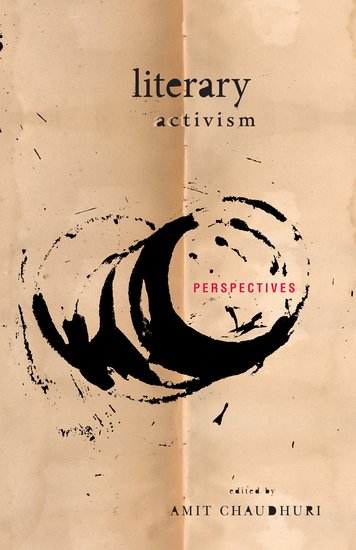
    A review of Literary Activism: Perspectives ed. Amit Chaudhuri (Oxford University Press, 2017)

    by Ragini Tharoor Srinivasan

    There’s a debate going on among some of my English department colleagues, centered on the following questions. What responsibility do faculty trained primarily in American and British literatures have to the teaching of English literatures of the non-West? How should English literature of South Asia or East Africa, for instance, be contextualized in terms of the relevant subcontinental and regional literatures in other languages? On what grounds might texts originally written in Bengali, Urdu, Swahili, or Arabic be taught in an English department? Is knowledge of the original language in which a text was written required for teaching it in translation? If so, what constitutes such knowledge?

    I’ve been thinking about these questions lately through the terms offered by Literary Activism, an idiosyncratic volume that collects proceedings from a 2015 Oxford symposium and even some of the email debriefing that followed. The title refers to a broad constellation of activities and object relations that motor critical engagements with literature in and beyond the academy. Literary activism is not quite “championing,” except when it is. It is not literature in service of what we conventionally understand as the political, nor is it simply an affirmation of the politics of aesthetics. Literary activism has a newly urgent brief given how markets and information technology have debased contemporary discourses on the literary; by that same token, it has been practiced as long as writers have written and readers have read. In editor and symposium-convener Amit Chaudhuri’s words, literary activism bears “a strangeness that echoes the strangeness of the literary…[it] may be desultory, in that its aims and values aren’t immediately explicable” (2017a: 6).

    Contributors to Literary Activism include scholars, journalists, publishers, creative writers, and literary critics. In response to Chaudhuri’s capacious opening gambit, they variously explore literary activism as “the crucial work that seeks to restore the importance of the literary to the public sphere” (Majumdar 2017: 122); the championing of writers by colleagues who believe “unconditionally in the value of [their] work” (Zecchini 2017: 20); a “critical” practice that can reorient debates on literary tradition and the modern (R. Chaudhuri 2017: 190); a counterpart to market activism (Graham: 2017); exemplified by the “passionate advocacy” of poetry translation (Mckendrick 2017: 249); a combination of literary “karma or work…jnana, or knowledge…and srishti, or creation” (Chakravorty 2017: 268); and “activism on behalf of an idea of literature” (Cook 2017: 298). These accounts are not mutually exclusive. Rather, they are consistent with how literature bridges and confounds private-public distinctions: traversing the figural space within and between minds, on the one hand, and passing materially through hands and institutions, on the other.

    Literary activism can be private, as in the case of English-Marathi poet Arun Kolatkar, who Laetitia Zecchini describes as having practiced his art in “a hostile or indifferent environment” (2017: 25). Kolatkar and his fellow poets “did not need the market or the public to know that their work was outstanding” (30); in fact, neglect by mainstream publishers was the enabling condition of their work. Spurning market logics, Kolatkar and his contemporaries published in their own presses, retained control over all aspects of production, and actively translated their and others’ works. They were “creating a world of their own, with their own standards and audience, however limited” (30). Zecchini’s translation of Kolatkar began with a private intimation as well, through an unexpected encounter with his poetry that she describes in terms of falling in love.

    Literary activism is also public, as in Amit Chaudhuri and Peter McDonald’s joint nomination of Arvind Krishna Mehrotra, a superlative poet, translator, and critic, for the post of 2009 Oxford Professor of Poetry. That nomination brought together novelists, scientists, historians, political thinkers, philosophers, and numerous other “well-wishers” in service of a campaign that was, Chaudhuri stresses, never going “to win”; it was “a deliberate long shot that should succeed” (2017b: 240, 245). That it didn’t succeed (the post ultimately went unfulfilled, a turn of events involving an alleged smear campaign by Ruth Padel against Derek Walcott, regarding his history of sexual harassment) was the point. By highlighting the work of Mehrotra, Chaudhuri and McDonald were able to lay bare the extra-literary considerations operative in the filling of posts like that of Oxford Professor.

    Zecchini’s and Amit Chaudhuri’s essays situate literary activism between acts of private creation and public consumption, between literature as a practice of living and literature as products in circulation. They contribute to the volume’s larger discussion of the relationship between literary activism and the “market activism” of publishing houses, agents, and booksellers. David Graham offers a normative account of market activism as the work of “experts” who are able “to bring new, fresh, and important voices to readers around the world” (2017: 80). Graham, a publisher, describes himself as both “a businessman whose business has been making literary works sell” and “a midwife to literary talent” (73). This tellingly mixed language captures the simultaneously opportunistic and beneficent nature of publishing.

    For most contributors, however, market activism is the province of those less interested in literature than in what sells. “[H]ow do we establish what is authentic,” Dubravka Ugrešić asks, “and what a product of market compromise?” (2017: 208). “[C]an any amount of activism really re-energize [literature’s] declined importance in the contemporary public sphere?” Saikat Majumdar wonders (141). Tim Parks laments the pervasive conflation of literary worth with accessibility, exemplified by how publishers and literary-festival organizers celebrate the success of texts that they themselves have been responsible for promoting (“How pleasant, then, to convince oneself that what reaches out to everyone is also the best” [2017: 157]). Reflecting on her own circumscribed position as a “Croatian writer who lives in Amsterdam,” Ugrešić wryly observes the mass culture industry’s unwillingness to read transnational literatures in anything other than national terms (208).

    Critiques of the culture industry, pandering publishers, and the marketplace of least-common-denominators are not new. But the contributors to Literary Activism go further by routing the literature-market binary through a significant third term: the academy. Derek Attridge describes how, over the course of many years, he championed the work of J.M. Coetzee and Zoë Wicomb, writing critical essays and a monograph about the former, and planning a conference and editing a volume about the latter (Attridge also nominated Wicomb for the Windham-Campbell Prize, which she received). It is the kind of affirmative academic attention that Gayatri Chakravorty Spivak has paid to Mahesweta Devi’s stories, or for that matter, which Majumdar has given to Amit Chaudhuri’s novels. All of this, Attridge speculates, “must have had some effect on publishers’ decisions, prize-awarding bodies, reviewers, and all the other agents in the literary marketplace” (2017: 59).

    What is the nature of this effect? How does academic attention to certain writers inflect their position in the literary marketplace—and vice versa? There is a long history of scholarship on literature’s relations to the market (Brier 2017), but it is only recently that the academy is taking stock of its particular mediation of those relations. As Andy Hines observes in an essay on the new institutionalism, only now are literary critics “willing to admit that we have been pushed around all along” (2018: np). Two remarkable paragraphs in Amit Chaudhuri’s essay strike at the heart of this vexed triangulation. He writes:

    By the late 1980s…departments of English…looked with some prejudice upon value and the symbols of value, such as the canon; problematized or disowned terms such as ‘classic’ and ‘masterpiece’; often ascribed a positive political value to orality, which it conflated with non-Western culture, and a negative one to inscription or ‘good writing’, which it identified with the European Enlightenment. Some of this was overdue and necessary. (2017b: 224)

    Chaudhuri is referencing two concurrent phenomena here. For one, a spate of works including Pierre Bourdieu’s rules of art (1992), John Guillory’s work on canon formation (1993), and Pascale Casanova’s world republic of letters (1999) problematized accepted terms and modes of literary valuation. At the same time, English studies was being transformed by critical theory, postcolonialism, feminism, and cultural studies. Construed positively, the discipline underwent significant internal reformation; viewed more suspiciously, it metabolized the oppositional knowledge projects that had emerged to contest its disciplinary hegemony.

    Chaudhuri’s passage then shifts subtly in focus:

    Meanwhile, publishers robustly adopted the language of value – to do with the             ‘masterpiece’ and ‘classic’ and ‘great writer’ – that had fallen out of use in its old location, fashioning it in their own terms. And these were the terms that academics  essentially accepted. They critiqued literary value in their own domain, but they were unopposed to it when it was transferred to the marketplace. Part of the reason for this was the language of the market and the language of the publishing industry were…populist during a time of anti-elitism…For example: from the 1990s onward, publishers insisted there was no reason that literary novels couldn’t sell…What they meant was that, in the new mainstream category of ‘literary fiction’, only literary novels that sold well would be  deemed valid literary novels. Academics neither exposed this semantic conflict nor  challenged the way literary value had been reconfigured. (2017b: 224-225)

    This is “the genius of market activism” that “disinherits and revivifies” terms of literary value that have fallen out of favor in the academy (A. Chaudhuri 2017b: 226). The result is that the status of Harold Bloom’s latest entrant into the Western canon is rightly debated, but first-time novelists debut “instant classics” and “modern masterpieces” that are unblinkingly received as such. And it’s not just that an indiscriminate public is being told what to read by Oprah, Reddit, or for that matter the Times. Now, rather than an Attridge elevating a Wicomb, the market tells the academic who and what is worthy of study. This transformation in market-academy relations has most significantly impacted those who teach and study contemporary and non-Western literatures. Chaudhuri’s passage closes with a note on such academics:

    When, in response to political changes in the intellectual landscape, they extended the old canon and began to teach contemporary writers, or novelists from the former colonies, they largely chose as their texts novels whose position had been already decided by the  market and its instruments, such as certain literary prizes. (2017b225)

    Chaudhuri is treading lightly here, but anyone familiar with his creative and critical oeuvre knows who he is talking about. The South Asian and South Asian diasporic writers most frequently taught and researched in the Anglo-American academy are Booker winners (Salman Rushdie, Arundhati Roy, Aravind Adiga), Pulitzer winner (Jhumpa Lahiri), and a Nobel Laureate (V.S. Naipaul). High profile nominations can bring otherwise minor texts to prominence, as do reviews in outlets like the Times or New Yorker. Scholars wondering which contemporary works will stand the test of time (as if the test of time were an adequate arbiter of literary value) turn to prizes and bestseller-lists in order to identify what is worthy of study. This is the context in which we “subsist on a sense that the lineage of the Indian English novel is an exemplary anthology of single works, rather than a tradition of cross-referencing, borrowing, and reciprocity” (A. Chaudhuri 2017b: 229). This is the context in which we become literary activists.

    This is also the context in which South Asian literature, to continue with the above example, becomes equated with South Asian literature in English, when in fact, as contributors to Literary Activism discuss, South Asian literature in English is part of a rich South Asian literary archive and must be studied in the context of the subcontinent’s multilingual traditions. For example, Rosinka Chaudhuri’s essay on the literary sphere of early 19th-century Bengal shows how “contentions between the major literary languages of India, including the classical and folk languages, nouveau urban and mixed languages, colonial and ‘native’ languages, played an instrumental role in the many negotiations between modernity and literary craft” (2017: 190). Zecchini’s approach to Arun Kolatkar and Amit Chaudhuri’s reading of Arvind Krishna Mehrotra are attuned to such negotiations in the 20th-century context.

    Which brings me back to the questions at the top of this essay. Originally hired as a Global Anglophonist, I am one of only two members of our literature faculty whose primary scholarly field is neither American nor British literature. I am also on the executive committee of an undergraduate major in World Literature that is housed in another college (formally and institutionally at our university, the “world” doesn’t belong to English). I therefore approach the debate about teaching texts in translation from my position at the interstices of the “Global Anglophone” and “World Literature,” which are distinct paradigms for the teaching of non-Western literatures. The former admits only texts written in English and is arguably a renomination of the postcolonial; the latter conventionally allows for the teaching of non-English texts in English translation.

    Surprising even myself, I have become an advocate—I dare say an activist—for the inclusion of non-Anglophone works of “World Literature” in English translation alongside works of “Global Anglophone” literature in our seminars and Masters exam lists. Why? Because we cannot teach and administer exams as if Chinua Achebe (a usual suspect) is only in conversation with Joseph Conrad, as if Things Fall Apart has nothing to say to Tayeb Salih’s Season of Migration to the North (translated from Arabic). Because graduate students reading Rushdie and Roy (more usual suspects) should very well know Intizar Hussain (translated from Urdu) and Kamala Suraya (translated from Malayalam). Because, as Roanne Kantor puts it, “no coherent historiography of the Global Anglophone can be built within the ‘Anglophone’ itself” (2018: np).

    My advocacy has been met by a complicated resistance. Faculty who oppose the teaching of texts in translation worry that the delinking of these texts from their source languages is intellectually irresponsible. They argue that our contemporary reading practices have, in Tim Parks’ words, “drastically weakened and in many cases altogether severed” “the old connections that linked writer to community” (149-150), and that teaching literature in translation will only exacerbate this problem. This critique, along with the suspicion that World Literature is “the educational equivalent of a shopping-mall food court” (Damrosch 2013: 153, 158), is worth heeding. But what is the alternative? The Global Anglophone circumvents the vexed politics of translation, but it valorizes Booker- and Nobel-prize winning writers like Rushdie, Wole Soyinka, and Nadine Gordimer. To return to Amit Chaudhuri’s argument, the Global Anglophone is preoccupied with Anglo-centric international prizes and the “instant classics” they create. It is by nature overly focused on the contemporary, as colonial histories prefigure the relevant 20th and 21st-century texts.

    Rigid adherence to the Global Anglophone rubric reflects an impoverished theory of translation as well, a topic discussed at length in Literary Activism. It is of course true, as Parks notes, that translations are not “always enriching” (170). By that same token, as Ugrešić writes, “Every translation is not only a multiplication of misunderstandings, but also a multiplication of meanings” (204). Translation is “cultural catalyst” (McKendrick 2017: 249). It is a practice “meant to forge affiliations and connections, to assert bonds of kinship, and to clear a space, however minor or marginal, for [writers] and their predecessors—who are turned into contemporaries by the process of translation itself” (Zecchini 2017:31). Electing not to read literature in translation because one risks misunderstanding is as suspect as assuming translation is a one-to-one “process of recoding” (Cook 2017: 322).

    That the above isn’t obvious is a reflection on the conservatism of English in some quarters, and maybe even literary scholarship more generally. In its final significant through-line, Literary Activism theorizes criticism as an alternative to scholarship, and amateurism as an alternative to expertise. Expert publishers and expert scholars who mediate between author and reader are distinguished from “amateur” critics—the category is Majumdar’s—who read and write without consideration of prize-winners, bestseller lists, market, or promotion-and-tenure-committee approval. For Majumdar, scholars are defined by their commitment to the objective, to their “archive of study” (2017: 115). By contrast, the critic “celebrates and foregrounds her subjective self” and practices literary interpretation as “a creative act” (115). Unlike professional scholars, whose archival considerations are overdetermined, amateur literary critics are characterized by their interdisciplinarity, willingness to take intellectual risks, and love of literature. They practice what Attridge describes as an “affirmative criticism, one that operates…to understand, explore, respond to, and judge what is of value in”—as opposed to the value of—“works of literature” (2017: 51).

    Majumdar is currently editing, with Aarthi Vadde, a volume called The Critic as Amateur that further develops the distinctions between private and public, scholar and critic, literature, market, and academy offered here. That volume (to which I have contributed) also includes essays by Attridge, Rosinka Chaudhuri, and McDonald. Taken together, the pair of books, Literary Activism and The Critic as Amateur, suggest another scene in which literary activism is performed: transnational collaborators deciding over symposia coffee breaks what to publish together next.

    I have come to think of much of the work I do as an English professor as literary activism. Certainly, my advocacy of an expansive literature curriculum is activism on behalf of an idea of literature. This essay is a minor piece of activism as well, a gesture of affirmative criticism that aspires to shore up the links between two projects and draw attention to them both. It can be painful at times, both urgent and pointless-feeling, and it might never be “properly remembered or noticed” (A. Chaudhuri 2017b: 244). Say what you want about love. In the first and final instance, literary activism is a form of labor.

    _____

    Ragini Tharoor Srinivasan is an assistant professor of English and Social, Cultural, and Critical Theory at the University of Arizona. She has also taught at the University of Nevada, Reno, and at the University of California, Berkeley, where she earned a PhD in Rhetoric in 2016. A former magazine editor and award-winning journalist, Srinivasan has contributed essays and criticism to scholarly, public, and semi-public venues on three continents. More from www.raginitharoorsrinivasan.com

    Back to the essay

    _____

    References

    • Attridge, Derek. 2017. “The Critic as Lover: Literary Activism and the Academy,” Literary Activism: Perspectives, edited by Amit Chaudhuri. New Delhi: Oxford University Press.
    • Brier, Evan. 2017. “The Literary Marketplace,” Oxford Research Encyclopedia of Literature. Oxford University Press.
    • Bourdieu, Pierre. 1992. The Rules of Art: Genesis and Structure of the Literary Field, trans. by Susan Emanuel. Stanford: Stanford University Press.
    • Casanova, Pascale. 1999. The World Republic of Letters, trans. By M.B. DeBevoise. Cambridge: Harvard University Press.
    • Chakravorty, Swapan. 2017. “Literary Surrogacy and Literary Activism: Instance from Bengal,” Literary Activism: Perspectives, edited by Amit Chaudhuri. New Delhi: Oxford University Press.
    • Chaudhuri, Amit. 2017a. “A Brief Background to the Symposium, and Some Acknowledgments,” Literary Activism: Perspectives, edited by Amit Chaudhuri. New Delhi: Oxford University Press.
    • –. 2017b. “The Piazza and the Car Park: Literary Activism and the Mehrotra Campaign,” Literary Activism: Perspectives, edited by Amit Chaudhuri. New Delhi: Oxford University Press.
    • Chaudhuri, Rosinka. 2017. “The Practice of Literature: The Calcutta Context as a Guide to Literary Activism,” Literary Activism: Perspectives, edited by Amit Chaudhuri. New Delhi: Oxford University Press.
    • Cook, Jon. 2017. “Literary Activism: Where Now, What Next?” Literary Activism: Perspectives, edited by Amit Chaudhuri. New Delhi: Oxford University Press.
    • Damrosch, David. 2013. “World Literature in a Postliterary Age,” Modern Language Quarterly 74.2.
    • Graham, David. 2017. “‘Market Activism’: A Publisher’s Perspective,” Literary Activism: Perspectives, edited by Amit Chaudhuri. New Delhi: Oxford University Press.
    • Guillory, John. 1993. Cultural Capital: The Problem of Literary Canon Formation. Chicago: The University of Chicago Press.
    • Hines, Andy. 2018. “The Material Life of Criticism,” Public Books, Jan. 22, http://www.publicbooks.org/the-material-life-of-criticism/, accessed Sept. 13, 2018.
    • Kantor, Roanne. 2018. “Even If You Gain the World: South Asia, Latin America, and the Unexpected Journey to Global English (working title).” Unpublished manuscript, last modified October 17, 2018. Microsoft Word file.
    • Majumdar, Saikat. 2017. “The Amatory Activist,” Literary Activism: Perspectives, edited by Amit Chaudhuri. New Delhi: Oxford University Press.
    • Mckendrick, Jamie. 2017. “Forms of Fidelity: Poetry Translation as Literary Activism,” Literary Activism: Perspectives, edited by Amit Chaudhuri. New Delhi: Oxford University Press.
    • Parks, Tim. 2017. “Globalisation, Literary Activism, and the Death of Critical Discourse,” Literary Activism: Perspectives, edited by Amit Chaudhuri. New Delhi: Oxford University Press.
    • Ugrešić, Dubravka. 2017. “Transnational vs. National Literature,” trans. David Williams. Literary Activism: Perspectives, edited by Amit Chaudhuri. New Delhi: Oxford University Press.
    • Zecchini, Laetitia. 2017. “Translation as Literary Activism: On Invisibility and Exposure, Arun Kolatkar and the Little Magazine ‘Conspiracy,’” Literary Activism: Perspectives, edited by Amit Chaudhuri. New Delhi: Oxford University Press.

    *Editorial Note (Nov 5, 2018): A broken link was fixed and a line that originally read “…I am the only member of our literature faculty whose primary scholarly field is neither American nor British literature” was changed to read: “…I am one of only two members of our literature faculty whose primary scholarly field is neither American nor British literature.”

  • Corbin Hiday –  Formalization and its Futures: Review of Tom Eyers’ “Speculative Formalism: Literature, Theory, and the Critical Present”

    Corbin Hiday – Formalization and its Futures: Review of Tom Eyers’ “Speculative Formalism: Literature, Theory, and the Critical Present”

    Tom Eyers, Speculative Formalism: Literature, Theory, and the Critical Present. Chicago: Northwestern University Press, 2017

    Reviewed by Corbin Hiday

    This essay has been peer-reviewed by the boundary 2 editorial collective. 

    The stakes of Tom Eyers’ recent monograph, Speculative Formalism: Literature, Theory, and the Critical Present, are clear from the work’s ambitious first sentence: “This book proposes a new theory of literary form and formalization” (2017: 1). Eyers’ effort attempts to carve out space within a recent proliferation of what might be understood as a return to form, one aspect of his larger intervention into contemporary methodological debates. Speculative Formalism provides both an exciting contribution to the heterogeneous, unformed moment of “new formalism,” as well as an acute explication of a range of “positivisms” in literary studies (11). For Eyers, a theoretically rigorous formalism exists antithetical to the digital humanities and object-oriented ontology (OOO) —illustrative of such “positivisms”—instead insisting on the necessity of “the critical attention to form” for any project of critique (28).1 In his titular allusion to the “Critical Present,” Eyers acknowledges this larger context of which his work is a part, with particular attention to scholars like Caroline Levine, Sharon Marcus and Stephen Best, Franco Moretti, and Graham Harman, all as ultimately unsatisfactory interlocutors. Ultimately, Eyers’ version of formalization, and his articulation of “speculative formalism” refuses a familiar dichotomy of literary mimesis—“its reflective or reproductive capacities”—and a self-enclosed version of literature—“fictive self-reference and self-foundation” (4). In order to produce an alternative to these poles, Eyers constructs sustained close readings of a series of poetic texts, in which Francis Ponge’s poems ultimately become central, and convincingly moves between and among various theoretical lenses, with Paul de Man’s version of deconstruction never too distant.

    If we were attempt to “formalize” Eyers’ own work, albeit perhaps vulgarly, we might break the monograph’s composition into sections, with roughly the first half grappling with the “critical present” referred to above in the guise of “new formalism,” digital humanities, and object-oriented ontology, and the second half articulating a version of “speculative formalism” through poetic engagement, in the form of rigorous and attentive close-readings paired with theoretical interlocutors such as Alain Badiou, de Man, and Jean Laplanche. Of course, this type of bracketing and separation of method and practice is largely unfair to Eyers’ ambitious, and multifaceted project, but the demarcation can function to better orient the reader to the scope of the intellectual and critical stakes. Thus, we might understand the two parts as dialectical, moving between method and practice, holding together Eyers’ account of the “critical present” and his theoretical production of formalism as “speculative.” The chapter that occupies the middle section of Speculative Formalism, strategically moves from the larger context of the “critical present”—object-oriented ontology (Graham Harman being its manifestation here)—to the more intimately focused readings and philosophic inquiry that marks Eyers’ work. In this sense, Eyers’ chapter, “Francis Ponge, Jean Cavaillès, and the Vexed Relation between Word and World,” represents a pivot from survey to instantiation, presenting a reading of Ponge’s poetry as attendant to and oriented toward objects, but outside the theoretical framework of OOO.

    For Eyers, through both deconstructive and psychoanalytic frameworks, language constitutively disrupts “the lack of a suitably nuanced account of subjectivity in Harman’s object-oriented ontology” and necessitates a “set of processes of formalization, processes that are motored by the resistances of objects, both material and linguistic, and in processes that are never ‘flat’ or easily delineable in the manner that Harman and his acolytes so often presuppose” (69). Turning to poetic objects through the work of Francis Ponge, Eyers continues: “[p]erhaps Ponge’s poetry of objects is best understood, then, as a somewhat devilish celebration of different instances of material and textual violence, of the ineluctable smothering of the autonomy of objects by the caprice of human language with its anthropomorphic excesses” (85). Eyers acknowledges a relationship between poetics and objects across Ponge’s poems, but in this process, exposes the limitations of OOO, while also laying the foundation for his own theoretical method. I refer to “foundation” here because this chapter, in many ways, becomes central to the book as a whole, in its staging of poetic, theoretical and philosophical encounters that are crucial to Eyers’ understanding of formalization, to his “speculative formalism.” Ponge’s influence persists throughout the book, becoming the looming literary figure for Eyers’ argument; one site of such persistence can be found in Eyers’ focus on the fruitful tension in the interplay of word and world, a “vexed relation,” marked by what he calls, “a fragile resonance between the two” (65), and only resonant “when both poetic language and the material world are imagined as necessarily shot through with impurities, such impurities preventing the swallowing of one by the other while permitting, nonetheless, their ruptural connection” (62). The fragility of both word and world, in their “impurities,” marks what Eyers finds productive in limits, a necessary incompletion and inability for literary language to achieve totalization of what Eyers refers to as “its various outsides—materiality, history, politics, nature” (1). According to Eyers, this becomes explicit in Ponge’s poetry as a function of corporeality, looking like Freudian erogenous zones: “the impasses of language are written on the body, in the involuntary corporeal contractions that poetic language and the object of that language alike may inflict” (86). This refusal of two poles, reflection and self-reference, inside and outside, not only characterizes Eyers’ larger project and his theorization of poetic, or literary (more on this distinction below) formalization, but also echoes the commitments of another imminent figure in Eyers’ work: Paul de Man.

    While Ponge’s poetry becomes central, functioning as Speculative Formalism’s conceptual literary center, Eyers owes his largest theoretical debt to de Man. In his chapter, “Paul de Man’s Poetic Materialism,” Eyers sets out to read de Man’s late essays, collected posthumously in Aesthetic Ideology, as a political and historical extension of his linguistic and tropolgical concerns via the “concepts of ‘materiality’ and materialism’” (126). Eyers’ theoretical articulation of the non-correspondence between word and world, or at least their “fragile resonance,” producing a type of opening in closure (87), finds resonance with the particular de Manian brand of deconstruction. Eyers writes, “Representation, then, as a correlational model of reference, is put radically in question throughout de Man’s career” (128). In order to grapple with this question, Eyers turns to de Man’s engagement with Kant, and his (de Man’s) skepticism regarding the alignment of reference with “phenomenalism,” ultimately attempting to produce a “properly materialistic philosophy and poetics” (128). However, even within his debt to de Man, Eyers shifts the critical terrain, departing “from a number of his conclusions” (125). Where de Man finds fragments after a deconstruction involving the interaction of “‘grammatical’ structure” and “‘rhetorical reading,’” Eyers’ “speculative formalism would rather trace the uncanny persistence of texts even after their apparent detotalization” (125), preserving a “formative force of the linguistic and philosophical binds” (149). Even within deconstructive dissolution and fragmentation, Eyers insists on the constructedness of form, this “formative force” akin to what he refers to earlier in the book as the “formativeness of form” (5). An insistence on this literary residue, the site of what’s left over after the “vexed relation” between world and word, necessitates Eyers move from de Man to psychoanalysis at the conclusion of Speculative Formalism. While de Man functions as the towering theoretical figure, Eyers’ final chapter turns to psychoanalysis as the concluding orienting “model” in order to fully account for lingering concerns of temporality and historicity (153).

    In his final chapter, “Language Poetry, Psychoanalysis, and the Formal Negotiation of History and Time,” Eyers concludes by turning to sources at the same time unlikely—the “so-called ‘language poets’”—and likely, psychoanalysis, a basis for his previous two books: Post-Rationalism: Psychoanalysis, Epistemology and Marxism in Postwar France (2015) and Lacan and the Concept of the ‘Real’ (2012). In order to do this, Eyers continues his meticulous close readings, here of language poets Bruce Andrews, Ron Silliman, Charles Bernstein, Lyn Hejinian, and Susan Howe, and turns to psychoanalysis via Jean Laplanche to construct his final theoretical frame, producing in the process a conjunction of unexpected bedfellows, illuminating a bridge between two important spheres of twentieth-century theory and poetics. Eyers locates a particularly useful homology between Silliman and Laplanche in their shared “refusal to concede this forced choice,” between the simultaneous “temporal instant” and its dissolution and “even deletion,” irreducible to being “simply individual nor utterly collective or historical” (160). In this final chapter, we find the culmination of much of Eyers’ theoretical vision, reasserting the persistence of gaps and absences, the simultaneous openings and closures running through Speculative Formalism. The historical stakes of “absence” are refracted through reconceptualizations of linearity and subjectivity in Silliman’s poem, “Albany”: “Silliman pictures the degradations of historical possibility precisely through his determined staging of the absence of plottable narrative unfolding, in the very instability of the (barely hinted at) subject-positions from which the poem’s particles of sense can be thought to emanate” (161). Eyers ends the chapter by triangulating the thought of Freud, Lacan, and Laplanche, ultimately tracing the profound influence of psychoanalysis over the project as a whole:

    If there is a legacy of Lacan’s reinvention of Freudian theory, and of Laplanche’s sophisticated extension and displacement of that legacy, is it surely this insight: word, world, and subject alike, in all their complex and asymmetrical entanglements, make contact at moments of apparent untranslatability; that is the broader thesis of this book with respect to literary form in particular. (181)

    Here, an explication of post-Freudian psychoanalytic theory finds connection to “literary form in particular.” However, because of Eyers’ particular attention to poetic objects, poetry comes to emblematize the capacity for this untranslatable “contact,” but it remains unclear why poetry stands in for literature as such. I wish now to briefly address this curious conflation of poetry with “literary form in particular” throughout Speculative Formalism.

    Early on in his monograph, Eyers addresses a methodological and theoretical decision that ultimately results in sustained and successful attentiveness to poetry, while eliding narrative prose as object of critique. Eyers defends this decision at the end of his introduction: “It may be that poetry, with its self-conscious disruption of this narrative impulse…can act as a fever-chart of asubjective, even materialist impulses that are not so easily pinpointed in narrative, but that sit nonetheless at the eccentric center not only of all literary forms (narrative surely included), but also of variants of political and historical form” (32). Here, without explicit reference, Eyers seemingly has de Man in mind, particularly the materialist de Man that Eyers takes up in his fourth chapter, discussed above; however, it might be useful to return to the de Man of “Semiology and Rhetoric,” in which a reading of Proust moves between metaphor and metonymy in a battle for “primacy,” ultimately revealing a similar “self-conscious disruption”; near the end of de Man’s extensive reading, he notes that the text produces a “state of suspended ignorance” (de Man 1979: 19). This suspension, produced by the interaction, opposed to the convergence, between grammar and rhetoric, looks ahead to de Man’s theory of irony found in Aesthetic Ideology (building upon Schlegel’s formulation): “irony is the permanent parabasis of the allegory of tropes…the undoing, the necessary undoing, of any theory of narrative…” (de Man 1996: 179). So, to return to Eyers’ claim regarding the suitability of poetry to his project, why abandon narrative when, following de Man, disruption exists as constitutive to its form, and to perhaps literature as such? As de Man notes, this internal tension and contradiction, i.e. deconstruction, exists within the Proust passage itself, not as an external addition:

    The deconstruction is not something we have added to the text but it constituted the text in the first place. A literary text simultaneously asserts and denies the authority of its own rhetorical mode, and by reading the text as we did we were only trying to come closer to being as rigorous a reader as the author had to be in order to write the sentence in the first place (de Man 1979: 17).

    While Eyers seeks to avoid the Jamesonian impulse toward the “irreplaceability of narrative” (2017:32), we might return to de Man, following his conception of the “poetic” (or rhetoric) as literature broadly understood.2

    In the absence of any engagement with narrative, particularly novels, Eyers refuses to pursue the rich narrative contributions of his preferred theoretical frameworks: post-Freudian psychoanalytic theory, Marxian literary theory, and de Manian deconstruction. Further, in his decision to focus solely on poetry, Eyers cannot fully articulate a repudiation of the literary mimesis he targets, a term more generally associated with prose, with its most problematic articulations related to the novel. We find one alternative to the mere reflection of mimesis in a version of literary “production,” and here we find Eyers’ debt to Pierre Macherey: “[t]o write of a ‘speculative’ formalism is simply to acknowledge that literature, is a peculiar site of production in its own right, one whose peculiarities are what allow it an awkward connection to its various others” (4). While I would argue that the novel exists as a particularly adept form at constructing “awkward connection[s] to its various others,” does a theory of form and formalization, as it relates to poetics or the “poem,” then produce an imagined world through the word, or does a rethinking of poetic formalization merely re-present or reflect the world in all of its instabilities, contradictions, and gaps? If a new theory of formalization looks more like the latter, then how does Eyers avoid mimesis under a different name? In other words, following Raymond Williams, how do we get “from reflection to mediation?”3

    The question of mediation also raises the issue of Speculative Formalism’s uneven relationship to Marxist literary theory, perhaps stemming from the fact that this tradition generally takes its corpus to be the novel. Here it might be useful to turn briefly to Lukács and attempt to bridge the gap between novelistic and poetic form. As Lukács notably states in Theory of the Novel, “the novel is the epic of an age in which the extensive totality of life is no longer directly given…yet which still thinks in terms of totality” (1971: 56). Somewhat relatedly, in his essay, “Art and Objective Truth,” he also writes about the limits of art, only ever able to give us the “approximation” of the “totality of life” (1978: 38). Compare Lukács to Eyers on poetic form and its “inability to present the whole”:

    It is in poetry’s determinative inability to present the whole, an inability written into the very productive constraints exemplified in poetry by the marshaling of language into meter, that it gains momentary access to the similar failures of completion and rational totalization that define its referents, referents otherwise assumed to lie submissive in anticipation of poetic representation (Eyers 2017: 101).

    Here we have what seems like a useful formulation to draw out a particular homology between poetic and novel form. Following Lukács, we know the novel might desire or strive toward the representation of totality, but because of formal (and historical) limits, the novel necessarily cannot fully capture totality in all of its social antagonisms, breaks, and ruptures. Is it possible to extend the idea of what Eyers refers to as a “noncorrelational spark” (62) beyond poetics into the realm of prose, specifically the ways in which the novel form constructs noncorrelationism?

    At stake here, in some sense, is the applicability or mobility of Eyers’ theory of formalization. In other words, does his insistence on the poetic object reveal something about form or formalization that the novel cannot? In the final chapter, Eyers provides his reader another defense of poetry: “Poetry, that is, seems ineluctably caught between the individual and the collective, or between the particular and the universal, and it is at the level of poetic form that these formative contradictions are best accessed” (169). In the idea of being “caught between the individual and the collective, or between the particular and the universal,” I find particular resonances between poetry and the novel form, thus suggesting potential openness and the conditions of possibility for the narrative future of Eyers’ “speculative formalism.” Following this, I want to suggest that Eyers’ attention to poetic objects throughout Speculative Formalism in no way forecloses or limits the possibility of the theoretical usefulness or applicability of his account of formalization to other objects of study. In fact, his refusal of a series of what he calls “neo-positivisms” (36), the latest fads in literary studies, allows for an embrace of negativity, and more than tarrying with or falling into a “negative theology” (133), Eyers convincingly articulates a version of negativity that opens up and expands the ways in which we think through our various worlds—theoretical, historical, political. In conclusion, I briefly suggest a return to the relation between Lukács and Eyers through Eyers’ own reading of Theory of the Novel. Early on in this account Eyers writes of Lukács’ early work: “Theory of the Novel may well bear within it non- if not anti-narrative theoretical resources” (Eyers 2016: 86). To borrow and slightly revise: Eyers’ Speculative Formalism certainly bears within it non-poetical theoretical resources, and I look forward to the after-life of this important work.


    Corbin Hiday is a PhD student in English at the University of Illinois at Chicago. His research focuses primarily on the Victorian novel, environmental and energy humanities, Marxist theory, and psychoanalysis. He is also the Economy Editor at Another Chicago Magazine.


    Notes

    1. While Eyers will specifically take up digital humanities and object-oriented ontology in Speculative Formalism, engagement with debates around “critique” and “post-critique” in literary studies are not explicit. For paradigmatic examples of the “post-critique” strain of the “critical present,” see Bruno Latour’s foundational essay, “Has Critique Run Out of Steam” (2004), and Rita Felski’s literary critical version in The Limits of Critique (2015).
    2. Again, in de Man’s “Semiology and Rhetoric,” he refers to the “deconstructive discourse that we call literary, or rhetorical, or poetic…” (1979:18).
    3. Here I have in mind Williams’ chapter, “From Reflection to Mediation,” from Marxism and Literature (1977).

    References

    De Man, Paul. 1996. Aesthetic Ideology. Minneapolis, MN: University of Minnesota Press.

    De Man, Paul. 1979. Allegories of Reading: Figural Language in Rousseau, Nietzsche, Rilke, and Proust. New Haven, CT: Yale University Press.

    Eyers, Tom. 2017. Speculative Formalism: Literature, Theory, and the Critical Present. Evanston, IL: Northwestern University Press.

    Eyers, Tom. 2016. “Form as Formalization In/Against Theory of the Novel. Mediations, Vol. 29, No. 2: 85-111. www.mediationsjournal.org/articles/form-as-formalization

    Lukács, György. 1971. The Theory of the Novel: A Historico-Philosophical Essay on the Forms of Great Epic Literature. Translated by Anna Bostock. Cambridge, MA: M.I.T. Press.

    Lukács, György. 1978. Writer and Critic, and Other Essays. Translated by Arthur Kahn. London: Merlin Press.


  • Ben Murphy – The Universes of Speculative Realism: A Review of Steven Shaviro’s The Universe of Things: On Speculative Realism

    Ben Murphy – The Universes of Speculative Realism: A Review of Steven Shaviro’s The Universe of Things: On Speculative Realism

    Steven Shaviro’s The Universe of Things: On Speculative Realism (2014)

    Reviewed by Ben Murphy

    Steven Shaviro begins The Universe of Things (2014) promising a “new look” at Alfred North Whitehead “in light of” speculative realism. The terms of this preface ought to be reversed though, since what follows Shaviro’s introduction is actually a “new look” at speculative realism “in light of” some Whiteheadean ideas. This distinction is important: readers should not seek out The Universe of Things for an introduction to Whitehead qua Whitehead or even a “new look” at Whitehead vis-à-vis current issues of cultural and critical analysis. (Indeed, better options along these lines include, respectively, Shaviro’s own earlier book, Without Criteria (2009), and the more recent University of Minnesota Press collection The Lure of Whitehead (2014).) Universe, on the other hand, is better described as an attempt to map the cumulative geography of speculative realism, a philosophical movement which Shaviro stresses should be referred to in the plural: speculative realisms. Speculative realisms (and its sibling endeavors like object oriented ontology and new materialism) are perpetually in search of heterodox traditions and forgotten figures—philosophical antecedents sought for foundational credence and inspiration. And in this sense Shaviro’s incorporation of Whitehead is the latest in a lengthening line: Graham Harman recuperates a certain version of Heidegger, Jane Bennett returns to Spinoza and Bergson (among others), and, more far afield still, Ian Hamilton Grant champions Schelling’s Naturphilosophie. But if these and other thinkers raid the archive to consolidate new and distinct philosophical templates, Shaviro’s survey is decidedly more evaluative than constructive. Working Whitehead into the cracks of speculative realism, Shaviro widens that movement’s internal fractures in order to expose, and at most nuance—rather than overturn, reverse, or revamp—its prevailing assumptions.

    Shaviro’s critical take on speculative realism relies on two recurring moves: first, an overarching unification and, second, a subsidiary distinction. First, in the name of unity, Shaviro stresses that speculative realisms hold in common a core desire to step outside what he—following French philosopher Quentin Meillasoux—calls the correlationist circle. As reiterated by Shaviro, the primary target implied by this phrase is Kant’s position that the world is only knowable and approachable through thought. “We” can never grasp an object “in itself” or “for itself” in isolation from its relation to us, the thinking subjects. This insistence means that any account of the world and reality is fundamentally an account of the world and reality as accessed through and by human thought. Speculative realisms are unified in wanting to get beyond this self-reflexive loop. Quentin Meillasoux, Graham Harman, Ray Brassier, and Ian Hamilton Grant (the school’s four founding fathers)—as well as fellow travelers—shed the correlationist straight jacket by theorizing (or, better, speculating) about the real world, the world of the “great outdoors” (another Meillasoux coinage) or, as Eugene Thacker puts it in his “horror of philosophy” series, the world “without us.” (For a very different account which disputes whether “correlationism” refers to a fair or even a meaningful reading of Kant, see David Golumbia’s “’Correlationism’: The Dogma that Never Was,” recently published in bounday 2.) As Shaviro notes, there’s a timeliness to this “anti-correlationist” critique, since casting the philosophical net beyond the circumscribing human mind seems a deadly serious endeavor in the face of impending ecological catastrophe. Still, the warming planet is just the most obvious and palatable hook that initiates what Shaviro calls the “changed climate of thought” (4) recently amenable to speculative realism. And if both new materialism and object oriented ontology are more prone to non- or para-academic environmental and ecological interventions, then speculative realism is more interested in revisiting and recasting the history of philosophy.

    A commitment to outfoxing correlationism unites speculative realism, but Shaviro’s second move—that of division—hinges on pinpointing the particular strategies employed to achieve this revisionary project. Repeatedly in Universe, Shaviro splits speculative realism into two main factions. On the one hand, Meillasoux and Brassier pursue lines of thought that Shaviro calls “eliminativist”: for these admittedly nihilistic thinkers, correlationism is undone by the revelation that thought is “epiphenomenal, illusory, and entirely without efficacy” (73)—that thought doesn’t rightly and necessarily belong anywhere in the universe. For Shaviro, Brassier goes further in approaching the “extinction of thought” than Meillasoux, who saves thought from complete elimination by introducing a deus ex machina according to which thought and life emerge “ex nihilo” and simultaneously from a universe previously devoid of both (76). The contrast to this first faction is found in Harman, Grant, Levi Bryant, and Timothy Morton. Instead of proposing that thought is fundamentally inimical to the universe, this coalition of speculative realism wagers that agency and thought are everywhere. Positing the “sheer ubiquity of thought in the cosmos” (82), this position reaches its apotheosis for Shaviro in a panpsychic vision where all things—animate and otherwise—are sentient (if perhaps not exactly conscious). Shaviro places himself in this second faction only after making a further distinction that separates him from Harman in particular. Whereas Harman, according to Shaviro, stresses the withdrawn nature of objects—withdrawn in the sense that the object must always “recede” from its relations (30)—Shaviro joins Whitehead (and Latour) in making a distinction between epistemological withdrawnness and ontological relations (see 105). Where an object may always hold something in reserve from what is knowable to the perceiving mind (as Harman insists), even this measure of the object that is reserved may be affected and changed by modes of contact that elude knowledge and understanding. Because of “vicarious causation” and “immanent, noncognitive contact” (138, 148) (a mode of contact that Shaviro never satisfactorily distinguishes from more popular usages of the term “affect”), an “occult process of influence” occurs that is “outside” any correlation between “subject and object, or knower and known” (148). The object, then, is not so utterly withdrawn as Harman’s narrowly epistemological account suggests. So between eleminativism and panpsychicism as extremes of the speculative realism spectrum, Shaviro says, we’re faced with a “basic choice” (83).

    Describing correlationism and the various offerings to get beyond it is standard fare for speculative realism. But what Universe lacks in originality it compensates for with breadth of analysis and consistently careful, patient exposition. Shaviro admirably treats a wide swath of speculative realists (plus quite a few philosophical giants from both continental and analytical traditions), and he does so with a tone perpetually modulated for utter clarity. Absent is any of the obfuscating rhetoric or over-the-top claims that one might expect from someone who sets out to correct Kant. In part Shaviro’s achievement stems from his own outsider status. His rich body of academic work—on everything from film studies to music video aesthetics to sci-fi infused accelerationism—as well as the light touch on display here and throughout his superb and eclectic online presence (see: http://www.shaviro.com/) stand him in good stead as a welcome interlocutor and guide. Approaching speculative realism as a kindred but not coincident thinker, he’s able to recapitulate his own coming-to-terms with ideas in a way that translates well to other sympathetic non-initiates.

    Apart from style and tone, though, Shaviro’s approach is also commendable for a self-avowed pragmatism of ideas. In an aside in the first chapter, Shaviro applauds Isabelle Stengers for the insight that “the construction of metaphysical concepts always addresses certain particular, situated needs” (33). “The concepts that a philosopher produces,” Shaviro continues, “depend on the problems to which he or she is responding. Every thinker is motivated by the difficulties that cry out to him or to her, demanding a response” (33). While a fair representation of Shaviro’s own admirably simple and workmanlike prose, these statements also epitomize the generous spirit that urges Universe. Shaviro is careful to explain the fruits and situational benefits of every idea that he treats, perhaps especially those ideas that he wants to challenge—an attractive way of grounding philosophical ideas which, being speculative by definition, sometimes feel quite flighty.

    The discussion of panpsychism that spans chapters four and five is the most exciting and original element of Universe. In part this is because it draws on a body of work in cognitive science and the philosophy of biology that Shaviro knows well and that is fresh fodder for discussions of speculative realism. His discussion in this section also has the added charm of giving itself over to the speculative freedoms afforded to speculative realism itself. As Shaviro recognizes, speculative realism is at its best when it joins with speculative fiction in the common task of “extrapolation” (10). Thus in considering panpsychism we’re teased with the notion that slime molds have thoughts (88). Less bogged down by the minutia of distinctions between this SR thinker and that, Shaviro joins a more diverse group of thinkers to consider, for instance, Thomas Nagel’s question about what it’s like to be a bat. Well aware of the absurdities attendant to a truly panpsychic vision, Shaviro lets speculation carry the day, and it’s a pleasure to follow him through a romp that ties the questions of speculative realism to a longer intellectual tradition of sometimes strange twists and turns.

    Also helpful and fresh for speculative realism—although somewhat hard to square with the rest of this book—is Shaviro’s first chapter, which shows how Emmanuel Levinas helps us appreciate speculative realism even as Whitehead’s “aesthetic” mode of “contrast” departs from Levinas’ “ethical” encounter with the Other. Where for Levinas the encounter trumps self-concern, for Whitehead both self-concern (or “self-enjoyment”) and “concern” for the Other are poles best understand in balancing counterpoint (rather than conflict). Apart from being the most detailed analysis of Whitehead’s thought—and, indeed, his thought as it changed in his long arc of writing—this opening account is valuable for SR in arguing that a commitment to circumventing correlationism need not be an ethical project in the traditional sense. In other words, in Shaviro’s reading of Whitehead, a philosophy geared towards the object world “without us” isn’t premised on care. The problem here and elsewhere in Universe, though, is the fuzzy usage of the term “aesthetic.” As I’ve suggested, chapter one deploys this term opposite Levinasian ethics in a frustratingly negative mode of definition: aesthetics is said to be what is not ethics. While gaining some clarification in the volume’s titular chapter (see 52-54), the aesthetic remains unclear even when given new treatment in a discussion of Kant that occupies the last ten pages of the book. Here “aesthetic” is set against knowledge (or epistemology) rather than ethics, and, as my discussion of Shaviro’s disagreement with Harman suggests, “aesthetic” comes to mean something like noncognitive contact, or “affect.” If these disparate senses of the “aesthetic” are related or even mutually inclusive, Shaviro doesn’t do enough to show how.

    For all its merits, Universe suffers heavily from being stuck between monograph and essay collection. One searches in vain for the absent promise that the book’s chapters can be read collectively or in isolation, approached in order or at random. Such a promise, at least, would admit that the chapters don’t serially build to anything in particular. Lacking this or any other clues from Shaviro, though, we’re faced with seven relatively short offerings that loop back on one another with frustratingly little meta-commentary. Much of the mapping of speculative realism as I’ve described it above via unification and division, for instance, appears essentially verbatim in chapters two, six, and seven. The treatment of Harman—both agreement and disagreement—in particular makes continual reappearance. The same could be said of the discussion of panpsychism, which is interesting the first and perhaps even second time but quickly turns suspect as it is recycled through chapters three, four, and five with only the trimmings changed. The mere fact that bits of argument can appear at the beginning and end of the book in essentially the same form (and with Shaviro seemingly unaware of such repetitions) leaves the reader wondering about the value of a journey that feels constrained to a treadmill. A more cynical reader might look to, and find answer in the book’s editorial meta-data, which reveals that the first three chapters are previously published. Insofar as Universe excels at any one thing, then, it may be at academic entrepreneurialism—a feat of (re)publishing in which a triplet of core essays are surrounded with the sort of rhetorical packing peanuts which actually detract from ideas that would be more forceful as standalone articles. The reader already deep inside the sweep of SR may find plenty in this extended cut edition, but those more casually interested will be better served to read independently (as interests dictate) “Self-Enjoyment and Concern” (on Whitehead, Levinas, and SR), “The Actual Volcano” (Shaviro’s primary disagreement with Harman), and “The Universe of Things” (a broad strokes and bouncy introduction to the promises and riddles of SR, new materialism, and object ontology). Each has gems of insight owed to Shaviro’s exhaustive research, and reading them apart from one another—perhaps even in their original contexts—would lessen the rather tiresome burden of trying to figure out how they all fit together.

    Ben Murphy is a Ph.D. student at the University of North Carolina at Chapel Hill. He works on 19th and 20th century American literature, the history and philosophy of science, and critical theory. His essay on James Dickey’s Deliverance and film adaptation is forthcoming from Mississippi Quarterly (2017), and you can also find his writing at ETHOS: A Digital Review of Arts, Humanities, and Public Ethics and The Carolina Quarterly. Website: http://englishcomplit.unc.edu/people/ben-murphy

  • Andrew Martino – Exhuming the Text: Alice Kaplan’s “Looking for the Stranger: Albert Camus and the Life of a Literary Classic”

    Andrew Martino – Exhuming the Text: Alice Kaplan’s “Looking for the Stranger: Albert Camus and the Life of a Literary Classic”

    Alice Kaplan’s Looking for the Stranger: Albert Camus and the Life of a Literary Classic

    Reviewed by Andrew Martino

    Albert Camus never considered himself an existentialist. In fact, Camus never exclusively believed in any school of thought. Camus was the consummate outsider, the one who stood apart from those who subscribed to views that forced those subscribers into a narrow ideology, especially when that ideology mixed with violence, something Camus steadfastly resisted. If we had to place Camus into any category it would be that of the humanist caught in the absurd. Camus believed in life over death (without believing in an afterlife), yet this belief did not keep him from contemplating the question of suicide, the only serious philosophical problem confronting us, as he writes in The Myth of Sisyphus. Camus’ humble beginnings in extreme poverty and illiteracy in his native Algeria  testify to the power of the human spirit in the face of an indifferent world. When he was awarded the Nobel Prize for Literature in 1957 he expressed reservations and claimed that the prize should have gone to André Malraux, an early influence on his writing. Camus also realized that the Nobel would bring a certain celebrity that would complicate his life, perhaps even sabotaging his art. Add to this his “silence” on the Algerian problem and his very public and acrimonious break with Sartre, and Camus becomes a figure trapped in a world where he is increasingly unable to control his own image. Camus is a problematic figure who is claimed by both the Right and the Left, leaving the man and his writing caught in a political vortex. Focusing on the postcolonial aspect of The Stranger, Edward W. Said writes that Camus “is a moral man in an immoral situation.”[i] When Camus died at the age of 46 in a car accident in 1960, he left the world with the image of the charismatic young man, Bogart-like in his coolness, and still with the promise of great things to come. But a saint he was not. His numerous affairs and constant womanizing, his reluctance to act or speak out against French imperialism in Algeria, his disillusionment with and expulsion from the Communist Party, render him more human than academics might be comfortable with. Camus’ life was full of contradictions, full of silences. Yet, it was precisely from these contradictions and silences that Camus produced one of the most important and widely read books of the twentieth century.

     Looking back over the seven decades since the publication of The Stranger, Camus’ reluctance to situate (in the Sartrean sense of the term) himself in the bubble of existentialism, a bubble in which The Stranger and his relationship with Sartre placed him, the novel blazed a path that opened up fields where the absurd might be articulated, contemplated, and confronted from the inside (the modernist bent) rather than from above and beyond, as the canonical novels of the nineteenth century may have done. In her essay “French Existentialism,” Hannah Arendt briefly examines Sartre and Camus’ influence on the “new” movement where novels carry the weight of philosophy. Throughout that essay she also comments on Camus’ reluctance to be labeled an existentialist. “Camus has probably protested against being called an Existentialist because for him the absurdity does not lie in man as such or in the world as such but only in their being thrown together.”[ii] Here we have what is perhaps the most concise and articulate formulation of absurdist philosophy to date. Camus’ definition of absurdity, painstakingly mapped out in Caligula, The Stranger, and The Myth of Sisyphus, is not quite existentialism, but does contain existentialist DNA, especially Kierkegaardian and Dostoevskian (two of Camus’ patron saints) DNA. As Camus remarks in The Myth of Sisyphus: “I can therefore say that the Absurd is not in man (if such a metaphor could have a meaning) nor in the world, but in their presence together.”[iii] Camus’ definition of the absurd is also the epistemological curve in the road separating him from Sartre’s thinking. If Sartre’s philosophy can be distilled into his phrase “Hell is other people,” then Camus’ is a philosophy of the absurd dependent upon relationships among people. On the other hand, Camus’ articulation of the absurd, as we’ve seen above, resides in the relationship of humans with their world.

    Together, Sartre and Camus blazed a path where philosophy and art, in this case literature, met, thereby ushering in a new form of the novel, one that would examine existence from a philosophical perspective while making use of a form in which to mold these philosophical perspectives. What emerges from this is a hybrid. According to Randall Collins, “What was identified was a tradition of literary-philosophical hybrids. Sartre and Camus were key formulators of the canon, and themselves archetypes of the career overlap between academic networks and the writers’ market. The phenomenon of existentialism in the 1940s and 1950s added another layer to this overlap.”[iv] But this hybridization was more than a heady cerebral new movement in fiction; this hybrid constituted a new way of thinking about the world, a world that emerged primarily from a particular network of intellectuals at a particular time in Paris. Sartre and Camus are on the crest of this wave of existentialism and their thinking would go on to change the world.

    Alice Kaplan’s extraordinary new book Looking for the Stranger: Albert Camus and the Life of a Literary Classic, is a careful and meticulously researched examination of Camus’ 1942 novel. Kaplan is one of the leading scholars of twentieth century French culture and history. She is currently the John M. Masser Professor of French at Yale University where she also received her Ph.D. in French in 1981. She has published seven books, including: French Lessons: A Memoir (1993), The Collaborator: The Trial and Execution of Robert Brasillach (2000), and Dreaming in French: The Paris Years of Jacqueline Bouvier Kennedy, Susan Sontag, and Angela Davis (2012). In 2013 Kaplan edited and provided the introduction to The Algerian Chronicles, a collection of articles and essays Camus wrote from 1939-1958. Kaplan’s edited edition is the first time these writings have appeared in English, so she is no stranger to Camus and his place in twentieth century French culture.

    Early on Kaplan claims that Looking for the Stranger is actually a biography of Camus’ best known work, and one of the most famous and widely read texts of the twentieth-century. However, this does not mean that Kaplan foregoes a glimpse into Camus’ life, thus resurrecting the Barthesian “death of the author” debate. Instead, Kaplan goes looking for The Stranger in the author instead of the author in The Stranger; the difference is subtly stunning. In other words, her investigation is more preoccupied with the creative process and its cultural and social context than it is with getting to the author as a god-like figure. Camus always claimed that The Stranger was the second in a three part series exploring the absurd from three different perspectives: a novel (The Stranger), a dramatization (Caligula), and a philosophical work (The Myth of Sisyphus). But The Stranger is hardly a book that needs rescuing from obscurity, nor does Kaplan claim that it does. To date the novel has sold over ten million copies and is still read in over 40 languages. It is still on high school and college syllabi, thus making it required reading for young men and women. In fact, a student’s first encounter with existentialism and the absurd is likely to come from a reading of The Stranger. Instead, she offers us a more comprehensive look into the text, running down every lead, exploring every avenue that might expand our understanding of what makes The Stranger the text that it is.

    Kaplan begins by acknowledging the spectacular success of The Stranger, making it one of the most popular and important texts of the twentieth century. She quickly glosses over the critical reaction to The Stranger by pointing out that readings of the novel map some of the most important theoretical lenses that have influenced twentieth century thought. “In fact, you can construct a pretty accurate history of twentieth-century literary criticism by following the successive waves of analysis of The Stranger: existentialism, new criticism, deconstruction, feminism, postcolonial studies” (2). The Stanger, she claims, has influenced thinking of a diverse population that spans generations. Indeed, the remarkable staying power of the novel to remain relevant, perhaps even more relevant now than when it was published, is a feat that its author and its critics at the time could not have foreseen. I am not sure that students continue to read The Stranger with the commitment that they once did, but it is undeniable that the novel still matters, that it still provokes us into thinking, especially in a time when fundamentalism and terrorism are on the rise, and Europe and the United States are flirting with a new form of fascism in the guise of a renewed interest in ridged nationalism. But Kaplan is not necessarily interested in the public and academic reception of The Stranger. Instead, she claims that the novel’s readers and commentators have overlooked something from our reading of the text since its publication: that something is a biography of the novel. “Yet something essential is lacking in our understanding of the author and the book. By concentrating on themes and theories—esthetic, moral, political—critics have taken the very existence of The Stranger for granted” (2-3). She takes the unprecedented, and academically unpopular path that looks into the life of the author and the circumstances that allowed the author at a particular place and time to write one of the most powerful works of world literature. However, it is important to point out that Kaplan sets out to write a biography of the novel, and not the author. In fact, Camus’ life becomes a part of the puzzle that is The Stranger.

    Kaplan is not the first to comment on the unlikely success of The Stranger and its problematic birth. She is, however, the first to devote an entire book to an investigation, an investigation that is almost documentary-like in its approach, to the novel from conception to publication and beyond. And she accomplishes this brilliantly. Told in twenty-six short chapters, bookended by a prologue and an epilogue, Kaplan leads us into the depths of the novel in a highly engaging and thought-provoking fashion. In fact, the structure of her book presents its readers with the “life” of the novel, a life that has continued on long after the death of its creator. Drawing from a reservoir of sources, including Camus’ notebooks and her own trips to Algeria, Looking for the Stranger is a scholarly adventure story. As Kaplan claims in her acknowledgements: “I looked for The Stranger in libraries, in archives, in neighborhoods on three continents” (219). Of course, the idea of The Stranger was with her all of the time, but what makes Kaplan’s book so provocative is precisely the lengths she goes to in search of the novel. Kaplan explores The Stranger in three parts: before its publication, during its publication, and after its publication.

    In the first chapter Kaplan gives us the image of a young man in front of a bonfire burning various papers that link him to a past, a past that could be dangerous to him and those who know him. But as Kaplan tells it, the young Camus could not bring himself to burn all of his letters and writings. What he saved would act as a cache of material, both physical and remembered, from which he would extract and rework into a slim, simply told tale of a man who fails to cry at his mother’s funeral and, by a series of circumstances, ends up shooting an unnamed Arab on a beach, only to be arrested, tried, convicted and sentenced to death. Yet, the reader is never quite sure if the protagonist is convicted and sentenced to death because of the murder or his refusal to conform to the rules of a society that demands that one cry at one’s mother’s funeral. The image of the bonfire given to us by Kaplan is a powerful one. As we travel with her deeper into her investigation, we learn that the bonfire was a kind of rite Camus needed to perform in order to purge his mind and soul so that he could go on to write what he felt needed to be written—unimpeded by ghosts, but still attentive to their silences, which spoke to and through him.

    Throughout the spring of 1940, six years after the bonfire, Camus worked furiously on The Stranger, almost in total isolation holed up in his miserable hotel room in Montmartre, interrupted only to work for five hours a day at Paris-Soir. The twenty-six year old was as cut off from the world as he had ever been. Alone in a foreign city, with German bombs exploding all over France, Camus fought his loneliness and misery by throwing himself into his writing. Not yet divorced from his first wife, Simone Hié, his fiancé Francine Faure refused to accompany him to Paris. The only thing he brought with him was the first chapter of The Stranger and a few of his press clippings. Kaplan: “His sense of separation from everyone he loved put him in a state of mind that was both painful and enabling” (71). Like Camus’ biographer Olivier Todd, Kaplan highlights the importance of Camus’ isolation when he first arrives in Paris. Camus believed that the failure of A Happy Death, his abandoned first novel, was due to his inability to write without interruption. Camus’ isolation in Paris enabled him, out of necessity, to devote all of his attention to The Stranger. Kaplan’s research offers us a marvelous glimpse into the creative process Camus used, or perhaps more accurately, was host to, during his writing of the novel. Kaplan claims that Camus wrote The Stranger almost line for line, as if he were dictating a story he was seeing play out before his eyes. Where he struggled with the writing of A Happy Death, The Stranger seems to have emerged almost fully formed, complete.

    However, his writing of The Stranger does not mean that it was without its problems. In fact, the birth of The Stranger was long and fraught with difficulties both internal and external. Until his arrival in Paris, Camus struggled with getting into the narrative, creating a new story, as well as using material from A Happy Death. Interestingly, most reviewers of Kaplan’s book, Robert Zaretsky, himself an accomplished Camus scholar, and John Williams in particular[v], have devoted a majority of their reviews to the shortage of paper in France as the novel was set to go to press. “To say that the very existence of The Stranger was threatened by the material conditions of the war is no exaggeration, since paper supplies were becoming more and more precious. It looked at one point as if Camus would have to supply his own paper stock!” (136). Camus was in Oran with his family at the time, and was happy to help Gallimard with locating paper. The novel came very close to not being published, but paper stock was found at the last minute and Camus was not obliged to supply his own.

    Once the novel was published it was met with immediate success. But perhaps its success was not so unusual after all. From the beginning Camus wanted the French publishing world, located in Paris, to represent him. In the chapter “A Jealous Teacher and a Generous Comrade,” Kaplan tells the story of Camus’ almost frantic correspondence with Jean Grenier and Pascal Pia, the teacher and the comrade, respectfully, and their influence on The Stranger in its early stages. More importantly, if Camus were to move from a provincial author to a wider audience, one that would include the whole of Europe and possibly America, he would have to seek publication outside of Algeria. As Kaplan notes: “Yet Paris was still the center of book publishing in France, and if Camus wanted to publish outside Algeria, he’d eventually have to find a way to get his manuscript to the capital” (107). This, it seems to me, provides the necessary evidence that Camus was thinking bigger than his native land. He desired a world stage, a stage that would allow his work to be read by the widest possible public and Gallimard was the publisher that could provide him with that opportunity. In his book The Existentialist Moment: The Rise of Sartre as a Public Intellectual, Patrick Baert illustrates the importance of publishing, especially those publishing houses in Paris, for providing the necessary outlet for ideas. “Intellectual ideas spread mainly through publications. Whether through books, magazines, or articles, publishing is central to the rise of intellectual movements. For such movements to be successful, authors have to be well connected to the main publishers and need to have sufficient freedom and power to be able to write what they want to write.”[vi] The network Gallimard could provide Camus with would plug him into some of the most resonant writers and thinkers of the time. As mentioned above, The Stranger was not just a novel, but also an important piece of a longer meditation on the absurd. Therefore, Camus’ relationship with Gallimard, as Kaplan points out, is a key component to his rise to international prominence. Quite frankly, without Gallimard, The Stranger might not have met with its tremendous success.

    Camus’ association with Gallimard was not the only key to his success, however. Gallimard’s star and existentialism’s major voice, Jean-Paul Sartre, also had a lot to do with the success of The Stranger. In his celebrated review of The Stranger, originally published in 1943, Sartre almost single handedly anoints Camus into the French intellectual network, thus solidifying his reputation as a resonant French intellectual. Still, early on in his review Sartre points out that, like its author, The Stranger is a book from “across the sea,” highlighting Camus’ Algerian heritage. Sartre’s generous and insightful review gives a certain intellectual legitimacy to the novel. Sartre: “The Stranger is a classical work, a work of order, written about the absurd and against the absurd.”[vii] This Apollonian form, in the Nietzschean sense, of the novel further reinforces the boundary lines that mark the absurd context, a context that we might fold into the Dionysian, again in the Nietzschean sense.

    But it would be a mistake to consider The Stranger a French novel; it is, in almost every sense, an Algerian novel, a novel obsessed with the sun and the sea. What is perhaps closer to the novel’s intention is, at least in part, a Mediterranean world in a colonial context. In other words, the pied noirs who enjoy French citizenship and the protection it offers as opposed to Arab subjectivity. Arab subjectivity is one of the chief criticisms postcolonial scholars hurl at The Stranger and its author. Yet, a purely postcolonial reading of The Stranger severely limits our understanding of the novel. As David Carroll points out, “I would even say that to judge and indict Camus [as Edward Said does] for his “colonialist ideology” is not to read him; it is not to treat his literary texts in terms of the specific questions they actually raise, the contradictions they confront, and the uncertainties and dilemmas they express. It is not to read them in terms of their narrative strategies and complexity. It is to bring everything back to the same political point and ignore or underplay everything that might complicate or refute such a judgment.”[viii] The postcolonial lens that has dominated readings of The Stranger has also relegated it and its creator to a graveyard for Eurocentric authors. Kaplan’s attention to detail, however, locates the nameless murdered Arab in The Stranger in a central, one might even say, privileged, position. Almost from the beginning, Kaplan admits to being nearly obsessed with the figure of the nameless Arab. Indeed, the namelessness of this character is one of the pivotal points in her book. As Kaplan discovers, there was a nameless Arab in Camus’ life, one that would lead him straight to the central scene in The Stranger.

    In 2015 Other Press published the English translation of Kamel Daoud’s The Meursault Investigation, a retelling of The Stranger from the point of view of the brother of the Arab killed on the beach by Meursault. Daoud, an Algerian journalist living in Oran, writes for Quotidien d’Oran, a French language newspaper in Algeria. The Meursault Investigation is an interesting book that reads more in the style of Camus’ The Fall than The Stranger. The protagonist, speaking to us in the first person from a bar in Oran, informs us that there are other facts in the case that we did not hear, the chief among these is the name of his brother, Meursault’s victim, Musa: “Who was Musa? He was my brother. That’s what I’m getting at. I want to tell you the story Musa was never able to tell. When you opened the door of this bar, you opened a grave, my young friend” (4). Daoud’s text comes dangerously close to being fan fiction. However, there is something profoundly relevant in the novel. The Meursault Investigation demonstrates a deeper understanding of The Stranger, and Camus’ style. In order to write this book, Daoud proves that he knows The Stranger intimately, and his contribution to the story is, indeed, worthy of consideration. The Meursault Investigation demands to be read, digested, and then read again in the context to the cultural as well as the literary conditions of Algeria before, during, and after its independence.

    Kaplan devotes nearly an entire chapter (chapter 26) to Daoud’s novel and the figure of the unnamed Arab who appears in nearly spectral form in The Stranger. She tells us that she had a meeting with Daoud in 2014 in Oran, in which he claimed “we don’t read The Stranger the same way as Americans, French, Algerians” (210).  Kaplan’s reading of Daoud’s novel is a revelatory experience for her, and by association, for us. She strategically situates The Meursault Investigation both within and beyond the lens of postcolonial theory.

    Kaplan’s research into the source of the killing of the Arab scene in The Stranger is a remarkable piece of journalism. Her investigation led her through the towns and alleyways of Oran, to dusty archives, and populated streets, all despite an Algerian travel advisory for those holding a United States passport. “For two years, I had traveled to places in France and Algeria connected to The Stranger: I had walked down the former rue de Lyon in Algiers, past Camus’s childhood home. With photographer Kays Djilali, I climbed the steep Chemin Sidi Brahim, knocking on doors until we found the House Above the World, now the home of three generations of Kabyle women who speak neither French nor Arabic. With Father Guillaume Michel from Glycines Study Center in Algiers, I drove out to gold and blue vistas of Tipasa. In Paris, I stood in the dreary spot on the hill of Montmartre where Camus wrote in solitude” (211). At the end of the trail is a name: Kaddour Touil, and a story.

    Kaplan’s research demonstrates that it is not really Camus the author who haunts The Stranger, but rather it is the specter of Meursault who haunts Camus, both in life and after death. Meursault, as Olivier Todd informs us, is a combination of several people Camus knew. “The character of Meursault was inspired by Camus, Pascal Pia, Pierre Galindo, the Bensoussan brothers, Sauveur Galliero, and Yvonne herself. Marie was not Francine. Camus the writer mastered his novel in a way that Camus the man did not control in his life. Meursault never asked himself any questions, whereas Camus was always examining his actions and motivations.”[ix] Authors routinely use what and who they know for characters and their actions in books, but Camus’ relationship with Meursault seems to be as complicated as that character’s relationship with the reader. Kaplan’s book sheds a new light on the complexities of those relationships.

    The Stranger is truly a work of world literature, in the sense that David Damrosch defines the concept.[x] With The Stranger we have an Algerian author who wrote in French but was influenced by Danish, Russian, and German thinking, and was stylistically influenced by American authors like Hemingway and James M. Cain. Alice Kaplan gives us a view of The Stranger that joins a growing chorus of scholarship on the controversial book and its author. She provides keen insight that opens up other avenues of thinking about that book and its author. Camus’ influence seems to be growing, not diminishing as we move deeper into the twenty-first century, and this is needed, especially given the growing resurgence of nationalism and isolationist polices, i.e. Brexit and Trump. Perhaps it’s only literature, and international fiction in particular, that can save us from ourselves. In this age of social media epitomized by the egotistical selfie, international fiction has become more important than ever. Kaplan’s book reminds us that nothing exists in a vacuum, that great works of art come about contextually and pan-culturally. The Stranger might never have been a success without the French existentialist network of the time.

    Andrew Martino is Professor of English at Southern New Hampshire University where he also directs the University Honors Program. He has published on contemporary literature and is currently finishing a manuscript on the concept of security in the work of Paul Bowles.

    Notes

    [i] Edward W. Said. Culture and Imperialism. (New York: Vintage Books, 1994), 174.

    [ii] Arendt, Hannah. “French Existentialism.” Essays in Understanding: 1930-1954. (New York: Schocken Books, 1994), 192.

    [iii]Albert Camus. The Myth of Sisyphus. Trans. Justin O’Brien. ) New York: Vintage Books, 1991), 30.

    [iv] Randall Collins. The Sociology of Philosophies: A Global Theory of Intellectual Change. (Cambridge, Massachusetts: The Belknap Press of Harvard University Press, 2002), 764.

    [v] See Zaretsky’s review in Los Angeles Review of Books (https://lareviewofbooks.org/article/biography-zaretsky-kaplan-camus/) and Williams’ review in the New York Times (Sept. 15, 2016).

    [vi] Patrick Baert. The Existentialist Moment: The Rise of Sartre as a Public Intellectual. (Cambridge, England: Polity Press, 2015), 138-139.

    [vii] Jean-Paul Sartre. “The Stranger Explained.” We Have Only This Life to Live: The Selected Essays of Jean-Paul Sartre 1939-1975. Ed. Ronald Aronson and Adrian Van Den Hoven. (New York: New York Review Books, 2013), 43.

    [viii] David Carroll. Albert Camus the Algerian: Colonialism, Terrorism, Justice. (New York: Columbia University Press, 2007), 15.

    [ix] Todd, Olivier. Albert Camus: A Life. (New York: Alfred A. Knopf. 1997), 107.

    [x] Here I am thinking specifically of Damrosch’s theory of circulation. See David Damrosch’s What is World Literature. (New Jersey: Princeton University Press, 2003) for a full definition of the concept.

  • Travis Alexander – Deregulating Grief: A Review of Dagmawi Woubshet’s “The Calendar of Loss: Race, Sexuality, and Mourning in the Early Era of AIDS”

    Travis Alexander – Deregulating Grief: A Review of Dagmawi Woubshet’s “The Calendar of Loss: Race, Sexuality, and Mourning in the Early Era of AIDS”

    a review of Dagmawi Woubshet’s The Calendar of Loss: Race, Sexuality, and Mourning in the Early Era of AIDS (Baltimore: The Johns Hopkins University Press, 2015)

    by Travis Alexander

    ~

    Not long after someone dies in Ethiopia, the edir—friend, relative, or neighbor—takes to the streets to blow a horn and call out the deceased’s name. Thus begins the process of mourning. After this announcement, the edir pitches a tent in front of the bereaved’s home. Over the next three days, mourners congregate in the tent and grieve. By the seventh day, public grieving has largely subsided. More urgency still has passed by the fortieth and eightieth days, by the seventh year. Dagmawi Woubshet opens The Calendar of Loss with a lyrical description of this practice, according to which the temporality of the living attunes itself to the claim of the dead. It’s a fitting introduction, as The Calendar casts Woubshet himself as no less edir than scholar. His particular charge is the AIDS dead from the “early years” of the epidemic—1981 to 1996, when highly active antiretroviral treatment became widely available. It was in 1996 that AIDS, according to certain political constituencies, was rendered nonlethal; according to others, it was even cured.

    The ambition of The Calendar, though, exceeds mourning the AIDS dead in either the form of a memoir or uncritical memorialization. To be sure, there exists a prolific tradition of just this kind of memoirish text, epitomized by writers like Sarah Schulman. Woubshet looks instead to efforts made by AIDS mourners to simultaneously grieve their dead, process the historical contingency of these deaths, and reckon with the probability that their own deaths were on the horizon. As such, these works are “steeped in a ‘poetics of compounding loss’” (3). This idiosyncratic form of mourning not only registers a novel structure of feeling, but, in “confound[ing] and travers[ing] the limits of mourning” renders extant literary and cultural elegaic genres inadequate (3). Evincing his interdisciplinary sensibility, Woubshet trains his analysis on genres running to obituaries, funerals, graffiti art, photography, film, epistolaries, choreography, installations, and of course, the poetic elegy itself. The resulting critical work is a dialogue at the intersection of trauma studies, psychoanalysis, queer theory, and African Diaspora studies.

    Woubshet organizes the book’s chapters according to the various ways that queer loss was reinserted into a public discourse that had attempted first to conceal it, and then to efface its embodied specificities. To take only one of his most powerful examples, Woubshet addresses how in its traditional form the obituary had functioned as a disciplinary genre of (hetero-) reproductive futurism. In its foregrounding of birth-family kinship networks, the obituary not only omitted mention of gay partners, but reified the futurism (those, especially, children, who live on) that sublimates and mediates such reproductivism. Moreover, these pieces never mentioned AIDS, coyly alluding instead to a “long disease” the deceased had suffered, thereby interring the dead in one last closet. In response to the mainstream news outlets running these posthumously disciplinary remembrances, gay newspapers “arrogated to themselves the authority of the obituary,” emphasizing the cause of death and the queer networks left in the wake of the decedent’s passing, thus both constituting queer counterpublics and protecting the “rights of the queer dead from the normative rites of the living” (59, 61, 67, 84). Woubshet’s ability to demonstrate how works of mourning exhumed the queer body interdicted from the scene of public grief is equally salient in his poetic analysis, centering on figures like Melvin Dixon and Paul Monette and informed by poetry and elegy scholars ranging from Peter Sacks to Max Cavitch to Jonathan Culler. He hastens to remind us that the explicitly fatal homophobia of the 1980s and ’90s has simply been sanitized into the gay liberalism of the present. In its triumphalist projection of gay normalcy and citizenship, gay liberalism (akin to what Jasbir Puar calls homonationalism) demands the erasure of AIDS, of the embodied queer past. “[B]y looking for the dead now, therefore,” The Calendar of Loss “challenge[s] gay liberalism’s present undertaking” (23).

    As such, the reformulation of central mourning genres such as the obituary , Woubshet notes, wasn’t demanded simply by the novel epidemiological and biocultural poetics of AIDS itself. It also responded to the unique forms of silence and erasure under which queer loss was placed in the 1980s and 90s by civil and governmental institutions alike. It is this “regulation of the ‘sphere of appearances’” (to borrow Judith Butler’s phrase) that the activist group ACT UP (AIDS Coalition to Unleash Power) addressed in its motto “Silence = Death” (16). Woubshet argues that the protocols of silence in this era “disprized” mourners of queer loss, “shroud[ing]” their grief “in silence, shame, and disgrace” (4). The texts and performances collected in Calendar refuse this status, and collectively insist that “mourning = survival.”

    In its recuperation of a form of grief that is indeterminate and inconsolable, The Calendar of Loss is also a referendum on the approach to loss and trauma offered by Freudian psychoanalysis, which sets forth a pat binary between normative grief (mourning) and pathological grief (melancholia). Where the mourner eventually replaces his lost object, the melancholic cannot, and languishes. Amid the exigencies of AIDS, however, this binary falls short insofar as it fails to apprehend the fact that for these mourners, death is not a “singular” event, but part of an ever-expanding series of deaths, including—most likely—the mourner’s own (5). The melancholic grief of queer communities constituted by AIDS are certainly not “normal” according to Freud, but neither are they pathological, inasmuch as they “achieve cathexis in mourning itself and in its art and activism. However, […] as newly cathected objects, [these] cannot displace loss; on the contrary, they place loss center stage” (18). In worrying the normal/pathological binary, Woubshet delivers a theoretical instrument to those employing psychoanalysis, and a bracing intervention to a queer theory whose conceptualizations of trauma have unproblematically embraced this conspicuously unqueer binarism for too long.

    Drawing on work by Howard Thurman, Woubshet observes that this non-pathological melancholy finds clear historical expression in the genre of slave songs and black spirituals. In the spirituals as well as in black life generally, “[d]eath and dying are not just ‘unusual, untoward events’ or ‘inevitably end-of-lifespan events,’ but instead punctuate [it] routinely and proleptically” (19). This constant anticipation of loss is central to the conceptions of social death elaborated by scholars such as Orlando Patterson. Thus, the paradigm of black mourning (as in the slave songs) and black life generally, “accommodates” and illuminates early AIDS mourning, particularly in its “insistence that death is ever present, that death is somehow always impending, and that survivors can confront all this death in the face of shame and stigma in eloquent ways that also often imply a fierce political sensibility and a longing for justice” (5). This comparative work confirms The Calendar Of Loss as the first monograph in the humanities at the intersection of queer theory and African Diaspora studies and allows it to spark a true theoretical commerce between those fields (26).

    Already in this book, in fact, interdisciplinarity has sensitized Woubshet to a liability of queer theory over and above its internalization of Freud’s pathologization of melancholy. I’m speaking here of queer theory’s characterization of the child derived heavily from Lee Edelman’s pathbreaking No Future: Queer Theory and the Death Drive (2004). In this latter account, the figure of the child is not only opposed to the queer subject, but is deployed—insofar as it represents the claims of futurity—to discipline and defer queer pleasure, which represents by contrast not only the present at the expense of the future, but also the very foreclosure of the future itself. In his final chapter, Woubshet details the Sudden Flowers collective, which provides the resources for Ethiopian orphans whose parents were lost to AIDS to create works of art and performances that help mediate their grief. Many of these orphans choose to write letters to their deceased parents in which they chronicle the stages and practices of their mourning, and the sensation of the absence, the lost object(s), they have not (yet) filled or replaced. These children “rely not on idealized figures of innocence and purity to characterize their own experiences, but instead on queer figures of abjection, disparagement, and fearlessness,” thereby “thwart[ing] the naturalized figure of the child as the very embodiment of futurity” (140). The experiences of these children, then, are a living rebuke to the cleanliness of queer theory’s characterization of the child. But Woubshet doesn’t simply gesture to the children of Sudden Flowers to append an asterisk to the queer theory’s anti-natalism, to correctively bolster its critical acumen (though he certainly does accomplish this). While joining Edelman in the latter’s critique of hegemonic natalism, he breaks away in aiming to indicate what we might well call the white privilege of queer theory—the complacency of the latter’s archive, its evident disinterest in the particularities of life in the submerged global south in favor of an aestheticized lumping-together of African people with AIDS under the signifier of unalterable tragedy.

    But more witheringly still, The Calendar of Loss reveals the extent to which queer theory becomes a vested defender, an unwitting academic strategist, in the process of universalizing whiteness. Drawing on Robin Bernstein’s Racial Innocence, Woubshet recounts how, unlike the image of the white child that gelled (under the auspices of nineteenth-century Romanticism) to figure innocence, purity, and futurity, the black child discursively produced simultaneously (most canonically in the pickaninny) evoked repulsion, abjection, and social death (142). “Emptied of innocence and futurity,” he speculates, “the black child […] cannot be a marker against which queerness can be negatively defined” (142). Hidden behind the tact of Woubshet’s account is the indictment that positions like Edelman’s not only prefer the white child for its compatibility with a given theoretical imperative, but perpetuate a universalization according to which the white child, unburdened by racial marking, becomes the child as such, which iterates in turn the social death (in its rhetorical concealment) of the black child. This revelation represents just one of the fruits of Woubshet’s inflection of queer theory by the itinerary of African Diaspora studies.

    While we might fairly critique Woubshet’s failure to address the role of NGOs (like those that care for Ethiopian Orphans) as the “mendicant orders” (cf. Hardt and Negri) of the very same biopolitical governmentality that allowed AIDS to become a pandemic in the first place, this oversight seems the exception rather than the rule. The Calendar’s more concerning oversight is instead its unintentional reification of vitalist, optimistic, and citizenship-oriented rubrics of affect in its moments of “recuperation.” Consider for example Woubshet’s description of the children in the Sudden Flowers art collective who become “political figure[s], publicly taking on one of the most urgent issues of our time, [while simultaneously] departing from the norm” (144). These children are revealed in turn as “powerful agents, as subjects capable of reflection on and articulation of their experiences” (140). Here these children become deserving of praise insofar as they embrace an active, vigorous relationship with their circumstances. Elsewhere Woubshet will attribute the same valorizing characteristics to the gay American subject of his book too. AIDS mourners “across the Atlantic […] embodied AIDS openly and fearlessly” (5). Here “openly and fearlessly” carries the same sense of vigor and interactivity he attributed to the “powerful,” “agent[ial]” children of Ethiopia.

    Not only do these forms of affect coincide neatly with the behavioral strictures demanded by a late liberalism that exercises itself in intellectual and emotional economies, but they also threaten to undo the depathologization of melancholy executed above. That is to say, where Woubshet had previously claimed to find melancholy non-pathological insofar as it generates a new cathexis (attention to compounding loss), here he seems to smuggle in—through “articulation of […] experiences”—the kind of object-replacement or work-completion characteristic of normative mourning. Indeed, he says so himself in expressing his desire to show that nonnormative mourning “can be ‘productive rather than pathological, abundant rather than lacking, social rather than solipsistic, militant rather than reactionary’” (22). Here Woubshet no longer desires simply a neutral opposition to the pathological (that is, the nonnormative), but—in the term “productive”—casts his lot in with a term derived from the cathectic economy of capital. In turn “social” evokes liberal citizenship and pluralism, while “militant” continues in the valorization of vigorous and positive affect suggested earlier by “powerful,” “agent[ial],” “open,” and “fearless.” Inasmuch as “militancy,” “articulation,” “social[ity],” and “productiv[ity]” address themselves to futurity, they reiterate the natalism that Woubshet in agreement with Edelman deemed unsalvageable.

    Indeed, Edelman himself is perhaps most helpful in diagnosing the forms of complicity I’ve attributed to Woubshet. In a 2006 piece, he cautions us against the trap of “affirm[ing] an angry, uncivil ‘politics of negativity’” (“The Antisocial Thesis in Queer Theory” 821). Insofar as such negativity is “affirmed,” it becomes “little more than Oedipal kitsch,” performing the sentimental and “fundamentalist […] attachment to ‘sense, mastery, and meaning,’” and thereby striking “the pose of negativity while evacuating its force” (822). True negativity, meanwhile, refuses what Adorno calls the “all subjugating identity principle” (Negative Dialectics 320). In his attempt to depathologize queer melancholy, Woubshet pays homage to negativity, spurning the identification between melancholy and pathology. But in framing that melancholy as “militant,” “productive,” “social,” “articulate,” “open,” “fearless,” and certainly “agent[ial],” his negativity is outed as an identity principle in drag. This complicity also lends support to Jasbir Puar’s recent critique of affect theory (“Prognosis Time: Toward a Geopolitics of Affect, Debility, and Capacity”). For her the latter, in attempting to conceptualize a register of energies and forces uncapturable by a form of governmentality dependent on the capitalization of intellectual and emotional labor, unwittingly finds itself attributing to affect a set of optimistic, buoyant characteristics that are themselves of a piece with the imperatives of productivity and ablement central to late capital in the first place (“Prognosis Time”). While Woubshet’s methodology has no stake in affect, the optimism inherent in his characterizations of melancholic grief and its creative expression—even his exclusionary attention to only those who have taken it upon themselves to create—instantiates the ideological double-bind of Puar’s affect theorists.

    Of course, a productivity that is cyclical and endlessly iterative would be recuperable where one that is teleological would not. And his investment in the trope of the calendar, which evokes a form of articulation that repeats—despite its “militan[cy]”—in stasis, suggests that this is version of productivity Woubshet has in mind. So his flirtation with productivity is potentially aesthetic rather than ideological. Whatever the case may be, The Calendar of Loss remains a rich and urgently needed contribution. When the legacy of AIDS is being submerged, not only by the rhetoric of gay liberalism, but by a generation of queer theorists who have turned their attentions elsewhere, efforts like Woubshet’s to “speak again” its history and “reanimate lives that demand remembering” cannot go unnoticed (xi).


    _____

    Travis Alexander is a Mellon Graduate Fellow at The University of North Carolina, Chapel Hill. Though broadly interested in Post-45 literature and visual art, his specific interests cluster around portrayals of the HIV/AIDS epidemic in film, literature, television, and cultural theory between the 1980s and 1990s. Website: http://englishcomplit.unc.edu/people/travis-alexander.

    Back to the essay
    _____

    Works Cited

    • Adorno, Theodor. Negative Dialectics. Trans. E.B. Ashton. New York: Continuum, 1994.
    • Edelman, Lee with Robert L. Caserio, Judith Halberstam, José Esteban Muñoz, and Tim Dean. “The Antisocial Thesis in Queer Theory.” PMLA 121.3 (2006): 819 – 828.
    • Puar, Jasbir. “Prognosis Time: Toward a Geopolitics of Affect, Debility, and Capacity.” Women & Performance: A Journal of Feminist Theory 19.2 (2009): 161 – 172.
    • Woubshet, Dagmawi. The Calendar of Loss: Race, Sexuality, and Mourning in the Early Era of AIDS. Baltimore: The Johns Hopkins University Press, 2015.
  • Micah Robbins — Misanthropic Humanism & the Politics of Comic Futility: Robert T. Tally Jr.’s Kurt Vonnegut and the American Novel

    Micah Robbins — Misanthropic Humanism & the Politics of Comic Futility: Robert T. Tally Jr.’s Kurt Vonnegut and the American Novel

    by Micah Robbins

    Kurt Vonnegut owes a good measure of his popularity, both as novelist and public intellectual, to his gift for treating the most depressing aspects of postmodern American life with cheerful contempt. His steadfast good humor renders dissident fictions palatable for mainstream audiences, while also appealing to those more politically active readers who are convinced the core values animating contemporary American life must be revised if, as the most idealistic generation in recent memory warned, we are not to be “the last generation in the experiment with living.”¹ He is, in this regard, one of postwar America’s most politically savvy literary voices, a novelist perhaps uniquely suited to posit radical ideas within mainstream discourse. It is important to note, however, that while Vonnegut lends his voice to a number of “isms” well outside the bounds of popular American politics (socialism, pacifism, and atheism come immediately to mind), he does so while remaining conspicuously skeptical of political activism as a force for positive and lasting social change. He thus performs the paradoxical task of inculcating a progressive moralism that condemns the most troubling aspects of postmodern American life—most notably the twin forces of consumer capitalism and militarization—while at the same time insisting on the inability of progressive politics to set straight what he sees as having gone so obviously awry. At the core of his critique is a “Do-Nothing ethos,” a sort of hip resignation that suggests an inevitable descent into evermore cruel and calloused ways of being.² This ethos finds its most memorable expression in his famously fatalistic phrase, “So it goes,” which he utters like a mantra throughout Slaughterhouse-Five (1969); or, to put it differently, as he does in his less popular novel Bluebeard (1987), humankind is “doomed to repeat the past no matter what. That’s what it is to be alive” (Slaughterhouse-Five 2; Bluebeard 91). It is around this fatalism that his oeuvre’s core contradiction develops. While Vonnegut’s novels may speak passionately against manifold forms of violence and oppression, they ultimately succumb to a playful nihilism that, though rich in irony and black humor, offers little by way of imagining a future beyond the sequence of traumas and disasters that characterizes our historical moment.

    Irony and black humor are, to be sure, means of making the intolerable seem tolerable, as gallows humor surely attests, and in the hands of more radical satirists such as William S. Burroughs, Ishmael Reed, Thomas Pynchon, and Kathy Acker, to name just a few of Vonnegut’s contemporaries, they become discursive weapons against the violent, exploitative mentalities that continue to structure our world into the twenty-first century. But with Vonnegut, the gallows carry the day. This is not to deny that Vonnegut’s satire does much to shame prevailing sociopolitical mores. It does. It also raises a powerful alarm that something has gone horribly wrong in the world. But in the end, Vonnegut’s fiction eschews imagining acts of meaningful resistance—symbolic or actual. His work is, in this regard a surrender, for even his most politically effective novels advance an image of humanity as powerless to enact positive social change in the face of overwhelming biological and historical forces. In his well-known 1973 interview with Playboy magazine, Vonnegut goes so far as to explicitly position the political novelist as part of a biological process that functions independently of the writer’s strategic intentions, an explanation that illustrates the fatalistic paradox at the core of his politics. In response to a question regarding his motives for writing, he says, “My motives are political. I agree with Stalin and Hitler and Mussolini that the writer should serve his society. I differ with the dictators as to how writers should serve. Mainly I think they should be—and biologically have to be—agents of change” [my emphasis]. Vonnegut imagines writers as “evolutionary cells” in the “social organism,” biologically determined agents that simultaneously introduce new ideas into society and function as a central “means of responding symbolically to life.” Yet immediately after articulating his progressive political commitments, Vonnegut turns notably pessimistic, stating, “I don’t think we’re in control of what we do,” before proceeding (in characteristically self-depreciatory fashion) to dismiss his theory of the writer as a force for evolutionary social change as “horseshit.”³ He thus undermines, in a moment of what I read as impromptu candor, one of the foundational premises of political activism: that people can join in solidarity and organize around conscious acts of will to fashion a better future.

    Robert T. Tally, Jr. takes up Vonnegut’s paradoxical politics in his ambitious study, Kurt Vonnegut and the American Novel: A Postmodern Iconography (2011). Ranging over Vonnegut’s nearly fifty-year career, and offering commentary on all fourteen of his novels, Tally develops a theory of Vonnegut as a leading iconographer of postmodern American society. This is not to say that Vonnegut is a leading postmodernist per se —Tally suggests the label “postmodern” doesn’t quite fit—but rather that he is a writer with deep-seated modernist sensibilities whose work attempts to capture a comprehensive vision of America at the height of its power. In ranging over Vonnegut’s novels, Tally touches on some crucial theoretical and generic concerns, both of which I’ll discuss in due course, but what stands out most impressively when considering Vonnegut’s effort to construct a thoroughgoing postmodern iconography is the way in which his modernist political sensibility—rooted in utopian ideals of social wholeness and moral intelligibility—gives way to the overwhelming uncertainty and fragmentation of the postmodern age. His iconography may aim for the “comprehensiveness and unity assayed by the most wide-eyed utopians of the early modernist period,” as Tally argues early in his study, “yet Vonnegut’s world remains more fragmentary and unfixed than the elegiac modernists imagined. Hence, Vonnegut makes a botch of things” (Kurt Vonnegut and the American Novel xxi). By tracking Vonnegut’s career-long attempt to negotiate the tensions between modernity and postmodernity, Tally offers a compelling literary-critical portrait of a significant (though largely neglected) American novelist grappling with the contradictions and crises of postwar American life, a portrait that helps clarify the paradoxical core of Vonnegut’s fatalistic political ethos.

    Tally argues that Vonnegut’s postmodern iconography is a fundamentally modernist project in that it seeks through symbolic means to contain a cultural moment come unhinged through rapid technological development and the values associated with mass consumerism and unchecked militarization. In response to the pervasive fragmentation of American society, Vonnegut constructs an iconography intended to identify the roots of postmodern social disintegration and thus, by extension, illuminate traces of a prelapsarian integrated whole or idealized unity. We see in this effort what Tally regards as Vonnegut’s “thoroughgoing, elegiac modernism,” a perspective that leads him to revisit key modernist concerns, including “the effects of industrialization and technology, the breakup of traditional (so-called organic) communities, the relations between historical and psychological structures, between social totality and personal experience” (6 – 7). Yet because he does so within a postmodern framework, his efforts at identifying clearly defined social problems that fit within stable narrative structures are ultimately stymied by the very slippages and lack of coherence that his fiction attempts to contain. The result of this tension is a body of work that fails to effectively imagine utopian solutions precisely because it runs repeatedly into the limitations of a cultural-historical moment that denies utopian thinking as such. As Tally rightly notes, “the politics of postmodernism—by denying both an Edenic past to return to and a utopian future just over the horizon—often appears doomed to fall back into an apolitical position.” As a result of this denial, and surrounded everywhere by a breakdown in signification and its attendant political frustrations, Vonnegut’s “political forces have been driven deeply into an unconscious. A writer who desperately wants to support causes championed by a populist left, Vonnegut cannot help his general despondence over the impossibility of a genuinely political movement achieving success” (10). So while Vonnegut’s modernist sensibility may lead him to desire stable political solutions, he ultimately succumbs to a postmodern framework that all but forecloses on the utopian, redemptive promise that energizes the various “isms” I mentioned above. He thus becomes what Tally calls “a reluctant postmodernist” (7).

    Although Tally makes the political dimensions of Vonnegut’s postmodern iconography clear, he tends away from situating Vonnegut within the rich and varied political discourses that shaped Cold War American society and its aftermath. He opts instead to engage literary-critical debates to argue for the significance of Vonnegut’s contribution to the development of American literature, even going so far as to suggest that Vonnegut is as good a candidate as any for having achieved some proximity to the ever-elusive “great American novel.” Indeed, Tally makes an extended claim that Vonnegut’s postmodern iconography is a noble yet failed attempt—a near miss, really—at achieving precisely such a deed. This is both a strength and a weakness. On the one hand, the book struggles to bear out Tally’s claim that Vonnegut’s iconography attempts the comprehensiveness associated with a project such as “the great American novel” precisely because it avoids a substantive engagement with specific sociopolitical developments in the decades following the end of the Second World War. Kurt Vonnegut and the American Novel is not a work of American studies, nor does it take advantage of sociohistorical methodologies that may, in the hands of some future scholar, help place Vonnegut’s work in relation to actual politics of world-historical significance—the Civil Rights and Anti-War movements, Nixon’s ouster and the rise of Reagan, the fall of Communism, etc. On the other hand, Tally’s emphasis on literary-critical debates allows him to construct an impressive survey of Vonnegut’s work, and he makes important strides toward understanding the extent of Vonnegut’s engagement with theoretical concerns developed by some of the twentieth century’s most important continental philosophers. Figures such as Friedrich Nietzsche, Martin Heidegger, Jean-Paul Sartre, Theodore Adorno, Gilles Deleuze, and Félix Guattari loom large in his study, and while their presence at times softens what could be a sharper focus on the particularities of Cold War American society, they allow Tally to make a case for Vonnegut as something more than a popular novelist. The truth is that Vonnegut is not taken very seriously within the academy, and by showing how his novels are shaped by and/or fit in relation to key theoretical insights, Tally makes a strong argument for Vonnegut’s place within a lineage of great American novelists running from Herman Melville to Thomas Pynchon.

    Yet even when Tally focuses on continental philosophy to make literary-critical claims about Vonnegut’s work, and particularly when he does so in relation to how Vonnegut negotiates the tension between modernist and postmodernist narrative techniques, he still manages to present important insights vis-à-vis Vonnegut’s paradoxical politics. For example, in his chapter on Vonnegut’s most famous novel, Slaughterhouse-Five, Tally draws extensively on Nietzsche’s theory of the “eternal return”—the idea that a finite universe exists in infinite time and space and thus must recur ad infinitum—as a key to understanding the novel’s “Tralfamadorian style.” Named after the bizarre alien life forms that abduct the book’s protagonist, Billy Pilgrim, and display him in a sort of zoo/natural history museum on their home planet Tralfamador, Vonnegut’s Tralfamadorian style is rooted in a cosmological concept that, much like Nietzsche’s eternal return, asserts “all moments, past, present, and future, always have existed, always will exist” (Vonnegut 1969, 34). Tralfamadorians experience such simultaneity literally, seeing all time arrayed before them as if it were a mountain chain over which their consciousnesses may range at will. Billy also experiences something approaching this simultaneity after coming “unstuck in time,” and his subsequent and varied shifts between the past, present, and future allow Vonnegut to dispose of linear storytelling and engage in altogether more experimental narrative techniques (29). Armed with Nietzsche’s theory of the eternal return, Tally argues that these techniques, though relying on apparent narrative instability and its associated fragmentation of experience, are actually evidence of Vonnegut’s attempt to achieve a more rigorous realism than that which more conventional narrative forms allow. If reality is determined by an eternal recurrence, as Nietzsche asserts, and all moments in time exist simultaneously, than it only makes sense that Slaughterhouse-Five’s narrative structure move beyond representing the world as if “one moment follows another one, like beads on a string, and that once a moment is gone it is gone forever” (Vonnegut 1969, 34). The novel’s fragmented narrative form thus becomes an exercise in constructing a cosmological unity, with past, present, and future held simultaneously in view and nothing left to slip away beyond our reach. For Tally, this is wholly “characteristic of Vonnegut’s modernism: the need for experimental narrative techniques (such as stream-of-consciousness, collage, time-warps) to do justice to what is really real, something that the older modes of realism were seemingly unable to accomplish. This marks Vonnegut’s wholly modernist view of reality” (78).

    Though questions regarding Vonnegut’s narrative techniques may seem to be of limited literary-critical interest, Tally shows how they prove reflective of Vonnegut’s “Tralfamadorian ethics,” an ethics infused with Nietzschean amor fati, or “love of fate,” and one that Tally argues is peculiarly “suited to Vonnegut’s modernist approach to the postmodern condition” (71). Billy’s disillusionment with time as linear phenomenon not only affects the novel’s narrative structure, but it also leads him to accept that which he has no power to change, namely the pervasive reality of death. Billy articulates this acceptance in a letter he writes to the editors of his local newspaper, an example Tally highlights as evidence of his peculiar ethics: “When a Tralfamadorian sees a corpse, all he thinks is that the dead person is in a bad condition in that particular moment, but that the same person is just fine in plenty of other moments. Now, when I myself hear that somebody is dead, I simply shrug and say what the Tralfamadorians say about dead people, which is ‘So it goes’” (34). The specific context of Billy’s struggle with death is the trauma he experiences after witnessing the American firebombing of Dresden, an event that Vonnegut also witnessed during his military service in World War Two. Hundreds of thousands of German civilians perished during the attack, and Billy’s postwar experiences—including the experience of seeing his son deploy to fight in Vietnam, a detail that provides the immediate political context of this self-professed anti-war novel—are haunted by his memories of the Dresden dead. Slaughterhouse-Five is, to a significant degree, an attempt to grapple with a world in which even those forces that seem most committed to liberty and justice engage in indiscriminate acts of mass murder. Nietzsche’s eternal return, a theory meant to liberate human psychology from the anxiety and resentment bound up in the wish to both alter the past and change an inevitable future, provides Tally with the theoretical means to figure the fatalism expressed in the phrase “So it goes” as the “appropriate response to death, as well as an affirmation of life” (75). It also allows him to synthesize Vonnegut’s style and ethics in such a way as to illuminate the paradox at the core of Vonnegut’s seemingly progressive politics, namely the belief that the world is as it is because it cannot be otherwise.

    In what is his most significant contribution to our understanding of Vonnegut’s work, Tally proposes the term “misanthropic humanism” to describe Vonnegut’s cheerful fatalism. Misanthropic humanism is a useful term because it explains how a body of work can seem committed to a radical project for progressive sociopolitical change, while simultaneously holding forth a constant reminder that cruelty, injustice, stupidity, and death are inevitabilities that strike at all in the end. There can be no question that Vonnegut cares deeply about the fate of humanity; his best novels expose the sometimes subtle pathologies that produce unparalleled suffering in the contemporary world, and they do so in such a way as to stir lasting sympathies in his audience. But the humanity Vonnegut cares so deeply about is, in his view, a species with self-destructive tendencies written into its very biology. The notion that human beings function as cells in a social organism, and biologically have to be a certain way, as Vonnegut insists they must in his Playboy interview, underwrites his misanthropic humanism and infuses his fiction with the humor of those destined for the gallows without hope of escape. Indeed, there is no hope for escape precisely because we are human. Tally argues that Vonnegut’s work “shows how human beings themselves are the greatest, indeed perhaps the only, impediment to human freedom and happiness,” and that this circumstance cannot be otherwise because our most debilitating qualities emerge from the inevitable inner-failing of human nature itself (23). Tally has a keen eye for how Vonnegut’s misanthropic humanism manifests itself through nearly every one of his novels, and though his study cannot ultimately resolve the contradiction of a progressive politics that denies the possibility of progress (this is Vonnegut’s failure, not Tally’s), it goes a long way toward clarifying some of the more paradoxical aspects of Vonnegut’s politics.

    Vonnegut stresses a pointed view of humanity as innately self-destructive throughout his oeuvre, beginning with his 1952 debut novel Player Piano, and extending into the late stages of his long career (his 1985 novel Galápagos is a good example). Indeed, in ranging over each of Vonnegut’s fourteen novels, Tally reveals the far-reaching ways in which Vonnegut’s work not only highlights humanity’s self-destructive tendencies, but also suggests that human beings lack basic free will. For example, he draws on Vonnegut’s first novel, Player Piano, to illustrate how his fiction “blurs the lines between man and machine, showing not just how humans are being replaced by machines or how machines have dehumanized American society (the ostensible themes of Player Piano), but that humans are themselves machines” (21; my emphasis). Set in a dystopian America in which an automated economy has deprived most people of meaningful work, Player Piano expresses the pervasive sense of corporate, middle-class angst captured most famously by Sloan Wilson’s novel The Man in the Grey Flannel Suit (1955). However, Vonnegut’s debut differs from most other 1950s novels of its sort by imagining a revolutionary movement that acts to restore power and dignity to a people dispossessed by a technocratic economic-political system. In this regard, Vonnegut’s fiction anticipates sociologist Theodore Roszak’s important study of the New Left’s opposition to technocratic values in his book The Making of a Counter Culture: Reflections on the Technocratic Society and Its Youthful Opposition (1969). Yet unlike those New Left activists motivated by the belief that a better world is possible, Vonnegut has his revolution fail at the very moment of its success. Immediately after Vonnegut’s dissident neo-Luddite zealots smash all the machines, they begin testing their technical know-how by first explaining and then repairing the technology they have just destroyed, thus taking the first step toward reestablishing the technocratic regime that had dispossessed them in the first place. It’s as if they can’t help but undermine their own liberation. In other words, the revolution fails not because it runs up against an implacable, dehumanizing system, but rather because such failure is written into human nature itself.

    Vonnegut’s work suggests that such failures are more than political; they are an innate part of human biology, which is hardwired for self-destructive behavior. This belief is what allows Vonnegut to care so deeply about humanity while simultaneously holding it squarely responsible for all of the world’s troubles. Tally makes this point clear when he writes, “Vonnegut sees most people as fundamentally flawed, petty, avaricious, and prone to acts of almost incredible cruelty. Yet, for all that, Vonnegut also cannot abandon humanity; he marvels at man’s folly, noting sadly or just curiously man’s absurd perseverance, as in the bittersweet image of the triumphant Luddites who, at the end of Player Piano, proudly put back together the very machines they had broken. In Galápagos, Vonnegut takes further pity on people, arguing that it was never their fault that they were silly, arrogant, and cruel. It was all due to their grotesquely oversized brains” (131). Absurd as this may sound, Vonnegut’s late novel Galápagos does indeed blame the evolutionary accident that led to our current brain size for everything from predatory economics and war to suicidal thoughts. In fact, the narrative fantasizes a world in which humans, through a dangerous mix of nuclear radiation and natural selection, evolve out of their debilitating brain size and into simpler brains incapable of advanced logical and/or moral reasoning. Only after humanity evolves into a species of seal-like creatures does the world achieve a sense of equilibrium. The joke is more-or-less transparent: we humans, with our advanced cognitive processes and opposable thumbs, our integrated economies and technologized wars, are a far baser lot than the simple-minded creatures splashing along the shores of the Galápagos islands. Better to be an animal than a human being when humans have done so much to degrade the world. But behind Vonnegut’s joke is a pathetic fatalism that holds forth biological evolution as the only feasible solution to the very real problems facing our world. According to this view, humanity will only be relieved of the destruction it visits upon itself and its environment when it ceases to be comprised of humans. A posthuman condition—or as Tally would have it, “a new humanism without the human”—thus becomes the only way to overcome the compelling, though ultimately frustrating misanthropy that infuses Vonnegut’s important body of work (132).

    Kurt Vonnegut and the American Novel does much to reposition Vonnegut as a major American writer. By approaching Vonnegut’s oeuvre as an integrated postmodern iconography, a strategic project bridging the gap between modernism and postmodernism, Tally reveals Vonnegut to be a serious, deeply imaginative writer whose fictions intervene in major intellectual debates—political and theoretical—that continue to impact contemporary social developments. Tally thus begins to correct the general paucity of scholarship on Vonnegut’s work, and he does so with a critical agility that not only allows him to touch on all of Vonnegut’s major fictions, but also to situate those fictions in relation to American literary history, continental philosophy, modernist and postmodernist aesthetics, and progressive politics. But what stands out most remarkably in this study is Tally’s theory of Vonnegut as misanthropic humanist. In bringing together these two seemingly oppositional terms, Tally lays bare the raison d’être of Vonnegut’s black humor, which is to find a way to embrace a self-degrading humanity that—through inevitable historical forces and biological determinism—cannot do otherwise but construct the mechanisms of its own destruction. Vonnegut’s black humor thus reveals the contours of what I now think of as a politics of comic futility. It’s important to note, however, that despite the fatalism that underwrites Vonnegut’s misanthropic humanism, his novels do struggle against seemingly insurmountable forms of violence and injustice, and they do so while maintaining a cheerful spirit that encourages political engagement even as they dismiss political activism as a quixotic pursuit of the impossible. As Tally notes at the conclusion of his illuminating study, Vonnegut “recognizes the demeanor and comportment best suited for engaging in a project such as he faces, and we face at the end of the American Century, and moving into another, as yet unknown, era. As Nietzsche put it, ‘Maintaining cheerfulness in the midst of a gloomy affair, fraught with immeasurable responsibility, is no small feat; and yet what is needed more than cheerfulness? Nothing succeeds without high spirits having a part in it’” (159).

    Micah Robbins is Assistant Professor of English at the American University in Dubai. His work focuses on the intersections between contemporary literature, radical politics, and small press publishing/alternative media, especially as these relate to the cultures of dissent that developed during the Cold War. He is currently revising his book manuscript, Total Assault on the Culture! Radical Satire and the Rhetoric of Liberation. You can learn more about his work at micahrobbins.com.

    Notes

    1. Tom Hayden et al., “Port Huron Statement,” H-Net, accessed August 19, 2015, http://www.h-net.org/~hst306/documents/huron.html.
    2. For more on this ethos and how it diminishes the force of Vonnegut’s satire, see Steven Weisenburger, Fables of Subversion: Satire and the American Novel, 1930-1980 (Athens, GA: University of Georgia Press, 1995), 176.
    3. Kurt Vonnegut, interviewed by David Standish, “Playboy Interview,” in Conversations with Kurt Vonnegut, ed. William Rodney Allen (Jackson: University Press of Mississippi, 1988), 76-77.

  • "Still Ahead Somehow:" Paul Amar’s The Security Archipelago

    "Still Ahead Somehow:" Paul Amar’s The Security Archipelago

    A Review of Paul Amar’s The Security Archipelago: Human-Security States, Sexuality Politics, and the End of Neoliberalism (Durham and London: Duke University Press, 2013).

    By Neel Ahuja

    One of the most widely reported news stories of the 2011 revolution in Egypt involved sexual assaults and other physical attacks on women in Cairo’s Tahrir Square, where mass protests led to the ouster of former President Hosni Mubarak. Paul Amar’s singular book The Security Archipelago explores, among other topics, the Egyptian military council’s attempt to burnish its own authority to “rescue the nation” and its “dignity” by constructing the Arab Spring uprising as a destructive site of violence and moral degradation (3). Mirroring the racialized discourse of international news media who invoked animal metaphors to represent dissent at Tahrir as an articulation of pathological urban violence and frenzy (203), the counter-revolutionary campaign allowed the military to arrest and incarcerate protesters by associating them with demeaned markers of class status and sexuality.

    For Amar, this conjunction of moralizing statism and the militarization of social life is indicative of a particular governmental form he calls “human security,” a set of transnational juridical, political, economic, and police practices and discourses that become especially legible in sites of urban crisis and struggle. Amar names four interlocking logics that constitute human security: evangelical humanitarianism, police paramilitarism, juridical personalism, and workerist empowerment (7). He unveils these logics by constructing a dense analysis of security politics linking the megacities of Cairo and Rio de Janiero.

    The chapters explore crisis moments that reveal connections between the militarization of police, the development of urban planning and development policy, tourism, the management of labor processes, and racialized and gendered struggles over rights and citizenship. Such connections arise in crises around public protest, attempts by municipal and national authorities to market heritage (in the form of Islamic heritage architecture or samba music) to tourists, coalitions between labor and evangelical Christian groups to combat trafficking and corruption, the attempts of 9/11 plotter Muhammad Atta to develop a theory of Islamic urban planning, and the policing of city space during major international development meetings. These wide-ranging case studies ground the book’s critical security analysis in sites of struggle, making important contributions to the understanding of the spread of urban violence and progressive social policy in Brazil and the rise of left-right coalitions in Islamic urban planning and revolutionary uprisings in Egypt.

    Throughout the book, public contestation over the permissible limits of urban sexuality emerges as a key factor inciting securitization. It serves as a marker of cultural tradition, a policed indicator of urban space and capital networking, and a marker of political dissent. For Amar, the new subjects of security “are portrayed as victimized by trafficking, prostituted by ‘cultures of globalization,’ sexually harassed by ‘street’ forms of predatory masculinity, or ‘debauched’ by liberal values” (15). In this way, the “human” at the heart of “human security” is a figure rendered precarious by the public articulation of sexuality with processes of economic and social change.

    If this method of transnational scholarship showcases the unique strengths of Amar’s interdisciplinary training, Portuguese and Arabic language skills, and past work as a development specialist, it brilliantly articulates a set of connections between the cities of Rio and Cairo evident in their parallel experiences of neoliberal economic policies, redevelopment, militarization of policing, NGO intervention, and rise as significant “semiperipheral” or “first-third-world” metropoles. In contrast to racialized international relations and conflict studies scholarship that fails continually to break from the mythologies of the clash of civilizations, Amar’s book offers a fascinating analysis of how religious politics, policing, and workerist humanisms interface in the urban crises of two megacities whose representation if often overwritten by stereotyped descriptions of either oriental despotism (Cairo) or tropicalist transgression (Rio).

    These cities, in fact, share geographic, economic, and political connections that justify what Amar describes as an archipelagic method: “The practices, norms, and institutional products of [human security] struggles have… traveled across an archipelago, a metaphorical island chain, of what the private security industry calls ‘hotspots’–enclaves of panic and laboratories of control–the most hypervisible of which have emerged in Global South megacities” (15-16). The security archipelago is also a formation that includes but transcends the state; it is “parastatal” and reflects the ways in which states in the Global South, NGO activists, and state attempts to humanize security interventions have produced a set of governmentalities that attempt to incorporate and govern public challenges to austerity politics and militarism.

    As such, Amar’s book offers a two-pronged challenge to dominant theories of neoliberalism. First, it clarifies that although many of the wealthy countries still battle over a politics of austerity, the so-called Washington Consensus combining financial deregulation, privatization, and reduction of trade barriers no longer holds sway internationally or even in its spaces of origin. Indeed, Amar claims that even the Beijing Consensus — the turn since the 1990s to a strong state hand in development investment combined with the controlled growth of highly regulated markets — is being supplanted by the parastatal form of the human security regime. Second, this line of thought requires for Amar a methodological shift. Amar claims, “we can envision an end to the term neoliberalism as an overburdened and overextended interpretive lens for scholars” given “the demise, in certain locations and circuits, of a hegemonic set of market-identified subjects, locations, and ideologies of politics” (236). The Security Archipelago offers an alternative to theories of globalization that privilege imperial states as the primary forces governing the production of transnational power dynamics. Without making the common move of romanticizing a static vision of either locality or indigeneity in the conceptualization of resistance to globalization, Amar locates in the semiperiphery a crossroads between the forces of national development and transnational capital. It is in this crossroads where resistances to the violence of austerity are parlayed into new security regimes in the name of the very human endangered by capitalism’s market authoritarianism.

    It is notable that the analysis of sexuality, with its attendant moral incitements to security, largely drops out of Amar’s concluding analysis of the debates on the end of neoliberalism. He does mention sexuality when proclaiming a shift from a consuming subject to a worker in the postneoliberal transition: “postneoliberal work centers more on the fashioning of moralization, care, humanization, viable sexualities, and territories that can be occupied. And the worker can see production as the collective work of vigilance and purification, which all too often is embedded through paramilitarization and enforcement practices” (243). While the book expertly reveals the emphasis on emergent forms of moral labor and securitizing care in the public regulation of sexuality, it also documents that moral crises and policing around the sexuality of samba, for example, are layered by the nexus of gentrification, private redevelopment, and transnational tourism that commonly attract the label neoliberalism. This point does not directly undermine Amar’s argument but suggests that further discussion of sexuality’s relation to human security regimes might engender an analytic revision of the notion of postneoliberal transition. The public articulation of sexuality as the site of urban securitization might rather reveal the regeneration of intersecting consumption forms and affective labors of logics of marketization and securitization that are divided geographically but dynamically interrelated.

    The fact that Amar’s book raises this problem reveals the significance of the study for moving forward scholarship on sexuality, security, and globality — as individual objects of study and intertwined ones. As scholars focusing, for example, on homonationalist marriage practices in the global north continue to use the analytic frame of neoliberalism, Amar’s study might press for how the moral articulation of the marriage imperative exerts a securitizing force that transcends market logics. Similarly, Amar’s focus on both sexuality and the semiperiphery offer significant geographic and methodological disruptions to the literatures on neoliberalism, the rise of East Asian financial capital, and crisis theory. His unique method challenges interdisciplinary social theorizing to grapple with the archipelagic nature of contemporary forces of social precarity and securitization.

    Neel Ahuja is associate professor of postcolonial studies in the Department of English and Comparative Literature at UNC. He is the author the forthcoming Bioinsecurities: Disease Interventions, Empire, and the Government of Species (Duke UP).

  • De América Latina a Abya Yala. Una reseña de Latinoamericanismo después del 9/11

    De América Latina a Abya Yala. Una reseña de Latinoamericanismo después del 9/11

    Una reseña de Latinoamericanismo después del 9/11

    Click here for English text/ Clic aqui para leer en ingles

    Emilio del Valle Escalante (Maya k’iche’, iximulew)

    Luego de los ataques del 11 de septiembre en suelo norteamericano en el 2001, los estado-nación latinoamericanos se unieron a George W. Bush en sus consignas de negar a “grupos terroristas la capacidad de operar en el Hemisferio.”1 A través de la Organización de Estados Americanos Bush indicaba que “Esta familia Americana permanece unida” (Youngers, 151). Sin embargo, en lugar de cultivar el inmenso apoyo continental, la administración Bush dio su espalda a los estados latinoamericanos e inició su “batalla contra el terrorismo” en el medio oriente (particularmente Irak), batalla que encendió un largo y divisivo conflicto cuyas consecuencias se sienten hasta hoy día, ahora con la emergencia del Estado Islámico de Iraq y Siria (ISIS en sus siglas anglosajonas). El distanciamiento de Estados Unidos de Latinoamérica, algunos han argumentado, resultó en la emergencia de políticas izquierdistas que a través de la democracia paulatinamente han tomado control del estado-nación, un fenómeno que es hoy conocido como “Marea rosada.” En efecto, luego del 11 de septiembre del 2001, presenciamos el establecimiento de los gobiernos del fallecido Hugo Chávez en Venezuela, Luis Inácio Lula da Silva en Brasil, Evo Morales en Bolivia, Rafael Correa en Ecuador, Cristina Fernández en Argentina, y Daniel Ortega en Nicaragua, gobiernos que muestran una transición de economías capitalistas neoliberales a proyectos orientados hacia un “renovado” socialismo.

    Tomando este contexto como punto de partida, Latinamericanism after 9/11 o Latinoamericanismo después del 9/11 de John Beverley explora la importancia de los gobiernos de la Marea rosada para los Estudios Latinoamericanos, argumentando que estos gobiernos de orientación izquierdista abren “una nueva, e imprevista serie de posibilidades y determinaciones.”2 Con su apuesta en el socialismo, estos gobiernos marcan el declive del Consenso de Washington y un alejamiento de las políticas e influencia estadounidense en la región. Beverley ve estos procesos políticos como desdoblando una necesaria confrontación entre América Latina y los Estados Unidos que provee una oportunidad para redefinir y asegurar la “fuerza ideológica y geopolítica” del Latinoamericanismo (Beverley, 7). El libro incluye una introducción y siete capítulos donde Beverley desarrolla discusiones y debates con varios sectores de la intelectualidad latinoamericanista a modo de re-examinar, conciliar, trascender y establecer un marco crítico “pos-subalternista” que, por un lado, valide al estado-nación como un lugar de lucha, y por el otro, articule un “nuevo” Latinoamericanismo que en su compromiso político con los movimientos sociales pueda potencialmente materializar cambios políticos y sociales (Beverley, 15).

    En los capítulos “Latinoamericanismo después del 9/11” y “Entre Ariel y Calibán,” Beverley hace un mapeo de los debates entre Latinoamericanistas que claman hablar desde América Latina y aquellos que hablan y se ubican fuera de sus entornos geopolíticos. En estos capítulos, Beverley desarrolla una crítica a intelectuales neo-arielistas como Mabel Moraña, Hugo Achugar y Nelly Richard quienes proponen un posicionamiento crítico que en lugar de adherirse a las nuevas políticas y demandas de los movimientos sociales, parecen más interesados en articular una forma de crítica que valora formas culturales cosmopolitas y la autoridad del intelectual criollo-mestizo como portador del conocimiento y la memoria histórica.3 Los argumentos de los neo-arielistas contra los Latinoamericanistas en Estados Unidos, según Beverley, tienen tres componentes: 1) los estudios latinoamericanos en Estados Unidos se concentran en cuestiones de las políticas de la identidad y el multiculturalismo, discusiones que están siendo “trasladadas” a América Latina y no representan adecuadamente las historias diversas y formaciones culturales en la región; 2) Los estudios latinoamericanos anglosajones disminuyen el papel militante de los intelectuales latinoamericanos en suelo latinoamericano y al hacerlo, subalternizan las contribuciones de pensadores que operan en y desde Latinoamérica; 3) los aparatos teóricos como los estudios subalternos y poscoloniales en el “Norte” contribuyen a disminuir la habilidad de los latinoamericanistas que hablan desde América Latina a implementar sus propios proyectos de identidad y desarrollo a nivel nacional o regional (Beverley, 62-63).

    Beverley indica que al construir un argumento que sitúa América Latina contra los latinoamericanistas en Estados Unidos y otras partes del mundo, los neo-arielistas ofrecen una respuesta inadecuada a la hegemónica cultural y económica anglosajona. Al reclamar que se habla “desde” América Latina, estos intelectuales no solo pasan por alto la orientalización que opera dentro del circuito de la ciudad letrada latinoamericana, sino que también reafirman su propio autoridad cultural y política, así como la de la literatura y la crítica cultural. Con esta propuesta, este sector intelectual también reafirma su propio origen criollo-mestizo europeo y su estatus de clase media alta burguesa, el cual articula una posición discursiva incapaz de producir un “atractivo nacional-popular” (Beverley, 20) A contrapelo de este posicionamiento, Beverley propone un “nuevo” Latinoamericanismo que recupere el “espacio de la des-jerarquización cedido al mercado y el neoliberalismo,” y “capaz de que, a la vez, inspire y se nutra de las nuevas formas de práctica política y social que emergen desde abajo” (Beverley, 22-23). Este proyecto requiere reconocer la naturaleza multiétnica y multinacional de América Latina, las demandas de los movimientos sociales y las poblaciones amenazadas por la globalización y el neoliberalismo en la región, las formas de territorialidad que van más allá del estado-nación (por ej. los Hispanos en Estados Unidos), las luchas contra el machismo, racismo, la homofobia, así como las luchas por la igualdad de género de las mujeres y las minorías sexuales . Dado que todas estas demandas y luchas son constitutivas de América Latina, es ahora el momento—Beverley sugiere—de desarrollar aproximaciones críticas que den cuenta e incorporen las demandas de estos sectores a modo de afirmar el desarrollo de un proyecto civilizatorio propio en la región; un proyecto civilizatorio “capaz de confrontar la hegemonía estadounidense y expresar un futuro alternativo para los pueblos de las Américas” (Beverley, 18).

    En el capítulo tercero, “La persistencia de la Nación,” Beverley ofrece una crítica de Imperio (2001) de Michael Hardt y Antonio Negri. Puesto que Hardt y Negri argumentan que vivimos en una especie de Imperio Romano donde no hay “centro” y/o “periferia”, Beverley se pregunta: ¿Quién en el mundo de hoy representa entonces una lógica de resistencia que puede derribar al imperio y proponer alternativas a su lógica? La crítica de Beverley se concentra en la idea de la “multitud” propuesta por los autores. Con esta idea, Hardt y Negri sugieren que la multitud es la “multifacética, hidra de las siete cabezas, o sujeto hibrido colectivo constituido por la globalización y la deterritorializacion cultural” (Beverley, 26-27) Para Beverley, sin embargo, la multitud no es sino una nueva forma de nombrar al proletario como un sujeto hibrido o heterogéneo universal que margina las demandas específicas—muchas veces nacionalistas—del subalterno. Por ejemplo, los movimientos sociales evocados por Hardt y Negri, como los Zapatistas en Chiapas, o el Intifada en Palestina, se caracterizan precisamente por usar políticas identitarias y la necesidad de cambiar la naturaleza misma del estado-nación. Hardt y Negri quieren imaginar—según Beverley—una forma de “política que vaya más allá de los límites de la nación y las formas de representación política y cultural tradicionalmente asociadas a la idea de hegemonía” (Beverley, 27-28)

    En el cuarto capítulo, “Deconstrucción y latinoamericanismo,” Beverley se concentra en The Exhaustion of Difference [El agotamiento de la diferencia] de Alberto Moreiras el cual es interpretado como una “nueva” forma de latinoamericanismo que se vale de la deconstrucción como aparato teórico capaz de renovar “si no a la izquierda en el sentido tradicional, ciertamente una política emancipadora en un nuevo orden global emergente;” Moreiras, según Beverley, se preocupa con las políticas del conocimiento relacionadas con la representación de la cultura latinoamericana, y busca “poner en crisis y radicalizar el espacio ideológico y conceptual de los estudios culturales latinoamericanos” (Beverley 44-45). Dado que Moreiras depende de la apropiación y privilegio de ciertos conocimientos (usualmente cosmopolita, o barroco), al igual que los neo-arielistas, termina resignificando la autoridad del intelectual dado que no interroga su propio posicionamiento crítico privilegiado. Moreiras tampoco cuestiona otras formas de conocimiento subalterno que quedan fuera de la mirada del latinoamericanismo latinoamericano por el que aboga. En este sentido, Moreiras articula un espacio crítico y teórico cosmopolita “que es en sí mismo producido por y realimenta la lógica de la globalización” (Beverley 54).

    En capítulo quinto, “El giro neoconservador,” Beverley percibe que de la mano con la re-emergencia de la izquierda como una fuerza política luego del 11 de septiembre, también surge una tendencia crítica dentro de la izquierda latinoamericana que “se está definiendo a sí misma, o está convirtiéndose en ‘conservadora’ en asuntos culturales, pero ‘liberal’ en asuntos políticos y económicos” (Beverley, 91). Esta tendencia crítica, similar al neo-arielismo y la deconstrucción, está representada por una clase burguesa medio-alta, usualmente con una educación universitaria, y esencialmente de raza blanca y/o criollo-ladino/mestiza. Estos críticos, representados por el trabajo de Mario Roberto Morales, Mabel Moraña y Beatriz Sarlo, buscan recuperar “el espacio hegemónico y hermenéutico hegemónico” con sus respectivas críticas al movimiento Maya en Guatemala, el campo de la crítica literaria latinoamericana en contra de los estudios subalternos y poscoloniales como alternativas teóricas, y el género del testimonio (Beverley, 91). En sus respectivas discusiones, estos críticos despliegan cierta incomodidad con el multiculturalismo y las políticas de la identidad cultural, las cuales son vistas como fetichizando y orientalizando su objeto de estudio subalterno. Estos autores hablan “en nombre de la autoridad de la literatura con el propósito de descalificar los esfuerzos de sujetos indígenas y subalternos a inscribirse ellos mismos en la historia” (Beverley, 83) De estas lecturas, Beverley concluye que el giro neoconservador en América Latina se distingue por 1) un rechazo a la autoridad de la voz y experiencia subalterna, y una insatisfacción extrema al o escepticismo sobre el multiculturalismo o la interculturalidad y políticas identitarias; 2) una defensa a la autoridad del crítico-escritor como portador del conocimiento; 3) una reafirmación de la identidad criollo-mestiza; 4) su fracaso a reconocer la persistencia del racismo y las jerarquías de género en América Latina; 5) expresar su “objeción a los proyectos de las luchas armadas revolucionarias de los años 60 y 70, y más bien a favor de una izquierda más razonada y cautelosa,” y 6) una “reteritorialización de las disciplinas académicas—particularmente el campo de la crítica literaria y cultural” (Beverley, 89).  La preocupación de Beverley es que este grupo “tiene el potencial de dividir innecesariamente a la nueva izquierda latinoamericana e impedir la fuerza hegemónica con la que está surgiendo a nivel nacional y continental” (Beverley, 91).

    En “Más allá del paradigma de la desilusión,” Beverley discute el tema de la lucha armada en América Latina. El capítulo argumenta que las narrativas actuales de las rebeliones armadas en la región, como Utopía desarmada de Jorge Castañeda, ofrecen una visión negativa de la insurgencia dado que están “más inclinadas a ver en donde fallamos en lugar de ver donde estuvimos bien” (Beverley, 109) . Estas perspectivas negativas despliegan un “paradigma de desilusión” donde la crítica, retrospectivamente, habla de la insurgencia armada como una “equivocación” o un error, o como movimientos “mal concebidos” y románticos, compuestos de jóvenes inmaduros, “destinados a fracasar”, “propensos a la desproporción, irresponsables y con una anarquía moral” (Beverley, 98-99). A pesar de que con la derrota de muchos de estos movimientos revolucionarios formas previas de capitalismo fueron “reestablecidas” (ahora bajo las banderas del “neoliberalismo” y la “globalización”), ver las luchas armadas de forma negativa oblitera el hecho de que estos movimientos sirvieron de piso a las corrientes políticas de resistencia y al activismo social actuales (por ej. el EZLN u otras movilizaciones de carácter étnico en América Latina). En este sentido, los movimientos sociales actuales confrontan desafíos muy similares a los de los movimientos de los años sesenta: ¿cómo “transformar el estado y empezar a trasformar la sociedad desde el estado” (Beverley, 108). Además, “mucha gente involucrada en los gobiernos de la marea rosada o en los movimientos que los llevaron al poder, apostaron sus esfuerzos e ideales políticos en el periodo de la lucha armada” (Beverley, 98) La “experiencia de la lucha armada en América Latina, incluyendo Cuba—Beverley argumenta—siguió la dirección de la democracia, e introdujo en la política un nuevo espíritu de esperanza para el cambio social que no había estado presente en la región desde los años treinta, y con ello, nuevas posibilidades de participación política directa” (Beverley, 105).

    Beverley cierra su libro con, “El subalterno y el estado”, abogando por la necesidad de un paradigma “pos-subalternista.” Es decir, una perspectiva teórica que en su aproximación crítica al estado nación revele su deuda a los estudios subalternos, pero que a la vez, los desplace. Beverley encuentra por lo menos dos limitaciones con los estudios subalternos. Primero, que éstos conceptualizan al subalterno fuera y constitutivamente opuesto al estado y la modernidad dado que estas instituciones han sido el resultado del colonialismo. Segundo, los estudios subalternos imaginan a la sociedad civil completamente independiente del estado nación. Lo que los gobiernos de la marea rosada han mostrado, sin embargo, es que el subalterno y el estado pueden ser compatibles. Beverley indica que “El Chavismo fue precisamente el resultado de la cristalización de una variedad de movimientos sociales operando en Venezuela durante la emergencia del Caracazo como nuevo bloque político” (Beverley, 114). De forma similar, el éxito del Movimiento al Socialismo (MAS) en Bolivia fue resultado de movimientos sociales de incidencia indígena que exitosamente modificaron las relaciones económicas y establecieron un liderazgo “predominantemente indígena” (Beverley, 109) En este sentido, los gobiernos de la marea rosada, según Beverley, nos permiten imaginar un estado que puede incorporar “las demandas, valores, experiencias de los sectores subalternos-populares (lo que requiere un proceso de articulación hegemónica preliminar y de un bloque político nuevo capaz de interpelar al estado), y que a su vez, desde el estado, pueda rehacer la sociedad bajo modelos económicos que distribuyan mejor la riqueza, igualitario y culturalmente diverso (es decir, el cómo la hegemonía puede ser construida desde el estado)” (Beverley 115-116).

    Mientras que encuentro relevancia en la crítica que Beverley hace al neo-arielismo y deconstrucción, su evaluación de la lucha armada, la importancia del estado-nación y las políticas de la identidad en un “mundo globalizado,” y su llamado a desarrollar un proyecto político que se asocie con los movimientos sociales, encuentro también algunas limitaciones en sus argumentos. Quiero subrayar tales limitaciones en lo que sigue.

    Como podemos ver, la crítica de Beverley se concentra en cómo el Latinoamericanismo ha fracasado en sus esfuerzos de reconocer e incorporar las demandas de los movimientos sociales y las poblaciones amenazadas por la globalización y el neoliberalismo. Sin embargo, si la idea es incorporar en los espacios hegemónicos—dominados por la inteligencia latinoamericanista de clase media alta, usualmente con una educación universitaria, y esencialmente de raza blanca y criollo-mestiza—las “demandas, valores, experiencias de los sectores subalterno-populares,” ¿hasta qué punto Beverley no es también cómplice en prevenir “los esfuerzos de sujetos indígenas y subalternos a inscribirse ellos mismos en la historia” (Beverley, 83)?

    Beverley reconoce que el proyecto civilizatorio de América Latina históricamente ha involucrado la supresión y marginalización de “lenguas y formas de pensar y ser” indígenas bajo el supuesto de que la vida y cultura indígena son “inadecuadas” o “atrasadas” (Beverley, 59). Dadas estas suposiciones, “los pueblos indígenas o campesinos o trabajadores o los pobres de la urbe no se identifican con el proyecto” civilizatorio latinoamericano (Beverley, 48). Pero a la vez que Beverley subraya estas limitaciones, no tiene problemas en abogar por un “nuevo latinoamericanismo.” Al hacerlo, rechaza y oblitera algunas de las categorías y alternativas propuestas por los movimientos sociales, en particular, de los intelectuales y activistas indígenas y afro-descendientes.4 Me sorprende, por ejemplo, que Beverley no reflexione o considere la categoría y el proyecto civilizatorio de Abya Yala 5  el cual ha sido propuesto por algunos estudiosos y activistas indígenas desde los años ochenta, y que ha sido teorizado por un ex – estudiante de doctorado del mismo Beverley: el académico y activista kichwa, Armando Muyolema.6 Muyolema desafía la idea de América Latina precisamente porque es y continúa siendo un proyecto constitutivo del etnocentrismo y colonialismo dado que, en la mayor parte, aboga por las aspiraciones de los intelectuales blancos y los criollo-mestizos de origen europeo; es decir, los sectores que el mismo Beverley crítica. Latinoamérica no es meramente un “nombre” o categoría, sino más bien un proyecto geopolítico que encarna y confirma el histórico y perdurable régimen del colonialismo en la región. Los pueblos indígenas sólo podemos ser parte de América Latina si renunciamos a nuestros territorios, idiomas, y especificidades culturales y religiosas. Contrario a este proyecto civilizatorio, Abya Yala, según Muyolema, representa nuestro propio proyecto y lugar de enunciación.

    En efecto, para muchos sectores Indígenas y no indígenas, la posibilidad de una “alianza política entre grupos sociales” y la formación de “un nuevo bloque histórico a nivel nacional, continental e internacional” (Beverley, 83) ya no reside tanto en un “nuevo” proyecto Latinoamericano o latinoamericanista sino más bien en Abya Yala. A mi modo de ver, para nosotros, reconocer y abogar por el Latinoamericanismo contribuirá a la afirmación de una lógica colonialista que ignora nuestras necesidades como naciones indígenas: en particular, nuestros continuos esfuerzos de recuperar y defender nuestros territorios, así como restituir nuestras especificidades lingüísticas, culturales y religiosas, esfuerzos que el Latinoamericanismo en todas sus formas, no ha podido entender y atender de forma profunda. Debido a esto, me atrevo a afirmar que los esfuerzos de los movimientos indígenas subalterno-populares están mejor empleados si primero, desarrollamos un bloque indígena a nivel global. Se trata de comprender que tenemos una historia común; reconocer que a partir de los esfuerzos por contrarrestar la opresión y marginalización podemos desarrollar un discurso colectivo que nos acerque como pueblos y naciones indígenas diversas que luchan para trascender los colonialismos externos e internos. Nuestro posicionamiento como sujetos indígenas no solamente permitirá la articulación hegemónica de nuestras demandas, sino que también nos permitirá negociar mejor con los no indígenas en la constitución de modelos nacionales multiculturales e interculturales en base a nuestras propias perspectivas indígenas.

    Respecto a la discusión de Beverley a propósito de la marea rosada, no hay ninguna duda que estos gobiernos izquierdistas han traído beneficios económicos y políticos a importantes sectores de la población marginalizada. Sin embargo, ¿Qué hacemos con Michelle Bachelet y su promulgación de la ley “anti-terrorista” creada por Augusto Pinochet en 1984, la cual está siendo empleada para justificar el encarcelamiento de líderes mapuches en la región norte de la Araucanía en Chile? ¿O los esfuerzos de Rafael Correa para cerrar la cede de las oficinas de la Confederación de Nacionalidades Indígenas del Ecuador (CONAI), una organización que inicialmente apoyó la elección presidencial de Correa? (ni mencionar el encarcelamiento y asesinato de varios activistas ambientales y campesinos en la región amazónica del Ecuador). ¿O el cómo la administración de Evo Morales ha invadido territorios indígenas Amazónicos (el llamado programa TIPNIS) para construir carreteras, puentes y sistemas eléctricos para económicamente favorecer a sectores electorales que le han apoyado? A mi modo de ver, lo que los gobiernos de la marea rosada muestran es que si bien por un lado han constituido al estado nación como un punto de lucha que propone el socialismo como alternativa, y en un caso, han establecido un liderazgo que es “predominantemente indígena”, por el otro, éstos también evidencian cómo son capaces de reproducir colonialismo, llegando a ser—tal y como lo sugiere Nicholas Dirks—“tan opresores como los peores regímenes coloniales” (Colonialism and Culture, 15).

    Al decir esto, de ninguna manera estoy sugiriendo que nosotros no veamos el estado-nación o la modernidad como espacios de posibilidades políticas. Como Beverley, considero que la nación y sus instituciones hegemónicas son claramente espacios de lucha necesarios que con nuestra participación y crítica eventualmente cambiaran las reglas del juego a favor de un “bloque subalterno-popular”, y la construcción de una “sociedad que sea a la vez igualitaria y diversa” (Beverley, 79). A diferencia de él, sin embargo, no creo que la labor de los movimientos sociales deba ser entendida e interpretada como completa luego de que estos movimientos ocupen el estado. En lugar de esto, pienso que los movimientos sociales y su articulación hegemónica debe seguir siendo la fuerza política que siga redefiniendo y determinando las políticas del estado-nación, y la transformación de la sociedad, cambios que solo pueden ocurrir desde abajo, en lugar que desde arriba.

    Emilio del Valle Escalante (Maya k’iche’, iximulew) es profesor asociado de español en la Universidad de Carolina del Norte en Chapel Hill. Es autor de Nacionalismos mayas y desafíos postcoloniales en Guatemala (FLACSO-Guatemala 2008).


    NOTAS
    1. Coletta Youngers, “Latin America,” in Power Trip: U.S. Unilateralism and Global Strategy After September 11, ed. John Feffer (New York: Seven Stories Press, 2003), 151.
    2. John Beverley, Latinamericanism after 9/11 (London-Durham: Duke University Press, 2011), 7. Todas las traducciones de las citas en inglés son del autor de esta reseña.
    3. Arielismo en Latinoamérica se refiere a una clase intelectual a inicios del siglo veinte que desarrollo una postura política y crítica contra la expansión estadounidense luego de la guerra española-norteamericana en 1898. Figuras como el uruguayo José Enrique Rodo evocaron la figura de Ariel de la obra La tempestad de William Shakespeare para sugerir que mientras Latinoamérica encarnaba virtudes nobles, intelectuales, harmoniosas y sensibles, los Estados Unidos representaba materialidad e insensibilidad. Además de Rodo, este grupo incluía al argentino Manuel Baldomero Ugarte y al mexicano José Vasconcelos.                                                                                                                                                                                                        4. Para una discusión sobre las relaciones entre los afro-descendientes y el estado nación en Latinoamérica véase, Agustín Lao-Montes, “Decolonial Moves. Trans-Locating African Diaspora Spaces,” en Cultural Studies. 21:2-3 (March-May 2007): 309-339.
    5. Para aquellos que no estén familiarizados con el concepto de Abya Yala, éste emerge hacia finales de los años setenta en Dulenega, o lo que para otros es, San Blas, Panama, territorio de los pueblos Kuna Tule. Abya Yala en el idioma Kuna significa “tierra en plena madurez”. Luego de que los Kuna ganaron una demanda legal para detener la construcción de un centro comercial en su territorio, algunos dirigentes kuna le dijeron a un grupo de periodistas que ellos empleaban el término Abya Yala para referirse al hemisferio occidental, o las Américas en su totalidad. Luego de escuchar esta historia, el líder aymara Takir Mamani sugirió que los Pueblos y organizaciones Indígenas usen el término Abya Yala en sus declaraciones oficiales para referirse al continente “americano.” Desde los años ochenta, muchos activistas indígenas, escritores, y organizaciones han abrazado la sugerencia de Mamani.
    6. Véase Armando Muyolema, “De la cuestión indígena a lo indígena como cuestionamiento. Hacia una crítica del latinoamericanismo, el indigenismo y el mestiz(o)aje.” Rodríguez, Ileana, ed. Convergencia de tiempos: estudios subalternos/contextos latinoamericanos estado, cultura, subalternidad (Amsterdam; Atlanta: Rodopi, 2001): 327-363.

  • From Latin America to Abya Yala: A Review of Latinamericanism after 9/11

    From Latin America to Abya Yala: A Review of Latinamericanism after 9/11

    A Review of John Beverley’s Latinamericanism after 9/11

    Click here for Spanish text/ Clic aqui para leer en español

    by Emilio del Valle Escalante (Maya k’iche’, iximulew)

    In the wake of the September 11 attacks on U.S. soil in 2001, Latin American nation-states united behind George W. Bush’s policies toward denying “terrorist groups the capacity to operate in this Hemisphere.”1 Through the Organization of American States Bush stated: “This American family stands united” (Youngers, 151). However, instead of nurturing this support, the Bush administration turned its back on Latin America and launched a “war on terror” in the Middle East (particularly Iraq) that ignited a long and divisive conflict whose consequences are still felt today, particularly with the emergence of the Islamic State of Iraq and Syria (ISIS). U.S. distancing from Latin America, some have argued, led to the emergence of Left-leaning politics that through democracy have taken control of the nation-state, a phenomenon that is known as the Marea rosada or “Pink Tide” politics. Indeed, after September 11, 2001, we see the establishment of the governments of the late Hugo Chávez in Venezuela, Luis Inácio Lula da Silva in Brazil, Evo Morales in Bolivia, Rafael Correa in Ecuador, Cristina Fernández in Argentina, and Daniel Ortega in Nicaragua, governments that mark a transition from neoliberal capitalist economies to “socialist” oriented ones.

    Taking this context as a point of departure, John Beverley’s Latinamericanism after 9/11 explores the significance of the Marea rosada governments for Latin American studies, arguing that these Left-leaning governments open up a “new, unforeseen, and unforeseeable series of possibilities and determinations.”2 With their bet on socialism, these governments mark a decline of the Washington Consensus in the region and a shift away from identification with U.S. power. Beverley sees these political processes as unfolding a necessary confrontation between Latin America and the United States that provides an opportunity to redefine and assert Latinamericanism’s “ideological and geopolitical force” (Beverley, 7). The book includes an Introduction and seven chapters where Beverley engages in discussions and debates with various sectors of the Latinamericanist intelligentsia in order to re-examine, conciliate, transcend and establish a new critical “post-subalternist” framework that validates the nation-state as a site of struggle and proposes a “new” Latinamericanism that in its engagement with social movements can potentially lead to political and social change (Beverley, 15).

    In the chapters “Latinamericanism after 9/11” and “Between Ariel and Caliban,” Beverley maps the debates between Latinamericanists who claim to speak from Latin America and those who speak of Latin America outside its geopolitical boundaries. In these chapters, he develops a critique of neo-Arielist intellectuals like Mabel Moraña, Hugo Achugar, and Nelly Richard who propose a critical stance that instead of embracing the new politics and demands of social movements, seem more interested in rearticulating a form of critique that values high culture and the authority of the criollo-mestizo intellectual as a carrier of knowledge and cultural memory.3 Neo-Arielist arguments against Latin Americanists in the U.S., according to Beverley, have three components: 1) Latin American studies from the U.S. concentrate on identity politics and multiculturalism, discussions that have been “transferred” to Latin America and misrepresent diverse histories and social-cultural formations; 2) Latin American Studies occludes the prior engagement by Latin American intellectuals on “native grounds,” and in doing so, they subalternize the contributions of thinkers from Latin America; 3) theoretical frameworks such as Subaltern and Postcolonial Studies from the North contribute to diminish Latin America’s ability to implement its own projects of national or regional identity and development (Beverley, 62-63)

    Beverley points out that by constructing an argument that situates Latin America against Latinamericanists in the United States and other parts of the world, neo-Arielists offer an inadequate response to cultural and economic U.S. hegemony. By claiming to speak “from” Latin America, or “on the ground,” these intellectuals not only overlook the orientalization that operates within the Latin American lettered city, but also reassert their own cultural and political authority and that of literature and literary criticism (Beverley, 61). In doing so, they end up reaffirming their own criollo-mestizo European origins and bourgeois or middle class status and articulate a discursive position incapable of producing a “national-popular appeal”(Beverley, 20) Instead, Beverley proposes a new form of Latinamericanism that recovers the “space of cultural dehierarchization ceded to the market and neoliberalism” and is “capable of both inspiring and nourishing itself from new forms of political and social practice from below” (Beverley, 22-23). This would entail recognizing the multiethnic and multinational nature of Latin America, the demands of Latin American social movements and the populations threatened by globalization and neoliberalism, the forms of territoriality that go beyond the nation-state (e.g. Hispanics in the United States), the struggles against male chauvinism, racism, homophobia, and those of women and sexual minorities for gender equality (Beverley, 24). Given that all of these demands and struggles are constitutive of Latin America itself, it is now time, Beverley argues, to develop critical approaches that can incorporate these populations’ demands in order to affirm Latin America as its own civilizational project, “capable of confronting U.S. hegemony and expressing an alternative future for the peoples of the Americas” (Beverley, 18).

    In the third chapter, entitled “The Persistence of the Nation,” Beverley offers a critique of Michael Hardt and Antonio Negri’s Empire (2001). Since Hardt and Negri argue that we live in a sort of Roman Empire where there is no “center” and/or “periphery,” Beverley asks: who in the world today represents a logic of resistance that can bring down Empire and propose alternatives to its logic? Beverley’s critique concentrates on Hardt and Negri’s idea of the “multitude” by which they mean the “many-faced, hydra-headed, hybrid collective subject conjured up by globalization and cultural deterritorialization” (Beverley, 26-27). For Beverley, however, the multitude is an expanded way of naming the proletariat as a hybrid or heterogeneous and “universal” subject that dismisses the specific demands—many times nationalistic—of the subaltern. For example, the social movements that Hardt and Negri themselves evoke, like the Zapatistas in Chiapas, or the Intifada in Palestine, are characterized by identity politics and the necessity to change the nature of the nation-state. Hardt and Negri want to imagine—Beverley indicates—a form of “politics that would go beyond the limits of both the nation and the forms of political and cultural representation traditionally bound up with the idea of hegemony” (Beverley, 27-28).

    In chapter four, “Deconstruction and Latinamericanism,” Beverley concentrates on Alberto Moreiras’s The Exhaustion of Difference which he reads as a “new” form of Latinamericanism that uses deconstruction as a theoretical framework capable of renewing “if not the Left in a traditional sense, then certainly an emancipatory politics to come in the emerging new world order of globalization” (Beverley, 44-45). Moreiras, according to Beverley, is concerned with the politics of knowledge involved in the representation of Latin American culture, and aims “to bring into crisis and radicalize the ideological and conceptual space of Latin American cultural studies” (Beverley, 45). Given that Moreiras depends on the appropriation and privileging of certain kinds of knowledge (usually that of high culture, or the baroque), like the neo-Arielists, he ends up re-signifying the authority of the intellectual, failing to interrogate his own critical position and authority, as well as other forms of subaltern knowledge that fall outside the metropolitan Latinamericanism he proposes. In this sense, Moreiras articulates a critical space of cosmopolitan critical theory “which is itself produced by and feeds back into the logic of globalization” (Beverley, 54).

    In “The Neoconservative Turn,” Beverley sees that alongside the re-emergence of the Left as a political force after 9/11, there is also a critical tendency within the Latin American Left that “is characterizing itself, or turning ‘conservative’ in cultural matters but ‘liberal’ in political and economic ones” (Beverley, 91).  This critical tendency, similar to neo-Arielism and deconstruction, is represented by a middle- and upper-middle-class, university-educated, and what is essentially a white, Criollo-Ladino/Mestizo intelligentsia that attempts to recapture “the space of cultural and hermeneutic authority” (Beverley, 93).  This intellectual class is exemplified by, among others, Mario Roberto Morales, Mabel Moraña and Beatriz Sarlo who develop critiques, respectively, of the Maya movement in Guatemala, the field of Latin American literary criticism against postcolonial and Subaltern studies theoretical frameworks, and testimonio and witness literatures. In their respective discussions, these critics display a strong discomfort with multiculturalism and identity politics, which they see as fetishizing and Orientalizing their subaltern object of study. These authors speak “in the name of the authority of literature to disqualify the effort of indigenous and subaltern subjects to write themselves into history” (Beverley, 83). From these readings, Beverley concludes that the neoconservative turn in Latin America is characterized by 1) a rejection of the authority of the subaltern voice and experience, and an extreme dissatisfaction with or skepticism about multiculturalism or interculturalidad and identity politics; 2) defense of the authority of the writer-critic as the bearer of knowledge; 3) reaffirmation of their criollo-mestizo identity; 4) failure to recognize the persistence of racism and gender hierarchies; 5) expression of a “disavowal of the project of the armed revolutionary struggle of the 1960s and 1970s, in favor of a more considered and cautious Left” , and 6) a “reterritorialization of the academic disciplines—particularly the field of literature and cultural criticism” (Beverley, 89). Beverley’s concern is that this group “has the potential to divide unnecessarily the new Latin American Left and inhibit its emerging hegemonic force at both the national and the continental levels” (Beverley, 91).

    In chapter six, “Beyond the Paradigm of Dissolution,” Beverley discusses the question of armed struggle in Latin America. He contends that the accounts of the armed rebellions, such as Jorge Castañeda’s Utopia Unarmed (1994), provide a negative view of insurgency that is “more inclined to see where we went wrong than what we did right” (Beverley, 109). These negative perspectives develop a “paradigm of disillusion” where critics retrospectively speak of armed insurgency as “equivocation,” or romantic, immature, “ill-conceived” movements “doomed to failure,” “prone to excess, error, irresponsibility and moral anarchy”(Beverley, 98-99). Despite the fact that with the defeat of many of these movements, previous forms of capitalist domination were “restored” (now under the banners of “neoliberalism” and “globalization”), to view the armed struggles in these negative terms obliterates the fact that they paved the way to current political and social activism in the present (e.g. EZLN or other ethnic mobilizations in Latin America). In this sense, current social movements confront similar challenges as those of the 1960s: how to “transform the state and begin to transform society from the state” (Beverley, 107). Moreover, “many of the people involved in the governments of the Marea rosada or in the movements that brought them to power, cut their political teeth in the period of the armed struggle” (Beverley, 98). The “experience of armed struggle in Latin America, including Cuba—Beverley argues—went in the direction of democracy, and brought into politics a new spirit of hope for change that had been missing since the 1930s and new possibilities for direct participation” (Beverley, 105.)

    Beverley closes his book with “The Subaltern and the State,” arguing for the need of a “post-subaltern” paradigm; that is, a critical perspective that in its critical approach to the nation-state reveals its debt to, but in turn, displaces subaltern critical frameworks. Beverley finds at least two limitations with Subaltern Studies. First, it conceptualizes the subaltern as outside and constitutively opposed to the state and modernity since these institutions have been the result of colonialism. Second, Subaltern Studies imagine civil society as completely independent from the nation-state. What the Marea rosada governments have shown, however, is that the subaltern and the state can be compatible. He indicates that “Chavismo was precisely the result of the crystallization of a variety of social movements operating in Venezuela in the wake of the Caracazo into a new political bloc” (Beverley, 114). Similarly, the success of the Movement Toward Socialism (MAS) in Bolivia was the result of Indigenous social movements that sought to and successfully modified economic relations and established a leadership that is “predominantly indigenous” (Beverley, 109). In this sense, Marea rosada governments, according to Beverley, allow us to envision a state that can bring “into it demands, values, experiences from the popular-subaltern sectors (which would require a prior process of hegemonic articulation of a new political bloc capable of addressing the state), and how in turn, from the state, society can be remade in a more redistributive, egalitarian, culturally diverse way (how hegemony might be constructed from the state, in other words)” (Beverley, 115-116).

    While I find relevance in Beverley’s critique of neo-Arielism and deconstruction, his assessment of the armed struggle, the importance of the nation-state and identity politics in a “globalized world,” and his call for an intellectual political project that engages with social movements, I also find some significant shortcomings in his arguments. Let me address them here.

    As we can see, Beverley’s main critique of Latinamericanism has to do with its failure to recognize and incorporate the demands of social movements and the populations threatened by globalization and neoliberalism. However, if the idea is to incorporate into hegemonic institutional spaces—dominated by middle- and upper-middle-class, university-educated, and essentially a white, Criollo-Ladino/Mestizo Latin American intelligentsia—the “demands, values, experiences of the popular-subaltern sectors,” to what extent isn’t Beverley complicit in preventing “the effort of indigenous and subaltern subjects to write themselves into history?”(Beverley, 83).

    Beverley recognizes that the civilizational project of Latin America has historically entailed the suppression and marginalization of Indigenous “languages and ways of thinking and being” (Beverley, 59) on the assumption that Indigenous life and culture are “inadequate” or “backwards.” Because of these assumptions, “Indigenous Peoples or peasants or workers or the urban poor may not identify themselves with the project” (Beverley, 48). But while Beverley underscores these limitations, he does not have a problem advocating for a “new Latinamericanism.” In doing so, he rejects and obliterates some of the categories and alternative projects being proposed by social movements, in particular, those of Indigenous and Afro-descendant intellectuals.4 I am surprised, for instance, that Beverley does not reflect or consider the category and civilizational project of Abya Yala 5 which has been proposed by some Indigenous scholars and activists since the 1980s, and has been theorized by Beverley’s former student, the Kichwa scholar Armando Muyolema.6 Muyolema challenges the idea of Latin America precisely because it is and continues to be constitutive of an ethnocentric and colonialist project that, for the most part, endorses the aspirations of the white, and criollo-mestizo intellectual sectors Beverley criticizes. Latin America is not merely a “name” or category, but rather a geopolitical project that embodies and confirms the historically enduring regime of colonialism in the region. Indigenous Peoples can only be a part of Latin America as long as we give up our lands, languages, and cultural and religious specificities. Contrary to the civilizational project of Latin America, Abya Yala, according to Muyolema, would represent our own civilizational project and locus of political enunciation.

    Indeed, for many Indigenous and non-Indigenous sectors, the possibility of “alliance politics between social groups” and the formation of “a new historical block at national, continental, and intercontinental levels” (Beverley, 83) does not lie so much in a “new” Latin American or Latinamericanist project anymore, but rather, in Abya Yala. For us to recognize and endorse the former, in my view, will contribute to affirming a colonialist logic that overlooks our needs as Indigenous Nations: in particular, our continued efforts to recover and defend our territories, and restitute our linguistic, cultural and religious specificities, efforts that Latinamericanism in all of its forms has failed to deeply address and understand. Because of these, I would venture to say that the efforts of subaltern-popular Indigenous rights movements would be better invested in first developing an Indigenous and even global historical block that while it addresses internal and external oppressions also manages to bring us together as diverse Indigenous Nations struggling to overcome external and internal/settler colonialisms. Our positioning as Indigenous subjects will not only allow the hegemonic articulation of our demands, but also negotiate with non-Indigenous others the constitution of multicultural or intercultural national models based on our own Indigenous perspectives.

    With regards to Beverley’s discussion of the Marea rosada, there is no doubt that these Left-leaning governments have brought economic and political benefits to important sectors of disenfranchised populations. However, what do we make of Michelle Bachelet’s re-enactment of Augusto Pinochet’s 1984 “anti-terrorist law” which has been used to incarcerate Mapuche activists in the northern region of the Araucania in Chile? Or Rafael Correa’s efforts to shoot down the offices of the Confederation of Indigenous Nationalities of Ecuador (CONAIE), an organization that supported Correa’s presidential election? (Not to mention the incarceration and assassination of several environmental Indigenous activists and peasant leaders in the Amazonian regions of Ecuador). Or the Evo Morales administration invading Amazonian Indigenous territories (the so-called “TIPNIS” affair) to build roads, bridges and electrical power systems to economically favor sectors of his constituency? In my view, what Marea rosada governments show is that while they have constituted the nation-state as a site of struggle that proposes socialism, and in one case, established a leadership that is “predominantly indigenous,” at the same time they demonstrate how they are capable of reproducing colonialism, often becoming—as suggested by Nicholas Dirks—“as repressive as the worst colonial regime.”7

    By pointing this out, I am by no means suggesting that we don’t see the nation-state or modernity as sites of political possibilities. Like Beverley, I believe that the nation and its hegemonic institutions are clearly necessary sites of struggle that with our participation and critique will eventually change the rules of the game in favor of a “popular-subaltern block,” and the construction of a “society that is at once egalitarian and diverse” (Beverley, 79). Unlike him, however, I don’t believe that the work of social movements should be understood as complete once their efforts culminate in the occupation of the State. Instead, social movements and their hegemonic articulations should be the guiding force in continuing to redefine the nation-state, and the transformation of society, changes that can only occur from below, instead of above.

    Emilio del Valle Escalante (K’iche’ Maya, Iximulew) is an Associate Professor of Spanish at the University of North Carolina in Chapel Hill. He is the author of Maya Nationalisms and Postcolonial Challenges in Guatemala (SAR Press, 2009).

    NOTES

    1. Coletta Youngers, “Latin America,” in Power Trip: U.S. Unilateralism and Global Strategy After September 11, ed. John Feffer (New York: Seven Stories Press, 2003), 151.

    2. John Beverley, Latinamericanism after 9/11 (London-Durham: Duke University Press, 2011), 7.

    3. Arielism in Latin America refers to an intellectual class at the beginning of the twentieth century that developed a political stance and discourse against the United States’ imperial expansionism after the Spanish-American war of 1898. Figures like Uruguayan José Enrique Rodo evoked the figure of Ariel from Shakespeare’s The Tempest to suggest that while Latin America embodied noble, intellectual, harmonious and sensible virtues, the U.S. represented insensible and material ones. Besides Rodo, this group included Argentinian Manuel Baldomero Ugarte and Mexican José Vasconcelos.

    4. For a discussion about the relationships between Afro-descendants and the nation state in Latin America, see Agustín Lao-Montes, “Decolonial Moves. Trans-Locating African Diaspora Spaces,” Cultural Studies. 21:2-3 (March-May 2007): 309-339.

    5. For those unfamiliar with the term Abya Yala, the concept emerged toward the end of the 1970s in Dulenega, or what, for others, is today San Blas, Panama, a Kuna Tule territory. Abya Yala in the Kuna language means “land in its full maturity.” After the Kuna won a lawsuit to stop the construction of a shopping mall in Dulenega, they told a group of reporters that they employed the term Abya Yala to refer to the Western Hemisphere or the Americas in its totality. After listening to this story, the Bolivian Aymara leader, Takir Mamani suggested that indigenous peoples and indigenous organizations use the term Abya Yala in their official declarations to refer to the American continent. Since the 1980s, many indigenous activists, writers, and organizations have embraced Mamani’s suggestion.

    6. See Armando Muyolema’s “De la cuestión indígena a lo indígena como cuestionamiento. Hacia una crítica del latinoamericanismo, el indigenismo y el mestiz(o)aje,” ed. Rodríguez, Ileana, in Convergencia de tiempos: estudios subalternos/contextos latinoamericanos estado, cultura, subalternidad (Amsterdam; Atlanta: Rodopi, 2001), 327-363.

    7. Nicholas Dirks, Colonialism and Culture, (Ann Arbor: University of Michigan Press, 1992), 15.

  • A Temporal Humanism: A Review of Joseph Frank's Responses to Modernity

    A Temporal Humanism: A Review of Joseph Frank's Responses to Modernity

    by Nick Levey

    Working in an Australian university, it’s easy to be persuaded by James Ley’s claim that a persistent quality of modern literary criticism is “a nagging sense of doubt about its necessity.”¹ In a familiar narrative, recent uncertainties in the Australian higher-education market (including the ever-looming deregulation of fees, which the Abbott government seems determined to leave as its education legacy)² continue to cast unease through student and academic cohorts, and it can be difficult not to let worries about enrollments and redundancies creep into the background of one’s writing. An institution I’m familiar with was this year forced to cut its first-year English offerings from six courses to two, for instance, not to mention almost proportional losses of departmental staff. And while there are pedagogical justifications for the reconfigured program, everyone certainly wonders what might happen to the remainders at the next shuffling of the cards.

    Unease is effortless to entertain, but one can make more productive use of doubts about the utility of criticism to show that what has sustained the activity of writing about writing is not just the usefulness of ideas, interpretations, and evaluations, but of characters. Like literature itself, the history of criticism is one defined by character types, writers who operate as necessary ciphers for certain kinds of cultural positioning, of manners, sensitivities, and standpoints that meaningfully stir and satisfy the needs of readers just as much as Hamlet or Philip Pirrip. The point is that the necessity of criticism can be articulated equally by the roles critics play as much as in anything they say.

    There are individual figures that predominate in this scene – Eliot and Richards, Moretti and Sontag. But there are wider subdivisions that describe their roles too, Ley’s aforementioned book suggesting we see at least two broad categories. The first is the figure of the “public critic,” the practitioner of what, following George Watson, Ley calls “descriptive criticism,” an “informal combination of personal responsiveness and literary analysis” (The Critic in the Modern World, 3). This persona speaks to practical concerns of working within the public sphere: the difficulty of achieving individuation while addressing a mass audience, of communicating mastery without seeming haughty, of working to tight deadlines. On the other side of the divide lies the academic critic. This character is more beholden to institutional considerations, and so has something of a vested interest in demonstrating the specialization of his or her pastime (if it needs to be taught in a university, literary criticism must inherently have something of a technical nature),³ and developing this specialization into an aesthetic. The history of modern criticism sees these two roles and their respective values in increasing conflict, with one side’s strengths appearing as weaknesses to the opposition. The public critic’s ready comprehensibility is, for example, touted as the sign of a thinker who is “not thinking hard enough” (The Critic in the Modern World, 3) while the abstruse academic is lambasted as a scion of institutional routinization.

    The late American critic Joseph Frank (1918-2013) was one of those interesting figures who managed to straddle both domains at different stages of his career. This is largely because he had the honor of being well known for two very different critical exercises: a founding work of narrative poetics promoting the spatial appraisal of modern literature, and a towering literary biography, his five-volume study of Fyodor Dostoevsky universally praised as a masterwork of the genre. Frank’s idea of spatial form has, as Kermode puts it “entered the jargon of the graduate school” (“A Reply to Joseph Frank”), but the Dostoevsky biography and much of the remainder of his critical work expresses an affinity for the practice and politics of the public critic, eschewing the academy’s technical values and mannerisms. The present volume under review, Responses to Modernity: Essays in the Politics of Culture (Fordham UP 2012) certainly operates most consistently within this non-academic role: totalizing comments on the humanistic value of literature and the encouragement to appreciate the importance of personal narrative show Frank’s preference for a style of criticism that works outside of institutional conventions. More than any coherence of reply to the current landscape, what is offered throughout is the history of a thinker engaging with the many characters of modern writing and thought, with Frank’s ultimate response to modernity describing literary criticism as a field from which the movements and tensions of culture can be clearly distilled.

    First published in 1945 and later collected in The Widening Gyre, “Spatial Form in Modern Literature” was the essay that built Frank’s reputation as a reader. Its argument posed that much of modern writing broke away from what Lessing had described as literature’s dependence on time, in favor of the spatial form more common to the plastic arts. In its literary manifestation, spatial form registered a questioning of historical progress, promoting cyclical, ‘mythical’ time through an increasing drive towards fragmentation and abstraction. The strategies for achieving this spatial form were varied: a text heavy in cross-references, a non-linear structure, the focus on freezing moments out of the stream of time. The Homeric parallels in Joyce, the self-referential language of The Waste Land, the maximalist detail in Proust all marked a growing interest in spatial form, and for Frank were to be seen as an attempt to escape the temporal and its incessant movement towards disorder. Following the ideas of Worringer, Frank argued that this spatial turn was a symptom of the ‘insecurity, instability, the feeling of loss of control’ typical of modernity (The Widening Gyre, 55). The fragmentation of Ulysses was not necessarily expressive of instability and chaos, then, but a wish to work against the flux of time, composing static and interconnected ‘linear-geometric’ chunks that secured a different kind of order. Hence the affinity in such works for mythic time, a comforting sense of repetition rather than the constant progression into uncharted territory. Spatial form, while seeming to mark an embrace of the new, was essentially conservative.

    When we read this essay today, nearly seventy years since its original publication, we witness an erudite and ambitious young reader trying to sum up his own age, synopsizing the moment in which he is present. As an act of totalization, the essay has been equally influential and controversial; Frank Kermode, among others, argued that spatial art’s ahistoricity seemed uneasily fascist (The Sense of An Ending: Studies in the Theory of Fiction, 110-111). But the essay still seems useful for approaching the peculiarities of some of today’s fiction. In a 2012 interview, Frank claimed that David Foster Wallace understood his biographical criticism better than he even understood it himself, Wallace’s review of the Dostoevsky project “being the best thing written on [his] work.” In Infinite Jest he might have seen confirmation of Wallace’s deep appreciation of his spatial theory too. It’s a well-known tidbit, for example, that the narrative of Infinite Jest was organized around the figure of a Sierpinski gasket, a fractal made up of recursively subdividing triangles, rather than a chronological timeline (Wallace discussed this in a 1996 interview with Michael Silverblatt). As such, the narrative has an obvious spatial element a reader must consider when trying to understand it. Events connect recursively to others, and the novel is often reticent to move forward in time, pointing deeper inwards to the detail of moments rather than along to the next event in its schedule. The ‘missing’ chunk at the end of Wallace’s novel expresses uncertainty in the ability of temporal narrative to act as an explanatory force, suggesting “the difficulty of understanding how what we have in the present came out of the work of the past,” as Samuel Cohen puts it in “To Wish to Try to Sing to the Next Generation: Infinite Jest’s History” (74). Such ambivalence for historical understanding lies at the core of Frank’s idea of spatial form. And the copious endnotes that force one to juggle the phonebook-sized novel as they flip back and forth through its pages instills the feeling that this object occupies a significant portion of space itself.

    It has been argued, however, that the reason Frank’s ideas still seem applicable today has more to do with spatial form’s presence across narrative art of all ages than with anything particular about the literature of modernity (see, for example,W.J.T. Mitchell’s Iconology: Image, Text, Ideology). At times, Frank’s definition can seem too flexible and vague, offering a list of qualities that strain to fit under the heading of ‘space.’ It’s a little arbitrary, for example, to see spatial as the necessary opposite of temporal, when atemporal form would just as easily describe much of The Waste Land, or Proust’s wish to freeze moments out of the flow of time. Perhaps the main problem one might have with Frank’s work is that it de-emphasizes the importance of the new temporal nuances developed in modernist works and their progeny. When Leopold Bloom wanders through the streets of Dublin, time moves at a pace unhurried by traditional literary form, shaped by different temporal criteria. That Wallace takes the time to describe all the objects in a waiting room that are blue, or catalogs at length a wall of banal photographs, shows a similar desire to make a reader conscious of the time of reading on top of whatever spatial aspect is performed by the contemporary literary work, similar to what we encounter in the long moments of near-stasis in the films of Andrei Tarkovsky.

    Writing an essay that continues to generate critical conservation seventy years after its publication is a feat of which we should all be envious. But ‘Spatial Form’ was Frank’s first and last sustained foray into the realm of poetics proper (if we ignore the somewhat awkward defense of the theory he wrote in 1977). In a brief introduction to Responses to Modernity, Frank tells us that many of the pieces it collects were written while occupied with the Dostoevsky project. Unsurprisingly, then, most are book reviews and occasional essays much closer to the form of literary biography than totalizing poetics; anyone looking for more of ‘Spatial Form’ will probably be a little disappointed if all they know of Frank’s work is what has circulated most commonly in academic circles. In an essay on Erich Kahler in which he quotes Kahler’s conviction that modern literature evidences an “all-embracement of discontinuity’, and a ‘spiritual transcendence of time” (124), it seems for a brief moment like spatial theory might gain another mention. But Frank is seemingly too humble to note the similarities.

    Responses to Modernity is divided into three sections: ‘France,’ ‘Germany and Romania,’ and ‘Critics and Criticism.’ Nearly half of the book is devoted to the literary and intellectual output of 19th and 20th century France. It’s interesting that Frank introduces many of these essays and reviews with a caution that his readers will probably not be familiar with the authors discussed within them, the worry so pervasive that three consecutive essays begin with much the same phrase. A piece on Jacques Maritain concedes that the philosopher’s name is ‘hardly likely’ to arouse in American readers “the thrill of excitement that marks an important intellectual encounter” (22). The account of Camus’s journalism hazards that American readers will only know him as philosopher or novelist. The essay on Malraux that follows these two begins by stating that such a name is “hardly likely to arouse the same turbulent response as it would have more than half a century ago” (45). This desire to be inclusive of his audience is a key component of Frank’s desired manner as a critic. It’s also clear that one of Frank’s first responses to modernity is the attempt to loosen this everyday reader’s focus from the Anglophone West, and to consider how many Joyces and Eliots reside in less familiar European traditions.

    Several of the pieces contain personal reflections that relate significant moments in Frank’s life as a reader, the biographical impulse becoming an autobiographical one, again showing his preference for working outside the terms of academic criticism. As Wallace notes in his review of the Dostoevsky biography, even though Frank was a child of New Criticism, his work proceeds as if such critical cornerstones as the Intentional Fallacy ‘didn’t even exist’, thereby giving ‘an enormous silent raspberry to his old teachers’ (Consider the Lobster, 259 n7.). In “Andre Malraux: A Hero of his Time”, Frank describes a formative scene of his youth, watching Malraux speak from a platform as part of a fund-raising tour in New York in 1937. Back then, the young Frank couldn’t understand a word of French, but still found it impossible “not to be swept away by the dynamic intensity of the passion [Malraux] managed to communicate above and beyond the limitations of language” (45). This ‘dynamic intensity’ behind the words, and the spectacle of the author as ‘hero of his time,’ battling against the injustices of history and impressing the public with his passion and vitality, is something that has fascinated Frank ever since, and threads its way through much of the present volume in one way or another. Frank’s view of the artist is of someone who affects and is affected by the history and politics of his time, but who also engages in something of a platonic lineage, defending the “genuine function of art” (73), and participating in a history that transcends the individual at the same time as he makes it. If the artist is a ‘hero’ he is also figure of cyclical return, arriving to rescue us from the undeserving suitors of culture.

    In ‘Paul Valéry: Masters and Friends,’ Frank offers a complex and insightful reading of the poet’s attempt to develop a mathematical schema that would account for the different moods and functions of the mind (reminding one, perhaps, of the psychoanalyst Wilfred Bion’s similarly ambitious ‘Grid,’ an attempt to chart the mechanisms of the Unconscious). Frank doesn’t note it here, but Valéry’s mathematics of the mental was primarily centered on geometry, and in it we see the development of a spatial view of mental life not dissimilar to supposed trends in modern art (again, Frank won’t highlight the parallels to his own work). We also see the poet attempting to raise the literary act above the mud of social and cultural life, into the realm of abstract symbols and the semi-autonomous language of mathematics. Frank’s success is in bringing him back to earth, showing that Valéry’s celebration of scientific rationality was actually the same thing he elsewhere despised about the modern world: “the moment he looked at the reality and actuality of the world created by his mathematical predilections, the poet and man of letters could not prevent himself from uttering a cry of protest” (18). The obsession with form and function over context develops through a complex recognition and denial of the situation of modernity. Likewise, Valéry’s attempt to attach the mind and its art to an impersonal schema is marred by his personal intransigence, an inability to measure himself “by the standards he applies so sternly to others” (20).

    A relaxed and humorous review of Sartre’s psychobiography of Jean Genet provides several polite jabs at the philosopher’s apparent inconsistencies and interpretive excesses, as well as showing us how literary biography shouldn’t be done. Frank argues that Sartre’s ‘existential psychoanalysis’ is inherently contradictory, and not much more than interpretive mania. While “this specially patented Sartrean method assumes that every aspect of a life, down to the minutest detail, is symbolically linked with the choice an existent makes among his own possibilities” (in Genet’s case, that of being a thief), it ultimately disavows Genet of any responsibility for his own actions: “their ultimate cause is not located in Genet himself.” Instead, “the trauma of his childhood is always to blame” (106). Distilling as unwieldy and prolix a tract as Saint Genet, comedien et martyr down to this simple contradiction shows Frank at his best as a reader.

    Throughout these first two sections we see that Frank has a fondness for ambitious (sometimes Quixotic) thinkers committed to universal abstractions and totalizations, but also for showing how social circumstances often work to undercut such impulses. Modernity simultaneously inspires and tempers human ambitions of mastery. Hitler and WWII, for example, appear often enough throughout the first two sections, enriching American culture by sending German intellectuals to its shores, ruining traditions of intellectual pursuit through their association with Nazism, and throwing authors in and out of popularity. One of the most interesting examples of this comes in Frank’s review of Alexandra Laignel-Lavastine’s book exposing the ties between Fascism and the early work of Ionesco, Eliade, and Cioran. Many readers and academics in postwar America, where the three Romanians had emigrated, had no knowledge of these writers’ pasts, and Eliade in particular was shrewd and shameless in covering his tracks, confident that the archives of prewar Romania were distant enough from the U.S. to conceal his association with the Iron Guard and fascist ideology. Even when word started to seep out, Eliade’s defenses never faltered. In these cases Frank seems to find affirmation of the particular approach to criticism he encourages in the field of biography, the importance of joining the life of the author to his work proven. Saul Bellow’s appearance at the funeral of the once openly anti-Semitic Eliade shows what embarrassments occur without the work of patient and world-ranging scholarship to recover what lies hidden in the archives of the past.

    “Erich Kahler and the Quest for a Human Absolute,” a combination of what were originally two separate essays, sees Frank writing most explicitly about his own ‘politics of culture’, but in a manner that points to some of the problems in his response to modernity. Frank quotes Kahler’s claim that never before has a malaise spread across the world on such a massive scale as in the twentieth century. Kahler believes that the emotional distress of modernity is unique, and stems from not just the absence of objective values, but a withering of the ‘faculty of valuation altogether’ (126). Frank agrees with Kahler, and suggests that nothing in the “past fifty years [has] infirmed the acuity of his diagnosis,” calling it “prophetic” (126). But he is probably too easily lured into Kahler’s dramatics here. Yes, the sustained spread of ‘existential’ malaise might appear unique and previously undocumented, but this has as much to do with the technological and communicational situation of modernity than anything particularly calamitous about our ‘values’. The nature of all kinds of modern technology (from cruise missiles to social media) means that experiences are increasingly shared across greater distances, and recorded more widely and easily. So to note, as Kahler does, that we “do not know of any document relating such a consciously sustained and far-reaching existential experience before the beginning of our century” (124) is a bit of a moot point when we consider that it is only in modernity (with globalization and the spread of international media) that the having and recording of such globalized experiences has become truly possible. Objective values won’t erase the malaise of widespread experience either, presumably, despite what Kahler prescribes as panacea; only a devolution of modern industry and communicational technology will. And that’s just not going to happen any time soon, at least without the coming of an even worse ‘predicament’ (e.g. catastrophic climate change). Globally pervasive moods come with the territory of modernity, but are not necessarily signs of its inherent brokenness.

    Frank’s fondness for Kahler betrays his predominantly conservative response to modern culture. For although he began his career as a celebrator of avant-garde poetics, he has ended it as something of a nostalgic piner, which to be fair might just be the inevitable consequence of having such a long career in the critical limelight (Blake wrote that the man who never changes his mind is like standing water, but there probably comes a point when all the mind wants to do is be still). As expressed in the Kahler essay, Frank sees the work of Foucault and Derrida as symptoms of the technological rationalization of modern culture, carrying further the “functionalization of the human in abject imitation of the physical sciences” (127). Foucault would argue, of course, that this is precisely what his thought is directed against. Nevertheless, throughout Responses to Modernity Frank has a bone to pick with these strands of French thought, and their influence on Anglophone literary criticism in particular. Although, as noted above, Frank feels that French literature is under-read in America today, he implies on several occasions that French theory is over-read, responsible for much of what he resists in the role of the academic critic. In an essay on the poetry and criticism of Yves Bonnefoy, he exclaims that when it has “when criticism all too often turns into a literal murder of the artist by the critic, what a relief it is to read Bonnefoy’s serene meditations on art and literature as part of man’s eternal metaphysical quest for the ultimate meaning of human life!” (72). Frank is mocking his own nostalgic passions just a little here, but throughout many of these essays he consistently expresses frustration with the manner in which the institutionalized form of criticism has supposedly taken to reading and writing about literary works.

    Dissatisfaction with capital-T theory is a common interest among many readers who work within the domain of Ley’s ‘public criticism’, and is an interesting historical phenomenon in its own right. Theory’s association with institutional values sees it posed often enough as an enemy to ‘organic’ literary principles and production, even though much current literature is a form of institutional output itself (here I have in mind Mark McGurl’s essential The Program Era: Postwar Fiction and the Rise of Creative Writing). It’s not as if Frank has remained entirely divorced from modern literary theory; he was responsible, after all, for bringing both Paul de Man and Derrida to America to give Gauss seminars at Princeton. But his dismissal of modern critical practice is often a little hasty and reactionary. To be fair, sometimes his thoughts are elegant and perceptive: he sees the shift from structuralism to post-structuralism, for example, as just another cycle in the continual oscillation between viewing works of art as autonomous objects or as productions that interact with key areas of human life (181). At other points his reductions seem more intransigent than illuminating, offering only curmudgeonly dismissals of a “younger generation” of readers. In one such jab he bemoans the “recent critical orthodoxies” that describe language as “entirely non-referential and thus isolate literature from any true human significance” (72). Frank must be forgetting that non-referential (or at least self-referential) language featured in his account of Eliot’s poetry in “Spatial Form in Modern Literature,” and there it was still able to express something of the human condition. And I’m not sure how any writing produced by a human wouldn’t express something of human significance; even a novel written by a computer would surely have such resonances. A basic term lacking from Frank’s vocabulary seems to be post-humanism, which might offer him a way of speaking more productively about developments he can only define as dehumanizing.

    Coming out the other side of these criticisms, Frank appears as an unashamed humanist. There is of course nothing wrong with this, were it not that humanism is often just a word used to preclude certain kinds of critical work, preferring essentialisms like the “fundamental issues of human life” (74) or “genuine function of art” (73). What humanism seems to mean for Frank can probably be traced back to that youthful encounter with Malraux in which he grew overwhelmed by language figured as a communication of pure feeling, beyond the sense of words. Many of the other essays express similar closeness to authors as people, and this closeness as a necessary factor in their appreciation. To write about Nicola Chiaromonte is “to say farewell to an old friend” (86). For those who knew it well, the personality of Richard Blackmur shone through his work and accounted “for the influence he exercised and the loyalty he inspired” (186). Reflecting on his personal acquaintance with the above-mentioned Cioran, Frank cannot find it within himself to believe that “the brilliantly sardonic, self-mocking, totally engaging and fascinating personality that I knew could not have been a conscious manipulator who would set out deliberately to deceive” (153-54). We’ll take Frank at his word, but one wonders: if he had not known Cioran in person would he be so ready to defend the genuineness of his reformed status? The force of personality convinces Frank more than other evidence, and his own character and mannerisms in these essays should, he hopes, convince us too. In some ways, Frank sees good literature and criticism as secondary productions of a generosity and brilliance of ‘spirit,’ entry points into the personality of the human behind them, which is the real point of it all.

    The last section of Responses of Modernity contains reviews of American and British works of criticism. Reflecting elsewhere on the lay of the literary land in 2012, Frank said that ‘even the book reviews are written in a way that disappoints me’, and criticized reviewers for ‘staying on top of the book, on its surface’ (407), rather than penetrating it. Much of this closing section thus seems included to show how he thought the job best done. Mostly all of the projects he considers here are totalizing ones attempting to sum up a form or a field (the novel, literary realism, etc.), continuing his fondness for ambitious thinkers. Some of the books reviewed are well-known titles, such as Ian Watts’ Rise of the Novel, and Eliot’s To Criticize the Critic; others less so, including Ian Williams’ The Idea of the Novel in Europe, and Patricia Dreschel Tobin’s Time and the Novel. One of the highlights is his generous treatment of Tobin’s book. Despite his distaste for the intellectual trends Tobin has imbibed, Frank can still see through to merits at the core of her work. One wishes he treated other texts influenced by Theory with as much patience as he does here.

    The overall difficulty of reviewing a book consisting mostly of reviews itself is that one feels obliged to try and discover an overall consistency when often the title is the primary organizing thread. Thankfully, there are common themes appearing throughout the book: the struggle to come to terms with the value of rationality in the wake of the wars; the placing of literary history in a transatlantic context; the difficulty of totalization in an era defined by complexity. But, in the end, to quote Frank’s review of Eliot’s To Criticize the Critic, these pieces are probably as valuable “for their occasional personal glimpses than for anything they have to say” (157). This might sound disparaging, but it’s not intended to be. And given Frank’s passion for the personal I don’t think he would find it that way either. How he chooses to respond to modernity – as a condition, a literature, an engagement with people – is defined by his character as a critic and the manner in which his work raises personality as an integral part of literary value. Frank’s personality and passions make this a consistent and worthwhile collection, especially for readers interested in how the complicated history of the twentieth century is articulated in the competing habits, mannerisms, and values of public intellectuals. If it’s overly easy to focus on the institutional problems affecting criticism in the current scene, Frank’s work reminds us that a large part of what is vital about criticism cannot be removed from the personal.

    Nick Levey teaches in the Department of English at La Trobe University (AUS). His doctoral dissertation, entitled “Giants and Junk: Contemporary Maximalism and the Uses of Detail,” was devoted to writers such as David Foster Wallace, Thomas Pynchon, and Nicholson baker, among others. He is currently writing about Post-Press Literature and the recent rise of digitally self-published authors, the anxieties of legitimacy that surround self-publishing in the current market and how means of publication affect our understanding of literary value, enjoyment, and agency.

    Notes

    1. James Ley, The Critic in the Modern World: Public Criticism from Samuel Johnson to James Wood (New York: Bloomsbury, 2014), 1.
    2. Michelle Grattan, ‘University Fee Deregulation Blocked but Pyne Pledges to Fight On,’ The Conversation, March 17, 2015, accessed April 5, 2015. https://theconversation.com/university-fee-deregulation-blocked-but-pyne-pledges-to-fight-on-38912.
    3. See for example Stephen Schryer, Fantasies of the New Class: Ideologies of Professionalism in Post-World War II American Fiction (New York: Columbia University Press, 2011), 31.
  • Born in Translation: "China" in the Making of "Zhongguo"

    Born in Translation: “China” in the Making of “Zhongguo”

    An essay by Arif Dirlik

    The unwillingness to confront tough questions about history and heritage in China cuts into the core of cultural identity”  Han Song
    _

     The_Great_Wall_of_China_at_JinshanlingFrom the perspective of nationalist historiography and Orientalist mystification alike, it might seem objectionable if not shocking to suggest that China/Zhongguo as we know it today owes not only its name but its self-identification to “the Western” notion of “China.” For good historical reasons, as each has informed the other, the development of China/Zhongguo appears in these perspectives as a sui generis process from mythical origins to contemporary realization. Nationalist historians see the PRC’s developmental success as proof of a cultural exceptionalism with its roots in the distant past. The perception derives confirmation from and in turn re-affirms Orientalist discourses that long have upheld the cultural exceptionality of the so-called “Middle Kingdom.”

    The problematic relationship of China/Zhongguo to its imperial and even more distant pasts is most eloquently evident, however, in the ongoing efforts of nationalist historians in the People’s Republic of China(PRC) to reconnect the present to a past from which it has been driven apart by more than a century of revolutionary transformation. That transformation began in the last years of the Qing Dynasty(1644-1911), when late Qing thinkers settled on an ancient term, Zhongguo, as an appropriate name for the nation-form to supplant the Empire that had run its course. The renaming was directly inspired by the “Western” idea of “China,” that called for radical re-signification of the idea of Zhongguo, the political and cultural space it presupposed, and the identification it demanded of its constituencies. Crucial to its realization was the re-imagination of the past and the present’s relationship to it.

    I will discuss briefly below why late Qing intellectuals felt it necessary to rename the country, the inspiration they drew upon, and the spatial and temporal presuppositions of the new idea of China/Zhongguo. Their reasoning reveals the modern origins of historical claims that nationalist historiography has endowed with timeless longevity. I will conclude with some thoughts on the implications of such a deconstructive reading for raising questions about the political assumptions justified by the historical claims of China/ Zhongguo—especially a resurgent Sino-centrism that has been nourished by the economic and political success of the so-called “China Model.” This Sino-centrism feeds cultural parochialism, as well as spatial claims that are imperial if only because they call upon imperial precedents for their justification. 1

    Naming China/Zhongguo

    My concern with the question of naming began with an increasing sense of discomfort I have felt for some time now with the words “China” and “Chinese” that not only define a field of study, but are also commonplaces of everyday language of communication. The fundamental question these terms throw up is: if, as we well know, the region has been the site for ongoing conflicts over power and control between peoples of different origins, and varied over time in geographical scope and demographic composition, which also left their mark on the many differences within, what does it mean to speak of China(or Zhongguo) or Chinese(Zhongguo ren or huaren), or write the history of the region as “Chinese” history (Zhongguo lishi)?

    The discomfort is not idiosyncratic. These terms and the translingual exchanges in their signification have been the subject of considerable scholarly scrutiny in recent years. 2 “China,” a term of obscure origins traced to ancient Persian and Sanskrit sources, since the 16th century has been the most widely used name for the region among foreigners, due possibly to the pervasive influence of the Jesuits who “manufactured” “China” as they did much else about it. 3 The term refers variously to the region(geography), the state ruling the region(politics), and the civilization occupying it(society and culture), which in their bundling abolish the spatial, temporal and social complexity of the region. Similarly, “Chinese” as either noun or predicate suggests demographic and cultural homogeneity among the inhabitants of the region, their politics, society, language, culture and religion. It refers sometimes to all who dwell in the region or hail from it, and at other times to a particular ethnic group, as in “Chinese” and “Tibetans,” both of whom are technically parts of one nation called “China” and, therefore, “Chinese” in a political sense. The term is identified tacitly in most usage with the majority Han, who themselves are homogenized in the process in the erasure of significant intra-Han local differences that have all the marks of ethnic difference. 4 Homogenization easily slips into racialization when the term is applied to populations—as with “Chinese Overseas”– who may have no more in common than origins in the region, where local differences matter a great deal, and their phenotypical attributes, which are themselves subject to variation across the population so named. 5 Equally pernicious is the identification of “China” with the state in daily reporting in headlines that proclaim “China” doing or being all kinds of things, anthropomorphizing “China” into a historical subject abstracted from the social and political relations that constitute it.

    The reification of “China” and “Chinese” has temporal implications as well. 6 “Chinese” history constructed around these ideas recognizes the ethnic and demographic complexity in the making of the region, but still assumes history in “China” to be the same as history of “Chinese,” which in a retroactive teleology is extended back to Paleolithic origins. Others appear in the story only to disappear from it without a trace. The paradigm of “sinicization”(Hanhua, tonghua) serves as alibi to evolutionary fictions of “5000-year old” “Chinese” civilization, and even more egregiously, a “Chinese” nation, identified with the Han nationality descended from mythical emperors of old of whom the most familiar to Euro/Americans would be the Yellow Emperor.

    One of the most important consequences of the reification of “China” and “Chineseness” was its impact on the identification of the region and the self-identification of its dominant Han nationality. Until the twentieth century, these terms did not have native equivalents. The area was identified with successive ruling dynasties, which also determined the self-identification of its people(as well as identification by neighboring peoples). Available trans-dynastic appellations referred to ethnic, political, and cultural legacies that had shaped the civilizational process in the region but suggested little by way of the national consciousness that subsequently has been read into them. As Lydia Liu has observed, “the English terms `China’ and `Chinese’ do not translate the indigenous terms hua, xia, han, or even zhongguo now or at any given point in history.” 7

    Contemporary names for “China,” Zhongguo or Zhonghua have a history of over 2000 years, but they were neither used consistently, nor had the same referents at all times. During the Warring States Period(ca 5th-3rd centuries BC), the terms referred to the states that occupied the central plains of the Yellow River basin that one historian/philologist has described as the “East Asian Heartland.” 8 During the 8th to the 15th centuries, according to Peter Bol, Zhong guo was a vehicle for both a spatial claim—that there was a spatial area that had a continuous history going back to the `central states’(the zhong guo of the central plain during the Estern Zhou)—and a cultural claim—that there was a continuous culture that had emerged in that place that its inhabitant ought to, but might not, continue, and should be translated preferably as “the Central Country.” 9

    Bol’s statement is confirmed by contemporaries of the Ming and the Qing in neighboring states. Even the “centrality” of the Central Country was not necessarily accepted at all times. The Choson Dynasty in Korea, which ruled for almost 500 years(equaling the Ming and Qing put together), long has been viewed as the state most clearly modeled on Confucian principles (and the closest tributary state of the Ming and the Qing). It is worth quoting at some length from a recent study which writes with reference to 17th century Choson Confucian Song Si-yol, resentful of the Qing conquest of the Ming, that,

    For Song, disrecognition of Qing China was fundamentally linked to the question of civilization, and as adamant a Ming loyalist as he was, he also made it quite clear that civilization was not permanently tied to place or people. Both Confucius and Mencius, for example, were born in states where previously the region and its people had been considered foreign, or barbaric(tongyi), and Song argued vigorously that it was the duty of learned men in Choson Korea to continue the civilizational legacy that began with the sage kings Yao and Shun, a precious legacy that had been cultivated and transmitted by Confucius, Mencius and Zhu Xi, and taken up by Yi Hwang(Toegye) and Yi I(Yulgok) of Choson Korea. …To reclaim its authority over rituals and discourse on the state of Choson Korea’s civilization, and even as it performed rituals of submission to the Qing, the Choson court took the dramatic step of also establishing a shrine to the Ming…This high-stakes politics over ritual practice helped establish a potent narrative of Choson Korea as so Chunghwa, a lesser civilization compared to Ming China, but after the Manchu conquest of China, the last bastion of civilization. 10

    I will say more below on the idea of “Under Heaven”(tianxia) in the ordering of state relations in Eastern Asia. Suffice it to say here that these relations were based not on fealty to “China”(or Zhongguo understood as “China”), but to a civilizational ideal embedded in Zhou Dynasty classics. Even Zhonghua, one of the names for “China” in the 20th century, was portable. It should be evident also that where Choson Confucians were concerned, the sages who laid the foundations for civilization were not “Chinese” but Zhou Dynasty sages whose legacies could be claimed by others against the “central country” itself. Indeed, both the Choson in Korea and the Nguyen Dynasty in Vietnam claimed those legacies even as they fought “central country” dominion. 11

    The term Zhongguo(or Zhonghua) assumed its modern meaning as the name for the nation in the late 19th century (used in international treaties, beginning with the Treaty of Nerchinsk with Russia in 1689). Its use “presupposed the existence of a translingual signified `China’ and the fabulation of a super-sign Zhongguo/China.” 12 As Bol puts it more directly,

    …in the twentieth century “China/Zhongguo” has become an officially mandated
    term for this country as a continuous historical entity from antiquity to the present.
    ….this modern term, which I shall transcribe as Zhongguo, was deployed in new
    ways, as the equivalent of the Western term “China.” In other words the use of
    “China” and “Chinese” began as a Western usage; they were then adopted by the
    government of the people the West called the “Chinese” to identify their own
    country, its culture, language, and population. This took place in the context of
    establishing the equality of the country in international relations and creating a
    Western-style nation-state, a “China” to which the “Chinese” could be loyal. 13

    The idea of Zhongguo as a fiction based on a “Western” invention obviously goes against the claims of a positivist nationalist historiography which would extend it, anachronistically, to the origins of human habitation in the region, and claim both the region’s territory and history as its own. 14 Properly speaking, Zhongguo(or Zhonghua) as the name of the country should be restricted to the political formation(s) that succeeded the last imperial dynasty, the Qing. Even if the modern sense of the term could be read into its historical antecedents, it does not follow that the sense was universally shared in the past, or was transmitted through generations to render it into a political or ideological tradition, or part of popular political consciousness. A recent study by Shi Aidong offers an illuminating(and amusing) account of the translingual and transcultural ironies in the deployment of terms such as “China,” “Chinese,” or Zhongguo. The author writes with reference to the early 16th century Portuguese soldier-merchant Galeoto Pereira, who had the privilege of doing time in a Ming jail, and subsequently related his experiences in one of the earliest seminal accounts of southern China:

    Pereira found strangest that Chinese[Zhongguoren] did not know that they were Chinese[Zhongguoren].He says: “We are accustomed to calling this county China and its inhabitants Chins, but when you ask Chinese[Zhongguoren] why they are called this, they say “[We] don’t have this name, never had.” Pereira was very intrigued, and asked again: “What is your entire country called? When someone from another nation asks you what country you are from, what do you answer?”  The Chinese[Zhongguoren] thought this a very odd question. In the end, they answered: “In earlier times there were many kingdoms. By now there is only one ruler. But each state still uses its ancient name. These states are the present-day provinces(sheng).The state as a whole is called the Great Ming(Da Ming), its inhabitants are called Great Ming people(Da Ming ren). 15(highlights in the original)

    Nearly four centuries later, a late Qing official objected to the use of terms such as “China,” in the process offering a revealing use of “Zhongguo” as little more than a location. The official, Zhang Deyi, complained about the names for China used by Euro/Americans, “who, after decades of East and West diplomatic and commercial interactions, know very well that Zhongguo is called Da Qing Guo[literally, the Great Qing State] or Zhonghua [the Central Efflorescent States]but insist on calling it Zhaina(China), Qina(China), Shiyin(La Chine), Zhina (Shina), Qita(Cathay), etc. Zhongguo has not been called by such a name over four-thousand years of history. I do not know on what basis Westerners call it by these names?” 16

    The official, Zhang Deyi, was right on the mark concerning the discrepancy between the names used by foreigners and Qing subjects. Even more striking is his juxtaposition of Qing and Zhongguo. Only a few years later, the distinguished Hakka scholar-diplomat Huang Zunxian would write that, “if we examine the countries(or states, guo) of the globe, such as England or France, we find that they all have names for the whole country. Only Zhongguo does not.” 17Liang Qichao added two decades later( in 1900) that “hundreds of millions of people have maintained this country in the world for several thousand years, and yet to this day they have not got a name for their country.” 18 Zhongguo was not a name of the country, it waited itself to be named.

    What then was Zhongguo? A mere “geographical expression,” as Japanese imperialism would claim in the 1930s to justify its invasion of the country? And how would it come to be the name of the country only a decade after Liang wrote of the nameless country where the people’s preference for dynastic affiliation over identification with the country was a fatal weakness that followed from an inability to name where they lived?

    By the time late Qing intellectuals took up the issue around the turn of the twentieth-century, diplomatic practice already had established modern notions of China and Chinese, with Zhongguo and Zhongguoren as Chinese-language equivalents. More research is necessary before it is possible to say why Zhongguo had come to be used as the equivalent of China in these practices, and how Qing officials conceived of its relationship to the name of the dynasty. It is quite conceivable that there should have been some slippage over the centuries between Zhong guo as Central State and Zhong guo as the name for the realm, which would also explain earlier instances scholars have discovered of the use of the term in the latter sense. There is evidence of such slippage in Jesuit maps dating back to the early seventeenth century. It does not necessarily follow that the practice of using Zhongguo or Zhonghua alongside dynastic names originated with the Jesuits, or that their practice was adopted by Ming and Qing cartographers. There is tantalizing evidence nevertheless that however hesitant initially, the equivalence between “China” and Zhongguo suggested in Jesuit cartographic practice was directly responsible for the dyadic relationship these terms assumed in subsequent years, beginning with the treaties between the Qing and various Euro/American powers. 19

    Matteo Ricci’s famous Map of the World(Imago Mundi) in Chinese from 1602 provides an interesting and perplexing example. The map designates the area south of the Great Wall (“China proper”) as “the Unified Realm of the Great Ming”(Da Ming yitong). 20At the same time, the annotation on Chaoxian(Korea) written into the map notes that during the Han and the Tang, the country has been “a prefecture of Zhongguo,” which could refer to either the state or the realm as a whole–or both as an administrative abstraction—which is likely as the realm as such is named after the dynasty. 21It is also not clear if Ricci owed a debt to his Ming collaborators for the annotation where he stated that the historical predecessors of the contemporary Joseon State had been part of Zhongguo, which explained the close tributary relationship between the Ming and the Joseon. 22 Four centuries later, PRC historical claims to the Goguryeo Kingdom, situated on the present-day borderlands between the two countries for six centuries from the Han to the Tang, would trigger controversy between PRC and South Korean historians over national ownership both of territory and history.

    Jesuits who followed in Ricci’s footsteps were even more direct in applying Zhongguo or Zhonghua to dynastic territories. According to a study of Francesco Sambiasi, who arrived in the Ming in shortly after Ricci’s death in 1610, on his own map of the world,

    Sambiasi calls China Zhonghua 中華, which is what [Giulio]Aleni uses in his Zhifang waiji, rather than Ricci’s term Da Ming 大明. Aleni, however, is far from consistent. On the map of Asia in his Zhifang waiji he has Da Ming yitong 大明一統, ‘Country of the Great Ming [dynasty]’, for China, and he uses the same name on his map of the world preserved in the Bibliotheca Ambrosiana. On another copy in the Biblioteca Nazionale di Brera, he uses yet another name for China, Da Qing yitong大清一統, ‘Country of the Great Qing [dynasty]. 23

    It was in the in the nineteenth century, in the midst of an emergent international order and under pressure from it, that Zhongguo in the singular acquired an unequivocal meaning, referring to a country with a definite territory but also a Chinese nation on the emergence. 24 The new sense of the term was product, in Lydia Liu’s fecund concept, of “translingual encounter.” Already by the 1860s, the new usage had entered the language of Qing diplomacy. The conjoining of China/ Zhongguo in international treaties in translation established equivalence between the two terms, which now referred both to a territory and the state established over that territory. 25 Zhongguo appeared in official documents with increasing frequency, almost interchangeably with Da Qing Guo, and most probably in response to references in foreign documents to China. It no longer referred to a “Central State.” Historical referents for the term were displaced(and, “forgotten”) as it came to denote a single sovereign entity, China. It is not far-fetched to suggest, as Liu has, that it was translation that ultimately rendered Zhongguo into the name of the nation that long had been known internationally by one or another variant of China.

    A few illustrations will suffice here. The world map printed in the first Chinese edition of Henry Wheaton’s Elements of International Law in 1864, used the Chinese characters for Zhongguo to identify the region we know as China. 26 Da Qing Guo remained in use as the official appellation for the Qing. For instance, the 19th article of the “Chinese-Peruvian Trade Agreement”(ZhongBi tongshang tiaoyue) in 1869 referred to the signatories as “Da Qing Guo” and “Da Bi Guo.” 27 Without more thorough and systematic analyisis, it is difficult to say what determined choice. It seems perhaps that where reference was to agency, Da Qing Guo was the preferred usage, but this is only an impressionistic observation. More significant for purposes here may be the use of Da Qing Guo and Zhongguo in the very same location and, even more interestingly, the reference further down in the article to Zhongguo ren, or Chinese people.

    The extension of Zhongguo to the Hua people abroad is especially signiicant. Zhongguo in this sense overflows its territorial boundaries, which in later years would be evident in the use of such terms as “Da Zhongguo” (Greater China) or “Wenhua Zhongguo” (Cultural China). Even more revealing than the proliferating use of Zhongguo in official documents and memoranda may be the references to “Chinese.” In the documents of the 1860s, Huaren and Huamin are still the most common ways of referring to Chinese abroad and at home (as in Guangdong Huamin). 28 However, the documents are also replete with references to Zhongguo ren(Chinese), Zhongguo gongren(Chinese workers), and, on at least one occasion, to “Biluzhi Zhongguo ren,” literally, “the Chinese of Peru,” which indicates a deterritorialized notion of China on the emergence, that demands recognition and responsibility from the “Chinese” state beyond its boundaries. 29

    In its overlap with Hua people, primarily an ethnic category, Zhongguo ren from the beginning assumed a multiplicity of meanings—from ethnic and national to political identity, paralleling some of the same ambiguities characteristic of terms like China and Chinese. Foreign pressure in these treaties– especially US pressure embodied in the Burlingame mission of 1868– played a major part in enjoining the Qing government to take responsibility for Hua populations abroad. The confounding of ethnic, national and political identities confirmed the racialization of hua populations that already was a reality in these foreign contexts by bringing under one collective umbrella people with different national belongings and historical/cultural trajectories.

    Late Qing intellectuals such as Liang Qichao and Zhang Taiyan who played a seminal part in the formulation of modern Chinese nationalism were quick to point out shortcomings of the term Zhongguo as a name for the nation. Liang Qichao offered pragmatic reasons for their choice: since neither the inherited practice of dynastic organization nor the foreign understanding ( China, Cathay, etc) offered appropriate alternatives, the use of “Zhongguo” made some sense as most people were familiar with the term. Nearly three decades later the historian Liu Yizheng would offer a similar argument for the use of Zhongguo. 30One historian recently has described the change in the meaning of Zhongguo as both a break with the past, and continuous with it. 31. The contradiction captures the ambivalent relationship of modern China to its past.

    Naming the nation was only the first step in “the invention of China.” The next, even more challenging, step was to Sinicize, or more appropriately, make Chinese (Zhongguohua), the land, the people, and the past. Liang Qichao’s 1902 essay, “the New History” appears in this perspective as a program to accomplish this end. As the new idea of “China/Zhongguo” was a product of the encounter with Euromodernity, the latter also provided the tools for achieving this goal. The new discipline of history was one such tool. Others were geography, ethnology, and archeology. History education in the making of “new citizens” was already under way before the Qing was replaced by the Republic, and it has retained its significance to this day. So has geography, intended to bring about a new consciousness of “Chinese” spaces. Archeology, meanwhile, has taken “Chinese” origins ever farther into the past. And ethnology has occupied a special place in the new disciplines of sociology and anthropology because of its relevance to the task of national construction out of ethnic diversity. 32

    It was twentieth century nationalist reformulation of the past that would invent a tradition and a nation out of an ambiguous and discontinuous textual lineage. It is noteworthy that despite the most voluminous collection of writing on the past in the whole world, there was no such genre before the twentieth century as Zhongguo lishi (the equivalent of “Chinese” history)—some like Liang Qichao blamed the lack of national consciousness among “Chinese” to the absence of national history. The appearance of the new genre testified to the appearance of a new idea of Zhongguo, and the historical consciousness it inspired. The new history would be crucial in making the past “Chinese”—and, tautologically, legitimize the new national formation. 33

    Especially important in constructing national history were the new “comprehensive histories”(tongshi), covering the history of China/ Zhongguo from its origins(usually beginning with the Yellow Emperor whose existence is still very much in doubt) to the present. 34 What distinguished the new “comprehensive histories” from their imperial antecedents was their linear, evolutionary account of the nation as a whole that rendered the earlier dynastic histories into building blocks of a progressive narrative construction of the nation. The first such accounts available to Qing intellectuals were histories composed by Japanese historians. Not surprisingly, the first “comprehensive histories” composed by Qing historians were school textbooks. It is worth quoting at length the conclusion to a 1920 New Style History Textbook that concisely sums up the goals of nationalist historiography from its Qing origins to its present manifestations with Xi Jinping’s “China Dream”:

    The history of China is a most glorious history. Since the Yellow Emperor, all the things we rely on—from articles of daily use to the highest forms of culture—have progressed with time. Since the Qin and Han Dynasties created unity on a vast scale, the basis of the state has become ever more stable, displaying China’s prominence in East Asia. Although there have been periods of discord and disunity, and occasions when outside forces have oppressed the country, restoration always soon followed. And precisely because the frontiers were absorbed into the unity of China, foreign groups were assimilated. Does not the constant development of the frontiers show how the beneficence bequeathed us from our ancestors exemplifies the glory of our history? It is a matter of regret that foreign insults have mounted over the last several decades, and records of China’s humiliation are numerous. However, that which is not forgotten from the past, may teach us for the future. Only if all the people living in China love and respect our past history and do their utmost to maintain its honor, will the nation be formed out of adversity, as we have seen numerous times in the past. Readers of history know that their responsibility lies here. 35

    This statement does not call for much comment, as it illustrates cogently issues that have been raised above, especially the rendering of “Chinese” history into a sui generis narrative of development where “outside forces” appear not as contributors to but “disturbances” in the region’s development, and imperial conquests of “the frontiers” a beneficent absorbtion into a history that was always “Chinese.” Ironically, while Marxist historiography in the 1930s(and until its repudiation for all practical purposes in the 1980s) condemned most of this past as “feudal,” it also provided “scientific” support to its autonomous unfolding through “modes of production” that of necessity followed the internal dialectics of development. 36
    A noteworthy question raised by this statement concerns the translation’s use of “China,” presumably for Zhongguo in the original, which returns us to the perennial question of naming in our disciplinary practices. How to name the new “comprehensive histories” was an issue raised by Liang Qichao from the beginning. In a section of his essay, “Discussion of Zhongguo History,” entitled “Naming Zhongguo History,” he wrote,

    Of all the things I am ashamed of, none equals my country not having a name. It is commonly called ZhuXia[all the Xia], or Han people, or Tang people, which are all names of dynasties. Foreigners call it Zhendan[Khitan] or Zhina[Japanese for China], which are names that we have not named. If we use Xia, Han or Tang to name our history, it will pervert the goal of respect for the guomin[citizens]. If we use Zhendan, Zhina, etc., it is to lose our name to follow the master’s universal law [gongli]. Calling it Zhongguo or Zhonghua is pretentious in its exaggerated self-esteem and self-importance. ; it will draw the ridicule of others. To name it after a dynasty that bears the name of one family is to defile our guomin. It cannot be done. To use foreigners’ suppositions is to insult our guomin. That is even worse.  None of the three options is satisfactory. We might as well use what has become customary. It may sound arrogant, but respect for one’s country is the way of the contemporary world. 37

    Liang was far more open-minded than many of his contemporaries and intellectual successors. Interestingly, he also proposed a three-fold periodization of Zhongguo history into Zhongguo’s Zhongguo from the “beginning of history” with the Yellow Emperor(he consigned the period before that to “prehistory”) to the beginning of the imperial period, when Zhongguo had developed in isolation; Asia’s Zhongguo(Yazhou zhu Zhongguo)from the Qin and Han Dynasties to the Qianlong period of the Qing, when Zhongguo had developed as part of Asia; and, since the eighteenth century, the world’s Zhongguo(shijie zhi Zhongguo), when Zhongguo had become part of the world. 38

    Historicizing “China/Zhongguo

    Historicizing terms like China/Zhongguo or Chinese/Zhongguo ren is most important for disrupting their naturalization in nationalist narratives of national becoming. It is necessary, as Leo Shin has suggested, “to not take for granted the `Chineseness’ of China,” and to ask: “how China became Chinese.” 39 It is equally important, we might add, to ask how and when Zhong guo became Zhongguo, to be re-imagined under the sign of “China.”

    Strictly speaking by the terms of their reasoning, Zhongguo/China as conceived by late Qing thinkers named the nation-form with which they wished to replace the imperial regime that seemed to have exhausted its historical relevance. The new nation demanded a new history for its substantiation. Containing in a singular continuous Zhongguo history the many pasts that had known themselves with other names was the point of departure for a process Edward Wang has described pithily as “inventing China through history.” 40 The schemes proposed for writing the new idea of Zhongguo into the past by the likes of Liang Qichao, Zhang Taiyan or Xia Zengyou (author of the first “new” history textbook in three volumes published in 1904-1906) drew upon the same evolutionary logic that guided the already available histories of “China” by Japanese and Western historians, re-tailoring them to satisfy the explicitly acknowledged goal of fostering national consciousness. In these “narratives of unfolding,” in Melissa Brown’s felicitous phrase, the task of history was no longer to chronicle the “transmission of the Way”(Daotong), as it had been in Confucian political hagiography, but to bear witness to struggles to achieve the national idea that was already implicit at the origins of historical time. 41 The break with the intellectual premises of native historiography was as radical as the repudiation of the imperial regime in the name of the nation-form that rested its claims to legitimacy not on its consistency with the Way or Heaven’s Will but on the will of the people who constituted it, no longer as mere subjects but as “citizens”(guomin) with a political voice. From the very beginning, “citizenship” was the attribute centrally if not exclusively of the majority ethnic group that long had self-identified as Han, Hua, or HuaXia—for all practical purposes, the “Chinese” of foreigners. Endowed with the cultural homogeneity, longevity and resilience that also were the desired attributes of Zhongguo, this group has served as the defining center of Zhongguo history, as it has of “Chinese” history in foreign contexts

    In a discussion celebrated for its democratic approach to the nation, “What is a Nation?,” the French philosopher Ernst Renan observed that,

    Forgetting, I would even say historical error, is an essential factor in the creation of a nation and it is for this reason that the progress of historical studies often poses a threat to nationality. Historical inquiry, in effect, throws light on the violent acts that have taken place at the origin of all political formation, even those that have been the most benevolent in their consequences. 42

    The quest for a national history set in motion in the late Qing has likewise been beset by the same struggles over memory and forgetting that have attended the invention of nations in the modern world. Similarly as elsewhere, the same forces that spawned the search for a nation and a national history transformed intellectual life with the introduction of professional disciplines, among them, history. 43 The imperial Confucian elite that had monopolized both official and non-official historical writing had developed sophisticated techniques of empirical inquiry and criticism which found their way into the new historiography. But the new historians answered to different notions and criteria of “truth” which at least potentially and frequently in actuality made their work “a threat to nationality.” From the very beginning, moreover, historians were divided over conceptions of the nation, its constitution and its ends. These divisions were manifest by the late thirties in conflicts over the interpretation of the national past among conservatives, liberals and Marxists, to name the most prominent, all of whom also had an ambivalent if not hostile relationship to official or officially sanctioned histories. 44

    What was no longer questioned, however, was the notion of Zhongguo history, which by then already provided the common ground for historical thinking and inquiry, regardless of the fact that the most fundamental contradictions that drove historical inquiry were products of the effort to distill from the past a national history that could contain its complexities. Laurence Schneider has astutely captured by the phrase, “great ecumene,” the notion of Tianxia (literally, Under-Heaven) which in its Sinocentric version has commonly been rendered into a “Chinese world-order.” 45 If Tianxia had a center, it was Zhong guo as Central State, not Zhongguo as “China.” Zhongguo/China history not only has erased(or marginalized) the part others played in the making of this ecumene(and of the Central State itself), but also has thrown the alluring cover of benevolent “assimilation” upon successive imperial states that controlled much of the space defined by the ecumene not by virtuous gravitation but by material reward and colonial conquest—including the area contained by the Great Wall, so-called “China proper.” It is rarely questioned if neighboring states that modeled themselves after the Central State did so not out of a desire to emulate the superior “Chinese” culture but because of its administrative sophistication and roots in venerated Zhou Dynasty classics—or, indeed, when Confucius became “Chinese”—especially as these states were quite wary of the imperialism of the Central State and on occasion at war with it. It is commonly acknowledged by critics and defenders alike, moreover, that the various societies that made up the “great ecumene” at different times were governed by different principles internally and externally than those that govern modern nations. The Han/Hua conquest of “China proper” no doubt brought about a good measure of cultural commonality among the people at large and uniformity for the ruling classes, but it did not erase local cultures which have persisted in intra-ethnic differences among the Han. Even more significantly from a contemporary perspective, so-called tributary states and even colonized areas such as Tibet and Xinjiang were independent parts of an imperial tribute system rather than “inherent” properties of a Zhongguo/Chinese nation. Nationalist historiography has not entirely erased these differences which are recognized in such terms as “five races in unity”(wuzu gonghe) under the Guomindang government in the 1930s, and “many origins one body”(duoyuan yiti), that is favored by its Communist successors. But these gestures toward multi-culturalism has not stopped successive nationalist governments(or the histories they have sponsored) from claiming Tianxia as their own, or even extending their proprietary claims into the surrounding seas. In Ruth Hung’s incisive expression, “Sino-orientalism thrives on the country’s expansionism and success on the global stage. It is about present-day China in relation to the world, and in relation to itself—to its past and to its neighbouring peoples in particular. Its critique of external orientalism conceals and masquerades a nationalism; it is an alibi for nationalism and empire.” 46

    Critical historians have not hesitated to question these claims. The prominent historian Gu jiegang, known for his “doubting antiquity”(yigu) approach to the past, wrote in 1936, in response to officially sponsored claims that Mongols, Manchus, Tibetans, Muslims, etc., were all descended from the Yellow Emperor and his mythical cohorts, that “If lies are used, what is to keep our people from breaking apart when they discover the truth? Our racial self-confidence must be based on reason. We must break off every kind of unnatural bond and unite on the basis of reality.” 47 His warning was well placed. The contradictions generated by Zhongguo/China history continue to defy conservative nationalist efforts to suppress or contain them. Such efforts range from claims to exceptionalism to, at their most virulent, xenophobic fears of contamination by outside forces, usually “the West.” 48 Interestingly, attacks on pernicious “Western” influences betray little recognition of the “Western” origins of the idea of “Zhongguo” they seek to enforce.

    The Politics of Names

    Knowing the origins of Zhongguo in its translingual relationship to “China” is not likely to make any more difference in scholarly discourse or everyday communication than knowing that words like “China” or “Chinese” are reductionist mis-representations that reify complex historical relationships. It may be unreasonable to expect that they be placed in quotation marks in writing to indicate their ambiguity, and even less reasonable to qualify their use in everyday speech with irksome gestures of quotation. It should be apparent from the Chinese language names I have used above , however, I believe that we should be able to use a wider range of vocabulary in Chinese even in popular communication to enrich our store of names for the country and for the people related to it one way or another.
    Is the concern with names otherwise no more than an esoteric academic exercise? I think not. Three examples should suffice here to illustrate the political significance of naming. First is the case of Taiwan where proponents of independence insist on the necessity of a Taiwan history distinct from Zhongguo history, justified by a deconstruction of Zhongguo history that opens up space for differences in trajectories of historical development for different “Chinese” societies, including on the Mainland itself. 49 In the case of Taiwan, these differences were due above all to the presence of an indigenous population before the arrival of the Han, and the colonial experience under Japan, that are considered crucial to the development of a local Taiwanese culture. 50 The colonial experience as a source of historical and cultural difference has also been raised as an issue in recent calls for a Hong Kong history, along with calls for independence. Such calls derive plausibility from proliferating evidence of conflict between local populations in “Chinese” societies such as Hong and Singapore and more recent arrivals from the PRC. 51
    The second example pertains to the seas that are the sites of ongoing contention between the PRC and its various neighbors. In the PRC maps that I am familiar with, these seas are still depicted by traditional directional markers as Southern and Eastern Seas. Their foreign names, South China Sea and East China Sea are once again reminders of the part Europeans played in mapping and naming the region, as they did the world at large, with no end of trouble for indigenous inhabitants. The names bring with them suggestions of possession that no doubt create some puzzlement in public opinion if not bias in favor of PRC claims. They also enter diplomatic discourses. In the early 1990s, “ASEAN states called for a name change of the South China Sea to eliminate `any connotation of Chinese ownership over that body of water.’” 52The Indian author of a news article dated 2012, published interestingly in a PRC official publication, Global Times, writes that, “While China has been arguing that, despite the name, the Indian Ocean does not belong to India alone, India and other countries can equally contend that South China Sea too does not belong to China alone.” 53 A recent petition sponsored by a Vietnamese foundation located in Irvine California, addressed to Southeast Asian heads of state, proposes that the South China Sea be renamed the Southeast Asian Sea, a practice I myself have been following for over a year now. 54 In a related change not directly pertinent to the PRC, Korean-Americans in the state of Virginia recently pressured the state government successfully to add the Korean name, “East Sea” in school textbook maps alongside what hitherto had been the “Sea of Japan.”
    Names obviously matter, as do maps, not only defining identities but also their claims on time and space. Histories of colonialism offer ample evidence that mapping and naming was part and parcel of colonization. It is no coincidence that de-colonization has been accompanied in many cases by the restoration of pre-colonial names to maps. Maps are a different matter, as they also have come to serve the nation-states that replaced colonies, again with no end of trouble in irredentist or secessionist claims.
    My third example is the idea of “China” itself, the subject of this essay. The reification of “China” finds expression in an ahistorical historicism: the use of history in support of spatial and temporal claims of dubious historicity, projecting upon the remote past possession of territorial spaces that became part of the empire only under the last dynasty, and under a very different notion of sovereignty than that which informs the nation–state. It was the Ming(1368-1644) and Qing(1644-1911) dynasties, following Yuan(Mongol) consolidation, that created the coherent and centralized bureaucratic despotism that we have come to know as “China.” These dynasties together lasted for a remarkable six centuries(roughly the same as the Ottoman Empire in Western Asia), in contrast to the more than twenty fragmented polities(some of equal duration, like the Han and the Tang) that succeeded one another during the preceding 1500 years of imperial rule. The relatively stable unity achieved under the consolidated bureaucratic monarchy of the last six centuries has cast its shadow over the entire history of the region which up until the Mongol Yuan Dynasty(1275-1368) had witnessed ongoing political fluctuation between dynastic unity and “a multistate polycentric system.” 55
    In his study of Qing expansion into Central Asia, James Millward asks the reader to “think of the different answers a scholar in the late Ming and an educated Chinese at the end of the twentieth century would give to the questions, `Where is China?’ and `Who are the Chinese?’ and goes on to answer:

    We can readily guess how each would respond: The Ming scholar would most likely exclude the lands and peoples of Inner Asia, and today’s Chinese include them(along with Taiwan, Hong Kong, and perhaps even overseas Chinese communities). These replies mark either end of the process that has created the
    ethnically and geographically diverse China of today. 56

    In light of the discussion above, Millward goes only part of the distance. Unless he was a close associate of the Jesuits, the late Ming scholar would most likely have scratched his head, as did Pereira’s subjects, wondering what “China” might be. Even so, the question raised by Qing historians like Millward, who advocate “Qing-centered” rather than “China-centered” histories, have prompted some conservative PRC historians to charge them with a “new imperialism” that seeks “to split” China—a favorite charge brought against minorities that seek some measure of autonomy, or those in Hong Kong and Taiwan who would rather be Hong Kong’ers and Taiwanese rather than “Chinese.” 57
    Such jingoistic sentiments aside, it is a matter of historical record that it was Manchu rulers of the Qing that annexed to the empire during the eighteenth century approximately half of the territory the PRC commands presently—from Tibet to Xinjiang, Mongolia , Manchuria and Taiwan, as well as territories occupied by various indigenous groups in the Southwest. Until they were incorporated into the administrative structure in the late nineteenth century, moreover, these territories were “tributary” fiefdoms of the emperor rather than “inherent”(guyoude) possessions of a “Chinese” nation, as official historiography would claim. Complex histories are dissolved into a so-called “5000-year Chinese history” which has come to serve as the basis for both irredentist claims and imperial suppression of any hint of secessionism on the part of subject peoples. The PRC today is plagued by ethnic insurgency internally, and boundary disputes with almost all of its neighboring states. It may not bear sole responsibility for these conflicts as these neighboring states in similar fashion project their national claims upon the past. Suffice it to say here that “Zhongguo/China,” which represented a revolutionary break with the past to its formulators in the early twentieth century, has become a prisoner of the very myths that sustain it. Ahistorical historicism is characteristic of all nationalism. “Zhongguo/China” is no exception.
    There are no signs indicating any desire to re-name the country after one of the ancient names that are frequently invoked these days in gestures to “tradition,” names like Shenzhou, Jiuzhou, etc. Those names in their origins referred to much more limited territorial spaces, shared with others, even if they were adjusted over subsequent centuries to accommodate the shifting boundaries of empire. Zhongguo/China, as putative heir to two-thousand years of empire, claims for the nation imperial territories as well as the surrounding seas at their greatest extent (which was reached, not so incidentally, under the Mongols and Manchus), and at least in imagination relocates them at the origins of historical time. The cosmological order of “all-under-heaven” (tianxia), with the emperor at its center(Zhongguo) has been rendered into a Chinese tianxia. Its re-centering in the nation rules out any conceptualization of it as a shared space in favor of an imperium over which the nation is entitled to preside, which hardly lends credence to assertions by some PRC scholars and others of significant difference from modern imperialism in general. 58 An imperial search for global power is also evident in the effort to remake into “Chinese” silk roads the overland and maritime silk roads constructed over the centuries out of the relay of people and commodities across the breadth of Asia.
    Names do matter. They also change. I will conclude here by recalling the prophetic words of the Jesuit Matteo Ricci as he encountered “China” in the late sixteenth century: “The Chinese themselves in the past have given many different names to their country and perhaps will impose others in the future.” Who knows what the future may yet bring?
    * I would like to express my appreciation to David Bartel, Yige Dong, Harry Harootunian, Ruth Hung, John Lagerwey, Kam Louie, Mia Liu, Sheldon Lu, Roxann Prazniak, Tim Summers, QS Tong, Rob Wilson and anonymous readers for boundary 2 for their comments and suggestions on this essay. They are not responsible for the views I express.

    notes:

    1. Claims to exceptionalism may be characteristic of all nationalism, as a defining feature in particular of right-wing nationalism. There is nothing exceptional about Chinese claims to exceptionality, except perhaps its endorsement by others. The United States is, of course, the other prominent example. The two “exceptionalisms” were captured eloquently in one of the earliest encounters between the two polities when the US Minister Anson Burlingame in 1868 proclaimed the prospect of “the two oldest and youngest nations” in the world marching together hand-in-hand into the future. Exceptionalism, we may note, easily degenerates into an excuse for assumptions of cultural superiority and imperialism. Under pressure from conservatives, Boards of Education in Texas and Colorado have recently enjoined textbook publishers to stress US exceptionalism in school textbooks. The drift to the right has also been discernible in the PRC since Xi Jingping has assumed the presidency and encouraged attacks on scholars who in the eyes of Party conservatives have been “brain-washed” by “Western” influence. For a report on US textbook controversies, see, Sara Ganim, “Making history: Battles brew over alleged bias in Advanced Placement standards,” CNN, February 24, 2015, http://www.cnn.com/2015/02/20/us/ ap-history-framework-fight/ (consulted 8 March 2015). To their credit, students in Colorado and Hong Kong high-schools have walked out of classes in protest of so-called “patriotic education,” an option that is not available to the students in the PRC—even if they were aware of the biases in their school textbooks.
    Back to essay

    2. Some recent examples are, Lydia H. Liu, The Clash of Empires: The Invention of China in Modern World Making (Cambrdge, MA: Harvard University Press, 2004); Wang Gungwu, China and the Chinese Overseas(Singapore: Academic Press, 1992); Leo Shin, The Making of the Chinese State: Ethnicity and Expansion on the Ming Borderlands(New York: Cambridge University Press, 2006) ; Zhao Gang, “Reinventing China: Imperial Ideology and the Rise of Modern Chinese National Identity in the Early Twentieth Century,” Modern China 32.1(January 2006): 3-30; Joseph W. Esherick, “How the Qing Became China, in Joseph W. Esherick, Hasan Kayali, and Eric Van Young (ed), Empire to Nation: Historical Perspectives on the Making of the Modern World (Lanham, MD: Rowman & Littlefield Publishers, 2006), pp. 229-259; Arif Dirlik, “Timespace, Social Space and the Question of Chinese Culture,” in Dirlik, Culture and History in Postrevolutionary China(Hong Kong: Chinese University of Hong Kong Press, 2011), pp. 157-196; Arif Dirlik, “Literary Identity/Cultural Identity: Being Chinese in the Contemporary World,” Modern Chinese Literature and Culture(MCLC Resource Center Publication, 2013) ; Peter K. Bol, “Middle-period discourse on the Zhong guo: The central country,” Hanxue yanjiu(2009), http://nrs. harvard.edu/urn-3:HUL.InstRepos: 3629313; Melissa J. Brown, Is Taiwan Chinese? The Impact of Culture, Power, and Migration on Changing Identities(Berkeley, CA: University of California Press, 2004); Hsieh Hua-yuan, Tai Pao-ts’un and Chou Mei-li, Taiwan pu shih Chung-kuo te: Taiwan kuo-min te li-shih(Taiwan is not Zhongguo’s: A history of Taiwanese citizens)(Taipei: Ts’ai-t’uan fa-jen ch’un-ts’e hui, 2005) ; Lin Jianliang, “The Taiwanese are Not Han Chinese,” Society for the Dissemination of Historical Fact, 6/6/2015, http://www.sdh-fact.com/essay-article/418 ; Shi Aidong, Zhongguo longde faming: : shijide long zhengzhi yu Zhongguo xingxiang (The Invention of the Chinese Dragon: Dragon Politics during the 16-20th centuries and the Image of China)(Beijing: Joint Publishing Company, 2014); Ge Zhaozhuang, Zhai zi Zhong guo: zhongjian youguan `Zhong guo’de lishi lunshu (Dwelling in this Zhongguo: Re-narrating the History of `Zhongguo’)(Beijing: Zhonghua Publishers, 2011); Ge Zhaozhuang, He wei Zhongguo: jiangyu, minzu, wenhua yu lishi(What is Zhongguo: Frontiers, Nationalities, Culture and History)(Hong Kong: Oxford University Press, 2014); Ren Jifang, “`HuaXia’ kaoyuan” (On the Origins of “HuaXia,” in Chuantong wenhua yu xiandaihua(Traditional Culture and Modernization), #4(1998). For an important early study, see, Wang Ermin, “`Chung-kuo ming-cheng su-yuan chi ch’I chin-tai ch’uan-shih”(The Origins of the name “Chung-kuo” and Its Modern Interpretations), in Wang Ermin, Chung-kuo chin-tai si-hsiang shih lun((Essays on Modern Chinese Thought)(Taipei: Hushi Publishers, 1982), pp. 441-480. The bibliographies of all these works refer to a much broader range of studies. Prasenjit Duara has offered an extended critique of nationalism in history writing with reference to the twentieth-century in, Rescuing History from the Nation: Questioning Narratives of Modern China (Chicago: The University of Chicago Press, 1997). I am grateful to Leo Douw for bringing Ge(2014) to my attention, and Stephen Chu for helping me acquire it at short notice..
    Back to the essay

    3. I am referring here to the important argument put forward by Lionel Jensen, Manufacturing Confucianism: Chinese Traditions and Universal Civilization(Durham, NC: Duke University Press, 1998) that Jesuits “manufactured” Confucianism as the cultural essence of “China” which was equally a product of their manufacture. For the confusion of names in both Chinese and European languages that confronted the Jesuits, see, Matteo Ricci/Nicholas Trigault, China in the Sixteenth Century: The Journals of Matteo Ricci, 1583-1610, tr. from the Latin by Louis Gallagher, S.J.(New York: Random House, 1953), pp.6-7. Ricci/Trigault write prophetically that “The Chinese themselves in the past have given many different names to their country and perhaps will impose others in the future.”(p. 6). The Jesuits also undertook a mission to make sure that the name popularized by Marco Polo, Cathay, was the same as “China.” Pp.312-313, 500-501
    Back to the essay

    4. The term minzu absorbs ethnicity into “nationality.” From that perspective, there could be no intra-Han ethnicity. See, Melissa Brown, , Is Taiwan Chinese?, and Emily Honig, Creating Chinese Ethnicity: Subei People in Shanghai, 1580-1980(New Haven, CT: Yale University Press, 1992)
    Back to the essay

    5. The racist homogenization of the Han (not to speak of “Chinese”) population is contradicted by studies of genetic variation. There is still much uncertainty about these studies, but not about the heterogeneity of the population which, interestingly, has been found to correspond to regional and linguistic variation: “Interestingly, the study found that genetic divergence among the Han Chinese was closely linked with the geographical map of China. When comparisons were made an individual’s genome tended to cluster with others from the same province, and in one particular province, Guangdong, it was even found that genetic variation was correlated with language dialect group. Both of these findings suggest the persistence of local co-ancestry in the country. When looking at the bigger picture the GIS scientists noticed there was no significant genetic variation when looking across China from east to west, but identified a ‘gradient’ of genetic patterns that varied from south to north, which is consistent with the Han Chinese’s historical migration pattern. The findings from the study also suggested that Han Chinese individuals in Singapore are generally more closely related to people from Southern China, whilst people from Japan were more closely related with those from Northern China. Unsurprisingly, individuals from Beijing and Shanghai had a wide range of ‘north-south’ genetic patterns, reflecting the modern phenomenon of migration away from rural provinces to cities in order to find employment. “ Dr. Will Fletcher, “Thousands of genomes sequences to map Han Chinese genetic variation,” Bionews, 596(30 November 2009), http://www.bionews.org.uk/ page_51682.asp(consulted 5 December 2014). For a discussion of racism directed at minority populations, see, Gray Tuttle, “China’s Race Problem: How Beijing Represses Minorities,” Foreign Affairs, 4/22/2015, http://www.foreignaffairs.com/articles/143330/gray-tuttle/chinas-race-problem 1/
    Back to the essay

    6. It is noteworthy that the reification of “China” has a parallel in the use of “the West” (xifang) by both Chinese and Euro/Americans, which similarly ignores all the complexities of that term, including its very location. The commonly encountered juxtaposition, China/West( Zhongguo/ xifang), is often deployed in comparisons that are quite misleading in their obliviousness to the temporalities and spatialities indicated by either term.
    Back to the essay

    7. Liu, The Clash of Empires, p. 80. Endymion Wilkinson tells us that there were more than a dozen ways of referring to “what we now call `China.’” For a discussion of some of the names and their origins, including “China,” see, Endymion Wilkinson, Chinese History: A Manual, revised and enlarged edition(Cambridge, MA: Harvard University Asia Center, 2000), p. 132
    Back to the essay

    8. Victor Mair, “The North(western) Peoples and the Recurrent Origins of the `Chinese’ State,” in Joshua A. Fogel(ed), The Teleology of the Nation-State: Japan and China(Philadelphia, PA: The University of Pennsylvania Press, pp. 46-84
    Back to the essay

    9. Bol, “Middle-Period Discourse on the Zhong Guo,” p.2. John W. Dardess, “Did the Mongols Matter? Territory, Power, and the Intelligentsiain China from the Northern Song to the Early Ming,” in Paul Jakov Smith and Richard von Glahn(ed), The Song-Yuan-Ming Transition in Chinese History(Cambridge, MA: Harvard University Press, 2003), pp. 111-134, especially, pp. 112-122, `Political Geography: What was “China.”’ Ge Zhaoguang and Zhao Gang have also found evidence of broader uses of Zhong Guo. Ge is particularly insistent on the existence of Zhongguo from the late Zhou to the present, with something akin to consciousness of “nationhood”(ziguo, literally self-state) emerging from the seventeenth century not only in Zhongguo(under the Qing) but also in neighboring Japan and Korea. The consequence was a shift from Under-Heaven(tianxia) consciousness to something resembling an interstate system (guoji zhixu). Ge, He wei Zhongguo?, p.9. Ge’s argument is sustained ultimately by Zhongguo exceptionalism that defies “Western” categories. At the latest from the Song Dynasty, he writes, “this Zhongguo had the characteristics of `the traditional imperial state,’ but also came close to the idea of `the modern nation-state.”(p. 25). That China is not an ordinary “nation” but a “civilization-state” is popular with sympathetic prognostications of its “rise,” such as, Martin Jacques, When China Rules the World: The End of the Western World and the Birth of a New Global Order(London: Penguin Books, 2012, Second edition) and chauvinistic apologetics like Zhang weiwei, The China Wave: Rise of a Civilizational State(Hackensack, NJ: World Century Publishing Corporation, 2012). Highly problematic in ignoring the racialized nationalism that drives domestic and international policy, such arguments at their worst mystify PRC imperial expansionism. There are, of course, responsible dissenting historians who risk their careers to call the “Party line” into question. For one example, Ge Jianxiong of Fudan University, see, Venkatesan Vembu, “Tibet wasn’t ours, says Chinese scholar,” Daily News & Analysis, 22 February 2007, http://www.dnaindia.com/world/report-tibet-wasn-t-ours-says-chinese-scholar-1081523
    Back to the essay

    10. Henry H. Em, The Great Enterprise: Sovereignty and Historiography in Modern Korea (Durham, NC: Duke University Press, 2013), pp. 28-29.
    Back to the essay

    11. Alexander Woodside, Vietnam and the Chinese Model: A Comparative Study of Nguyen and Ching Civil Government in the First Half of the Nineteenth Century(Cambridge, MA: Harvard University Press, 1971).

    Back to the essay

    12. Liu, The Clash of Empires, p. 77
    Back to the essay

    13. Bol, “Middle-Period Discourse on the Zhong Guo,” p.4. See, also, Hsieh, Tai and Chou, Taiwan pu shih Chung-kuo te, op.cit., p.31 We might add that the celebrated “sinocentrism” of “Chinese,” based on this vocabulary, is a mirror image of “Eurocentrism” that has been internalized in native discourses.
    Back to the essay

    14. European(including Russian) Orientalist scholarship provided important resources in the formulation of national historical identity in other states, e.g., Turkey. For a seminal theoretical discussion, with reference to India, see, Partha Chatterjee, Nationalist Thought and the Colonial World: A Derivative Discourse? (Minneapolis, MN: University of Minnesota Press, 1986). With respect to the importance of global politics in the conception of “China,” we might recall here the Shanghai Communique (1972) issued by the US and the PRC. The Communique overnight shifted the “real China” from the Republic of China on Taiwan to the PRC.
    Back to the essay

    15. Shi, Zhongguo longde faming, pp. 8-9. For the original reference in Pereira, see, “The Report of Galeote Pereira,” in South China in the Sixteenth Century: Being the narratives of Galeote Pereira, Fr. Gaspar de Cruz, O.P., Fr. Martin de Rada, O.E.S.A., ed. By C.R. Boxer(London: The Hakluyt Society, Second series, #106, 1953), pp. 3-43, pp.28-29. Da Ming and Da Ming ren appear in the text as Tamen and Tamenjins. Interestingly, the account by de Rada in the same volume states that “The natives of these islands[the Philippines] call China `Sangley’, and the Chinese merchants themselves call it Tunsua, however its proper name these days is Taibin.” (p. 260). According to the note by the editor, Tunsua and Taibin are respectively Zhong hua and Da Ming from the Amoy(Xiamen) Tiong-hoa and Tai-bin. Shi recognizes that “the invention of the Chinese dragon” presupposed “the invention of China,” which is also the title of a study by Catalan scholar, Olle Manel, La Invencion de China:Perceciones et estrategias filipinas respecto China durante el siglo XVI(The Invention of China: Phillipine China Perceptions and Strategies during the 16th Century) (Wiesbaden: Otto Harrassowitz Publishers, 2000). Jonathan Spence credits Pereira with having introduced lasting themes into Euopean Images of China. Spence, The Chan’s Great Continent: China in Western Minds(New York: W.W. Norton & Company, 1998), pp. 20-24. In a similar vein to Pereira’s, Matteo Ricci wrote at the end of the century, “It does not appears strange to us that the Chinese should never have heard of the variety of names given to their country by outsidersand that they should be entirely unaware of their existence.” Ricci/Trigault, China in the Sixteenth Century, p. 6
    Back to the essay

    16. Zhang Deyi, Suishi Faguo ji(Random Notes on France)(Hunan: Renmin chuban she, 1982), p. 182.
    Back to the essay

    17. Quoted in Wang Ermin, “`Chung-kuo min-gcheng su-yuan chi ch’i chin-tai ch’uan-shih,” p. 451.
    Back to the essay

    18. Quoted in John Fitzgerald, Awakening China: Politics, Culture, and Class in the Nationalist Revolution(Stanford, CA: Stanford University Press, 1996), p. 117.
    Back to the essay

    19. For a discussion of problems in the reception of Jesuit maps by Ming/Qing cartographers, see, Cordell D.K. Yee, “Traditional Chinese Cartography and the Myth of Westernization,” in J.B. Harley and David Woodward(ed), The History of Cartography, Volume 2, Book 2: Cartography in the Traditional East and Southeast Asian Societies(Chicago: University of Chicago Press, 1994), pp. 170-202.
    Back to the essay

    20. This term, literally “unified under one rule,” was the term Mongols used, when the Yuan Dynasty unified the realm that had been divided for nearly two centuries between the Song, Liao, Jin and Xi Xia. Brook explains that the Ming took over the term to claim “identical achievement for themselves.” See, Timothy Brook, Mr. Selden’s Map of China: Decoding the Secrets of a Vanished Cartographer(New York: Bloomsbury Press, 2013), p. 134. For a close analysis of this period, see, Morris Rossabi, China Among Equals: The Middle Kingdom and Its Neighbors, 10th-14th Centuries (Berkeley: University of California Press, 1983).
    Back to the essay

    21. Various versions of the map are available at https://www.google.com/search?q=matteo+ricci+ world+map&safe=off&biw=1113&bih=637&site=webhp&tbm=isch&tbo=u&source=univ&sa=X&ei=LmL2VKjWJ5C1ogSroII4&ved=0CB0QsAQ&dpr=1 .
    Back to the essay

    22. For Ricci’s own account of the production of the map, and the different hands it passed through, see, Ricci/Trigault, China in the Sixteenth Century: The Journals of Matteo Ricci, 1583-1610, tr. from the Latin by Louis Gallagher, S.J.(New York: Random House, 1953), pp. 168, 331.
    Back to the essay

    23. Ann Heirman, Paolode Troia and Jan Parmentier, “Francesco Sambiai, A Missing Ling in European Map Making in China?,” Imago Mundi, Vol. 61, Part I(2009): 29-46, p. 39. It is quite significant that Aleni’s map, first published in 1623 toward the end of the Ming, was widely available during the Qing, and found its way into the Imperial Encyclopedia compiled under the Qianlong Emperor in the late eighteenth century..
    Back to the essay

    24. In this sense, the Qing case is a classical example of the Giddens-Robertson thesis that the international order preceeded, and is a condition for, the formation of the nation-state, especially but not exclusively in non-Euro/American societies. Roland Robertson, Globalization: Social Theory and Global Culture(Thousand Oaks, CA: Sage Publications, 1994).
    Back to the essay

    25. It may be worth mentioning here that in spite of this equivalence, the English term is much more reductionist, and, therefore, abstract. Chinese has a multiplicity of terms for “China”: Zhongguo, Zhonghua, Xia, Huaxia, Han, Tang, etc. The term “Chinese” is even more confusing, as it refers at once to a people, to a “race,” to members of a state that goes by the name of China as well as the majority Han people who claim real Chineseness, creating a contradiction with the multiethnic state. Once again, Chinese offers a greater variety, from huaren, huamin, huayi, Tangren, Hanzu, to Zhongguoren, etc.
    Back to the essay

    26. Liu, The Clash of Empires. p. 126.
    Back to the essay

    27. Chen Hansheng(ed), Huagong chuguo shiliao huibian(Collection of Historical Materials on Hua Workers Abroad)(Beijing: Zhonghua shuju, 1984), 10 Volumes, Vol. 3, p.1015
    Back to the essay

    28. “Zongli yamen fu zhuHua Meishi qing dui Bilu Huagong yu yi yuanshou han”(Zongli yamen Letter to the American Ambassador’s Request for Help to Chinese Workers in Peru)(18 April 1869). In Ibid., p.966. The Zongli Yamen(literally the general office for managing relations with other countries), established as part of the Tongzhi Reforms of the 1860s, served as the Qing Foreign Office until the governmental reorganization after 1908.
    Back to the essay

    29. “Zongli yamen wei wuyue guo buxu zai Hua sheju zhaogong bing bujun Huaren qianwang Aomen gei Ying, Fa, E, Mei Ri guo zhaaohui”(Zongli yamen on the Prohibition of Labor Recruitment by Non-Treaty Countries and on Chinese Subjects Communicating with England, France, Russia, United States and Japan in Macao.” In Ibid., pp.968-969, p. 968.
    Back to the essay

    30. Wang Ermin, pp. 452, 456.
    Back to the essay

    31. Chen Yuzheng, Zhonghua minzu ningjuli de lishi tansuo(Historical Exploration of the Chinese Nation’s Power to Come Together)(Kunming: Yunnan People’s Publishing House, 1994). See Chapter 4, “Zhongguo—cong diyu he wenhua gainian dao guojia” mingcheng” (Zhongguo: from region and culture concept to national name), pp. 96-97.
    Back to the essay

    32. For history, geography and archeology, in the late Qing and early Republic, see the essays by Peter Zarrow, Tzeki Hon and James Leibold in Brian Moloughney and Peter Zarrow(ed), Transforming History: The Making of a Modern Academic Discipline in Twentieth-century China (Hong Kong: Chinese University of Hong Kong Press, 2011). See also, Chen Baoyun, Xueshu yu guojia: “Shidi xuebao” ji qi xue renqun yanjiu(Scholarship and the State: The History and Geography Journal and Its Studies of Social Groupings)(Hefei, Anhui: Anhui Educational Press, 2008). For ethnology and sociology, see, Wang Jianmin, Zhongguo minzuxue shi(History of Chinese Ethnology), Vol. I(Kunming: Yunnan Educational Publishers, 1997), and, Arif Dirlik(ed), Sociology and Anthropology in Twentieth-Century China: Between Universalism and Indigenism (Hong Kong: Chinese University of Hong Kong Press, 2012). See, also, Q. Edward Wang, Inventing China Through History: The May Fourth Approach to Historiography(Albany, NY: State University of New York Press, 2001); James Leibold, “Competing Narratives of National Unity in Republican China: From the Yellow Emperor to Peking Man,” Modern China, 32.2(April 2006): 181-220; and, Tze-ki Hon, “Educating the Citizens: Visions of China in Late Qing History Textbooks” (published in The Politics of Historical Production in Late Qing and Republican China [Brill, 2007], 79-105) (35 pages). . A recent study provides a comprehensive account of the transformation of historical consciousness, practice and education during this period through the growth of journalism. See, Liu Lanxiao, Wan Qing baokan yu jindai shixue(late Qing Newspapers and Journals and Modern Historiography)(Beijing: People’s University, 2007).
    Back to the essay

    33. For further discussion, see, Dirlik, “Timespace, Social Space and the Question of Chinese Culture,” pp. 173-180. Shi Aidong’s study of “the invention of the Chinese dragon” offers an amusing illustration of how the dragon, rendered into a symbol of “China” by Westerners, has been appropriated into the Chinese self-image extended back to the origins of “Chinese” civilization. It is not that the dragon figure did not exist in the past, but that a symbol that had been reserved exclusively or the emperor (and aspirants to that status) has been made into the symbol of the nation.
    Back to the essay

    34. Zhao Meichun, Ershi shiji Zhongguo tongshi bianzuan yanjiu(Research into the Compilation of Comprehensive Histories in Twentieth-century China)(Beijing: Chinese Social Science Publications Press, 2007).
    Back to the essay

    35. Quoted(as an epigraph) in Peter Zarrow, “Discipline and Narrative: Chinese History Textbooks in the Early Twentieth Century, in Moloughney and Zarrow(ed), Transforming History, pp. 169-207, p. 169. We may note that the notion of “China” going back to legendary emperors resonated with orientalist notions of “China” as a timeless civilization. It is inscribed in the appendices of most dictionaries, which means it reaches most people interested in “China” and “Chinese.”
    Back to the essay

    36. For further discussion, see, Arif Dirlik, “Marxism and Social History,” in Ibid., pp. 375-401. Marxist historiography took a strong nationalist turn during the War of Resistance Against Japan(1937-1945). The rise of “cultural nationalism” among Marxists and non-Marxists alike during this period is explored in Tian Liang, Kangzhan shiqishixue yanjiu(Historiography During the War of Resistance)(Beijing: Renmin Publishers, 2005). Possibly the most influential product of this period well into the post-1949 years was Zhongguo tongshi jianbian(A Condensed Comprehensive History of Zhongguo) sponsored by the Zhongguo Historical Research Association and compiled under the chief editorship of the prominent historian Fan Wenlan(first edition, 1947).
    Back to the essay

    37. Liang Qichao, “Zhongguo shi Xulun”(Discussion of Zhongguo History)(1901),” in Liang, Yinping shi wenji(Collected Essays from Ice-Drinker’s Studio), #6(Taipei: Zhonghua Shuju, 1960), 16 vols., Vol 3, pp. 1-12, p.3.
    Back to the essay

    38. Ibid., pp. 11-12. See, also, Xiobing Tang, Global Space and the Nationalist Discourse of Modernity: The Historical Thinking of Liang Qichao(Stanford, CA: Stanford University Press, 1996), Chap. 1.
    Back to the essay

    39. Shin, The Making of the Chinese State, p. xiii. As the above discussion suggests, how “China” became “China” is equally a problem.
    Back to the essay

    40. Q. Edward Wang, Inventing China Through History: The May Fourth Approach to Historiography(Albany, NY: The State University of New York Press, 2001).
    Back to the essay

    41. Brown, Is Taiwan Chinese?, pp. 28-33. For Daotong, see, Cai Fangli, Zhongguo Daotong sixiang fazhan shi(History of Zhongguo Daotong Thinking)(Chengdu: Sichuan Renmin Publishers, 2003). Cai traces the oigins of Daotong thinking to the legendary emperors, Fuxi, Shennong and Yellow Emperor, and its formal systematization and establishment to the Tang Dynasty Confucian, Han Yu, who played an important part in rolling back the influence of Buddhism and Daoism to restore Confucianism to ideological supremacy. He attributes the formulation of “Daotong historical outlook”(Daotong shi guan) to the Han Dynasty thinker, Dong Zhongshu, who formulated a cosmology based on Confucian values(p. 239). In this ourlook, dynasties changed names, but the Dao(the Way) remained constant, and dynasties rose and fell according to their grasp or loss of the Dao.
    Back to the essay

    42. Ernest Renan, “What is a Nation?” Text of a speech delivered at the Sorbonne on 11 March
    1882, in Ernest Renan, Qu’est-ce qu’une nation?tr. by Ethan Rundell, (Paris: Presses-Pocket, 1992), p.3.
    Back to the essay

    43. See the essays in Moloughney and Zarrow(ed), Transforming History: The Making of a Modern Academic Discipline in Twentieth-century China.
    Back to the essay

    44. See, Li Huaiyin, Reinventing Modern China: Imagintion and Authenticity in Chinese Historical Writing(Honolulu, HI: University of Hawaii Press, 2013).
    Back to the essay

    45. Laurence A. Schneider, Ku Chieh-kang and China’s New History: Nationalism and the Quest for Alternative Traditions(Berkeley, CA: University of California Press, 1971), p. 261. For further discussion of “ecumene,” see, Arif Dirlik, “Timespace, Social Space and the Question of Chinese Culture,” in Dirlik, Culture and History in Postrevolutionary China, pp. 157-196, pp. 190-196. A concise and thoughtful historical discussion of Tianxia by a foremost anthropologist is, Wang Mingming, “All Under Heaven (tianxia): cosmological perspectives and political ontologies in pre-modern China,” HAU: Journal of Ethnographic Theory, 2(1): 337-383. Morris Rossabi, China Among Equals, offers a portrayal of the ecumene. It was only in the late imperial period during the Ming and the Qing Dynsties(1368-1911) that the centralized bureaucratic regime emerged that we know as “China.” For a portrayal of cosmopolitanism during the Mongol Empire, see, Thomas T. Allsen, “Ever Closer Encounters: The Appropriation of Culture and the Apportionment of Peoples During the Mongol Empire,” Journal of Early Modern History,1.1(1997): 2-23. For a critical discussion of the PRC preference for sinocentrism over “shared history” in the region, see, Gilbert Rozman, “Invocations of Chinese Traditions in International Relations,” Journal of Chinese Political Science(2012) 17: 111-124.
    Back to the essay

    46. Ruth Y.Y. Hung, “What Melts in the `Melting Pot’ of Hong Kong?,” Asiatic, Volume 8, Number 2(December 2014): 57-87, p. 74.
    Back to the essay

    47. Quoted in Schneider, Ibid..
    Back to the essay

    48. For a recent report on the attack on academics “scornful of China” or their deviations from official narratives, see, “China professors spied on, warned to fall in line,” CBS News, November 21, 2014, http://www.cbsnews.com/news/china-communist-newspaper-shames-professors-for-being-scornful-of-china/# (consulted 22 November 2014). It is not only official histories that promote a “5000-year glorious history.” The same mythologizing of the past may be found among the population at large, nativist historians, and opponents of the Communist regime such as the Falun gong which serves to unsuspecting spectators the very same falsehoods dressed up as Orientalist exotica. A brochure for the Falun gong “historical spectacle, Shen Yun, in Eugene, Or, states that, “Before the dawn of Western civilization, a divinely inspired culture blossomed in the East. Believed to be bestowed from the heavens, it valued virtue and enlightenment. Embark on an extraordinary journey through 5000 years of glorious Chinese heritage, where legends come alive and good always prevails. Experience the wonder of authentic Chinese culture.”
    Back to the essay

    49. Hsieh, Tai, and Chou, Taiwan pu shih Chung-kuo te: Taiwan kuo-min te li-shih. Former Taiwan President, and proponent of independence, Lee Teng-hui, was involved in the publication of this book. The title translates literally as “Taiwan Is Not Zhongguo’s”—in other words, does not belong to Zhongguo.
    Back to the essay

    50. For further discussion, see, Arif Dirlik, “Taiwan: The Land Colonialisms Made,” Keynote address, Conference on Taiwan, the Land Colonialisms Made, College of Hakka Studies, National Chiao Tung University, Taiwan, December 18-19, 2014.
    Back to the essay

    51. Conflicts in Hong Kong are quite well-known. A theoretically and historically sensitive account is offered in Hung, “What Melts in the `Melting Pot’ of Hong Kong?” See, also, Alan Wong, “Hong Kong Student Organization Says It Won’t Attend Tiananmen Vigil,” New York Times, April 29, 2015, http://sinosphere.blogs.nytimes.com/2015/04/29/hong-kong-student-organization-says-it-wont-attend-tiananmen-vigil/?_r=0 . The reason given was: “Many of us dislike the vigil’s underlying notion that we’re all Chinese,” explained Sunny Cheung, a 19-year-old leader of the student union of Hong Kong Baptist University, which had voted against attending the vigil. “We want to build a democratic Hong Kong. It’s not our responsibility to build a democratic China.” For a thoughtful discussion of conflicts in Singapore that does its best to put a positive spin on the problem, see, Peidong Yang, “Why Chinese nationals and S’poreans don’t always get along,” Singapolitics, March 27, 2013, http:// www.singapolitics.sg/ views/why-chinese-nationals-and-sporeans-dont-always-get-along, and, “PtII: Why Chinese nationals and S’poreans don’t always get along,” Singapolitics, April 18, 2013, http://www. singapolitics.sg/views/pt-iiwhy-chinese-nationals-and-sporeans-dont-always-get-along .
    Back to the essay

    52. Eric Hyer, “The South China Sea Disputes: Implications of China’s Earlier Territorial Settlements,” Pacific Affairs, Vol. 68 No.1(Spring 1995): 34-54, p. 41.
    Back to the essay

    53. Rajeev Sharma, “China and India Jostle in Indian Ocean,” Global Times, 2012-10-18, http:// www.globaltimes.cn/content/739276.shtml.
    Back to the essay

    54. Nguyen Tai Hoc Foundation, “Change the name `South China Sea’ to `Southeast Asia Sea,’” https://www.change.org/p/change-the-name-south-china-sea-to-southeast-asia-sea; Yang Razali Kassim, “South China Sea: Time to Change the Name,” Eurasia Review, April 28, 2015, http://www.eurasiareview.com/28042015-south-china-sea-time-to-change-the-name-analysis/?utm_source=feedburner&utm_medium=email&utm_campaign=Feed%3A+eurasiareview%2FVsnE+%28Eurasia+Review%29 .
    Back to the essay

    55. Mark Mancall, China at the Center: 300 Years of Foreign Policy(New York: The Free Prss, 1984), p. 5. See, also, Dardess, “Did the Mongols Matter?”
    Back to the essay

    56. Jame A. Millward, Beyond the Pass: Economy, Ethnicity and Empire in Qing Central Asia, 1759-1864(Stanford, CA: Stanford University Press, 1998), p. 18.
    Back to the essay

    57. “Xuezhe ping `xin Qing shi’: `xin diguo zhuyi’ biaoben”(Scholar criticizes `new Qing history’: `an emblem of `new imperialism’), Chinese social science net, 20 April 2015, http://www.cssn.cn/zx/201504/t20150420_1592588.shtml. Such attacks are most likely intended as warnings to more open-minded historians in the PRC not to fall in with foreign historians, which has become part of a resurgent repressiveness under the Xi Jinping regime.
    Back to the essay

    58. For a historically and theoretically sensitive discussion of “tianxia,” see, Wang Mingming, “All under heaven(tianxia): Cosmological perspectives and political ontologies in pre-modern China,” HAU: Journal of Ethnographic Theory 2(1)(2012): 337-383. Possibilities of “sharing” are explored in,Young-sun Ha, “Building a New Coevolutionary Order in Asia,” East Asia Institute(EAI) Commentary No. 35(July 20, 2014), 3pp.
    Back to the essay


    Arif Dirlik is a US Historian and former Professor of Duke University and a retired “Knight Professor of Social Science” from the University of Oregon.
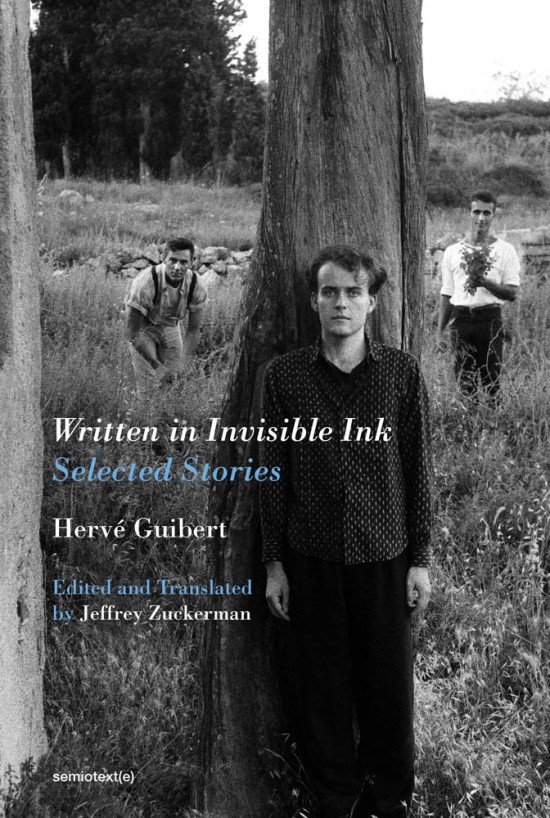
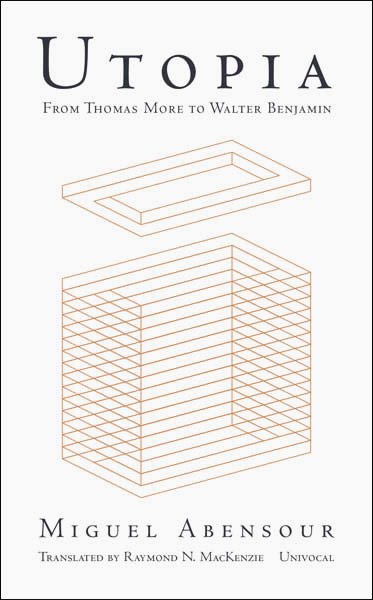
  • Hubris and Heteronomy: A Review of Lessons in Secular Criticism

    Hubris and Heteronomy: A Review of Lessons in Secular Criticism

    A Review of Stathis Gourgouris’s Lessons in Secular Criticism

    by Jason Stevens

    In Spring 2013, boundary 2 published a special issue, Antinomies of the Postsecular, which assessed the so-called “turn to religion” in the humanities and social sciences. Under the movement term “postsecularism,” this academic turn to religion, commends itself as a necessary response to “the return of religion” as a social and political force in contemporary life. Whether such a “return” has actually occurred and what is at stake in making this assertion was the subject of b2’s special issue. The goal of the contributors to Antinomies of the Postsecular, as editor Aamir Mufti explained in his introduction, was to expose “the internal conceptual incoherence” of postsecularism as “an emergent orthodoxy” and to question the “political affiliations” of secularism’s critics, as revealed “by their treatment of modern religiosity” (3, 4).

    One major source of incoherence is postsecularism’s account of secularization as a closed process with an expiration date for religion. By this misreading of Weber, to cite one of postsecularism’s bugbears, secularization is an abject failure. The global persistence of religion, which b2’s issue acknowledges as a neutral historical fact, is mistakenly interpreted as a resurgence or revival pressing up from cultures in resistance to secularism. The latter is conceived as an anti-popular and imperialistic instrument of domination, having its sources in European Enlightenment and the hubris of Western reason. Genealogical critiques of Enlightenment/secularism add to the irony of secularization’s alleged failure by detecting ghosted forms of “the sacred,” having Christian derivation, within reason’s self-understanding and within the liberal political imaginaries that rationalism underwrites. Reason is indebted to that which it disavows and tries to sequester; it was doomed to misprize the intimate entanglement of religion with culture and politics. Reacting to this misbegotten rule of reason, postsecularists resort to “culturalism”: shielding religion from external judgment by defending it as an expression of profoundly rooted local sensibilities (or, in more Foucauldian language, “practices” and “discourses”) buffering subjectivities against modernizing deracination and disciplinary schemes. Post-secularism’s attack on the ways that the Western liberal states have inscribed and bounded religion(s) thus frames these problems, which are certainly worthy of address, such that the secular is undermined as a source of analytical questioning while religion is insulated as a source of identity, filiation, and empowerment. Whatever the merits of this understanding of “the return to religion” – b2’s contributors found few – the conclusions that it reaches align post-secularism with some strange bedfellows: the anti-secular positions of religious fundamentalisms and conservative political theologies as well as those of religiously inflected liberation movements. Post-secularists may not seek some of these political affiliations and may even find them undesirable in many particulars, but their reading of modernity’s ailments finds enemies in common. Proponents of skepticism and intellectual consensus, for example, can find themselves on the defensive because they have the effrontery to throw acids on a people’s traditional beliefs.

    Stathis Gourgouris, one of the scholars featured in Antinomies of the Postsecular, has elaborated his case against postsecularism in Lessons in Secular Criticism (Fordham, 2013), the first of a planned triptych that will include The Perils of the One and Nothing Sacred. Professor of Comparative Literature and Director of the Institute for the Comparative Literature and Society at Columbia University, Gourgouris comes to this project well-equipped by his previous works, the books Dream Nation: Enlightenment, Colonization, and the Institution of Modern Greece (Stanford 1996), Does Literature Think? Literature as Theory for an Antimythical Era (Stanford, 2003), Freud and Fundamentalism (Fordham 2010); his translations of sociologist Cornelius Castoriadis (who is an intellectual touchstone for Gourgouris in this book); his two essays for Antinomies of the Post-Secular, one of which, “Why I Am Not a Post-Secularist,” is reproduced here; and his heated debate with Saba Mahmood in The Immanent Frame, which was one of the highlights of the on-line journal’s 2008 exchange, “Is Critique Secular?”

    lesson in Secular Criticism

    The “secular criticism” in Gourgouris’s title has its provenance in Edward Said’s The World, the Text, and the Critic (1983), and his set of “lessons” (in the post-structuralist sense of the leçon, or ceaselessly thinking reflexively) can be seen as extending b2’s ongoing task of theorizing what Said meant by his conjoining of “secular” and “critique.” For Gourgouris, the two are inextricable, the first in its worldly orientation making possible the articulation of the second. Secular criticism is “an experimental, often interrogative practice, alert to contingencies and skeptical toward whatever escapes the worldly”; particularly, it is skeptical toward any notion of “authority that is assumed to emerge from elsewhere,” toward any knowledge “presented as sovereign, unmarked by whatever social-historical institution actually possesses it” (13, 64, xiv). These knowledges include discourses of secularism that would make any legal-political boundary between religion and the state rest on a metaphysical distinction between the secular and the religious wrongly conceived as essences. This is Gourgouris’s key dialectical movie: to preserve the secular as a practice and as “a space” that makes the practice possible, it must be defined over and beyond the limitations imposed on it by both academic post-secularism and secularism as an institutional power.

    Lessons is organized into six chapters, the first half breaking down flawed conceptions of the secular and the second half building Gourgouris’ case that secular criticism is necessary if we are to imagine more democratic societies than we presently know. Chapter One, “The Poiein of Secular Criticism,” disputes anthropologist Talal Asad’s effort to draw a lineage for the notion of critique that traces it to Platonic and Christian traditions. Asad discovers in critique a displaced religious attitude: a quest after and veneration of the Truth, abstracted from an image of God but still bearing the imprint of monotheism, for the Truth of the critic is unalterable, inalienable, and singular (8). In other words, Said’s fearless intellectual inherits a practice of thinking made possible by religious/mystical modes of contemplation and rigorous ascesis of the subjective. For Gourgouris, the irony Asad relishes in this situation is willfully produced by his genealogy, which does not so much trace continuities as force analogies between worldly criticism and a “theological desire.” For the analogy to function, it requires a representation of “secular” criticism (Asad would effectively put Said’s adjective in scare quotes) as the effort to clear man’s thinking for the revelation of “a hypergood.”

    Gourgouris instead sees critique as an activity like poiesis. Here Gourgouris is returning in capsule form to the theory of poetics that he develops at length in Does Literature Think? In that work, through meticulous close readings of Sophocles, Flaubert, Benjamin, Kafka, Celan, Genet, and DeLillo, Gourgouris models poesis as a unique kind of cognition that requires the making of things not thought before, and that in making these things also unmakes what is given: “to form is to make form happen, to change form (including one’s own)”(11). Poiesis is a making of the new and unmaking of the known materials of society (discourses, images, narratives) that potentiates far-reaching self-alteration: “things that may indeed appear to be impossible in the present time . . . cannot be said to be generically impossible, impossible for all time” (26). As Gourgouris proceeds, poiesis is valuable because its most sophisticated artistic products dramatize what critique also endeavors to enact: autonomy (auto-nomos), understood here not as reason’s free submission to “the hypergood,” but as the questioning, historicizing, and pluralizing of the authorities (epistemological, political) to which self-altering subjects give only provisional consent.

    In trying to define secular criticism away from Said, Asad erroneously conceives it as a quest after a transcendental. The uncovered Truth, in this conceptualization, becomes a law given to the self from elsewhere, like a command from the almighty. In Gourgouris’s estimation, Asad makes the critic’s relation to reason heteronomous. Heteronomy, which receives greater elaboration in Chapter Four, is both a structure of decision and a state of alienation. In contrast to autonomy, heteronomy describes a structure in which “the law” (the reason for deciding) is given externally, from the other. For Gourgouris, all law is self-generated out of the social imaginaries of existing communities. Heteronomy therefore cannot exist except in a state where the law has been othered, occulted in a beyond that is made more real, more authoritative in being both beyond and more real, than the humble state in which men direct their own affairs. Whenever humans sever themselves from this worldly state of decision-making and institute an absolute other for sanctioning what they do, they have created a heteronomous structure. Under the self-alienated conditions of heteronomy, decisions take the form of a command/obedience structure, in which one listens rather than questions. Any transcendental is, intrinsically, something that commands, even though it is produced by the humans who obey it.

    Having countered Asad’s attempt to impose a heteronomous structure on critique, Gourgouris’s second chapter proceeds to ferret out the transcendental in secularism. By the latter, Gourgouris refers to an institutional term representing “a range of prospects in the exercise of power,” particularly as pertains to state mechanisms (28-29). A priori and dogmatic substantiations of secularism Gourgouris deems “metaphysical,” and this adjective functions similarly to “transcendental” in the book’s proliferative terminology. However, there is a subtle reason for the differentiation that proves important. The “metaphysical” ends up being the name for any non-theistic statement of transcendental first principles; it designates whatever is taken to be an incontestable foundation, without confounding the notional foundation with the sacred of theology or religion (29). A metaphysic and a divine law are each, in application, heteronomous, but the former is “a set of principles that posit themselves independently of historical reality” rather than something held sacred that eternal God has posited (30). It is crucial for Gourgouris to provide these dual definitions, for his opponents, Talal Asad and anthropologist Saba Mahmood , discern secularism’s metaphysical layers only to theologize them for the purpose of revealing modernity’s disavowed religious substrata: “It is one thing to speak of the metaphysics of secularism and another to equate secularism with religion” (34).

    An example of one of the “metaphysics” on which secularism rests would be the pre-social individual theorized by classical liberalism. It is the sanctity of this individual, god-like in his agency, his clarity, and his identity with himself, that secularism is often said to protect from religious intolerance. In contrast, Gourgouris sees this figure of bourgeois enlightenment caught up in the self-altering forces unleashed by a still ongoing process of secularization. The form of autonomy that secularization bares for view is thoroughly social in character (44). To be autonomous is not to give oneself the law, but, as citizens, to give the law to ourselves. It is as social members that we decide what the law is; to be autonomous is to not only to give ourselves the law, but also to recognize ourselves interrogating the law together. Catholic philosopher Charles Taylor, who emerges as another opponent in Gourgouris’ Chapter Two (titled “De-Transcendentalizing the Secular”), has also famously argued against the reified idea of the individual in classical liberalism. However, he believes that our modern social imaginaries have built such protective carapaces around the self that we have difficulty experiencing an outside to its liberal representation. In well-known formulations, he has described the modern self as too “buffered” against any motivations that can be confused with enchantment. As a result, modern man – for all his sense of self-mastery – is actually dispossessed, haunted by a God-reference that has been voided of transcendence, though modern man still needs the transformational openness that God once provided. In other words, Taylor does not theologize the secular, as do Asad and Mahmood, but he does see it as impoverished. Gourgouris objects to “Taylor’s whole framework of valuation and determination,” and he pivots to Taylor’s A Secular Age (2007) for the purpose of redefining alterity without resort to a “heteronomous” position outside history (43). Taylor is wrong to say that moderns need transcendence in order to experience a liberating otherness. Recalling his theory of poiesis, Gourgoruis argues that the otherness is something created by the self in its working upon the materials it finds within the world. This otherness is “immanent,” emerging from within autonomy, and involves no inrushing from a space beyond history: “The immanence of autonomy does not mean closure in a purely self-referential or self-sufficient signification . . . . Autonomy is nonsensical as a permanent state, as the property of a thing, which is why it has nothing to do with the imaginary of self-possession or the legacy of possessive individualism that is the crux of liberal law” (44). That Taylor cannot see the possibility of human satisfaction in autonomous self-alteration, whether achieved via politics, art, or eros, is a measure of his melancholic appraisal of the worldly: “Taylor cannot fathom that fullness, total plenitude and fulfillment, can be found in the finite and the fragile, in the ephemeral and the mortal, in the uncertain and the passing” (41). It is Gourgouris’ task, in his third chapter, “Why I Am Not a Post-Secularist,” to defend the sufficiency of the finite and the mortal to answer human striving and imagining.

    “I am not a post-secularist,” he states with bald conviction, “because I am an atheist.” This first line begins the most eloquent of all the book’s chapters. Within its concentrated length, Gourgouris not only provides a vigorous case for atheism against its cultured despisers, but also builds his case that only a secular space, oriented toward a future in which the distinction theism/atheism will no longer matter, can produce the conditions for radical democratic politics to thrive. Since the second point is one that Gourgouris will amplify in subsequent chapters, I will also defer addressing it here and focus for the time being on his case for atheism. In marked contrast to the New Atheists, Gourgouris does not bother with demolishing proofs of God or citing evidence pointing up the absurdity of biblical accounts of creation or belief in miracles. To quote Wallace Stevens, Gourgouris plainly looks out from a horizon in which the gods are “dispelled in mid-air and dissolve[d] like clouds,” and makes “no cry for their return.” God’s death is a Christian idea. Outside the Christian imaginary, where Gourgouris places himself, the de-sacralization of society inflicts no melancholia – no divine haunting, absence, or silence, none of the governing motifs of writings that have seen in modernity a state of ruination. At the same time, there is nothing heroic in Gourgouris’s atheism either, for the question of God’s existence is no great either-or in his thought. The question is “irrelevant” to the secular consciousness he wishes others to imagine with him: “It would mean to live not as if God does not exist but to live as if God does not matter” (69). Rather than a ruined world doddering from shorn foundations, Gourgouris finds in a terrene of finite things, and ineluctable death, much cause for “wonder.” The word, connecting philosophy and myth in Greek, links aesthetic pleasure and speculation in Gourgouris’s usage; the experience of wonder felt in the human encounter with what is new and extraordinary discredits miracles, for it leads to questioning. Furthermore, it replaces the need for such beliefs with the pleasure taken in curiosity and in creative acts of pattern-making that give a feeling of intelligibility to reality. Reaching back to the Greeks as a touchstone, Gourgouris treats hubris as a passion imperceptibly sliding behind wonder that he condones in advance of its appearance as a specifiable motive. Hubris is conventionally the other to Truth, but Gourgouris prefers its risks to heteronomy (76). Still, there is a tragic element in Gourgouris’ account of a desacralized world. It stems not, as in pessimistic readings of Greek tragedy, from the defiance of a transcendental order. It is the “irredeemably sad” recognition that autonomy is possible only under conditions of impermanence. History is radically open-ended and shaped solely by human self-determination, and that very limitlessness is not circumscribed by death, but extended by it, for death denaturalizes all humanly constructed boundaries (106). The lucidity for which Gourgouris calls in these passages recalls Camus’s tragic humanism, except that Gourgouris’ never passes through despair.
    Atheism, then, is tragic autonomy, attuned to the wonder as well as the mutability of finite existence and undaunted by the Christian proposition of the death of God. While I agree with Gourgouris that Christianity makes God’s death central to salvation history, I do not believe that he accurately represents this event’s theological significance within orthodox belief. Moreover, I believe that he unnecessarily dualizes the Christian and Greek imaginaries.

    To take up the first objection, Gourgouris mistakenly summarizes dogma as such: “God dies so that he may be resurrected, simple as that. The instrumental outcome is all that matters (the abolition of sin happens with the Resurrection, not Crucifixion), and the reality of God’s death – God’s suicide, to be exact, vanishes behind the interminable ritual repetition of a mythical spectacle” (73). This misconstrues how atonement is supposed to be effectuated. Paul, Anselm, Athanasius are touchstones here, but no systematic Christian theologian dissociates the Atonement from the Crucifixion or argues that redemption only becomes possible with the Resurrection. The Crucifixion always entails the Resurrection, and the Resurrection always implies the Crucifixion, and they always work together to accomplish salvation. Certainly in the doctrine of Atonement there are relative degrees of emphasis between the Western and Eastern Churches, and between Protestantism, Catholicism, and Eastern Orthodoxy. In Eastern Orthodoxy, there are many more icons of the Resurrection, as there is a greater stress on deification, or theosis, in the teachings of the Byzantine and Russian churches. It is interesting, further, to compare the iconographical emphasis of the Orthodox (focus on the risen and transfigured Christ, as in the Pantocrator icon) versus Catholics (focus on the suffering and broken Christ) versus Protestants (typically, an empty cross, which combines the meanings of both the former). Nonetheless, in each tradition, soteriology depends on the joint significance of the Crucifixion and the Resurrection: they work in tandem, never in isolation or separated by time. I have continued on this matter at some length not because it undermines Gourgouris’s case for atheism – it does not – but because he handles Christian thought somewhat ham-fistedly. Occasionally, his animus is wittily abrasive, as in his hilariously irreverent description of Christ as a reanimated zombie; but he can ride roughshod over subtleties and sometimes make neglectful over-generalizations.

    This leads me to the second objection. Gourgouris opposes the Christian imaginary to the Greek in a manner that needlessly dualizes them and downplays the practice of religion among the ancient Greeks. Part of the problem here stems from Gourgouris’s tendency to celebrate what was thinkable in the Greek imaginary versus what is typical of the Christian imaginary. The “thinkable” here is an idea that I am interpolating from Castoriadis, whose own reflections on the ancient Greeks are clearly an influence on Gourgouris. Put baldly, the thinkable refers to what is possible to formulate and speak out of a social imaginary at given point and time in its history. The thinkable need not be typical and, indeed, may be inassimilable to conventional, inherited thought. The Christian imaginary Gourgouris sees in broad strokes: the mystification of authority, the darkening of antiquity, the denial of death, heteronomous dogma. In the Greek imaginary, contrastingly, Gourgouris finds the capacity, not everywhere actualized but available, for wonder, lucidity, democracy, and autonomy. This sampling of the ancient Greeks accentuates their modernity, but it occludes quite a bit that would destabilize Gourgouris’ binary of enlightened Greek versus regressive Christian. As E. R. Dodds reminded us some time ago in his classic, The Greeks and the Irrational, religion was robust even in the age of democracy and the great tragedians. Beliefs persisted in daemons, magic, soothsaying, oracles, and mystery cults. Animals were still sacrificed to the gods regularly as part of the civic calendar in Athens, and citizens made use of sacred images in public places of worship. Festivals, prayers, and processions still took place. Despite secularization among the philosophes, new religions like Orphism and Pythagoreanism developed in the 4th century, and Socrates was executed, among other reasons, for impiety. Or does Gourgouris limit his version of the Greek imaginary to the elements of modernity in the Classical Age and the Ionian Enlightenment?

    The answer comes indirectly through Chapter Four, which connects poiesis and autonomy, themes of chapters 1-3, to ontology and politics, which will cascade into the book’s fifth and sixth chapters. The modernity of the Greek imaginary lies not in its rationalism, but in the polis and in the arts, where autonomy was a self-consciousness project. The project did not require the disenchantment of myth, as superstition or error, so much as its appropriation for poetic self-creation, as Gourgouris makes clear in Does Literature Think? With threads to this earlier book, Chapters Four and Five of Lessons in Secular Criticism, “Confronting Heteronomy” and “The Void Occupied Unconcealed,” go to a fascinating place conceptually, a rethinking of idolatry that extends its domain to transcendence, even if Gourgouris gets the reader there by way of a disputable theory about the operation of myth on the Athenian stage. The claims that he makes for an expanded sense of idolatry, as distinguished from myth, prepare for the criticism that he mounts of socialist philosopher Claude Lefort’s famous essay on democracy, “The Persistence of the Theologico-Political?” (1980).

    In Gourgouris’s reading of classical Greek theater, myths were not only the narrative sources for tragedy, but also the stuff for mythographic reflection performed by the dramas. Myth, as he describes it in Does Literature Think? (2003), was a material means for Greek dramatists and their public audiences to reflect on the groundlessness of human creation (the making and unmaking of forms in history) where there is no divine anthropogony to teleologize nomos. In “Confronting Heteronomy,” he imports Castoriadis’s ontology to describe what both take to be the Greeks’ insight into the chaos of Being against which humans generate their societies and authorize them. Being was, is, and always will be disunited (105). Its differentiation “permeates all existence and thus precipitates the conditions for human beings to realize that (1) there is a necessity for nomos, for otherwise life is defeated by its own meaninglessness; and (2) this necessity does not confine humans to a de facto subjugation to nomos because it opens the way for them to create meaning and the frameworks of meaning” (106). Societies, however always occlude the generative chaos against which humans give form to their lives. The sacred’s chief function, in fact, is to mask the chaos of Being. The sacred is fundamentally distinguished from mythic imagining as Gourgouris defines it in Does Literature Think? Whereas myth is metapoetic, the sacred is the ossification of myth and its fusion with religious authority. Whereas myth tarries fearlessly with non-being as it produces figures of self-othering, the sacred throws up idols. Gourgouris does not except iconoclastic monotheisms from the accusation of idolatry; the more transcendental the image of the divine, the more cunning an idol it is. A complete image ban still produces an idol because its transforms non-representability into a sign of a latent absolute. To conceptualize idolatry this way is to sap the power of both blasphemy and iconoclasm as these have been practiced in Islam, Judaism, and Christianity. Monotheistic religions authenticate themselves by producing counter-sacreds whose images they can then desacralize. Applying Gourgouris’ logic, they are deflecting from their own cores of idolatry: in the religion of the heretic, they show the chaos of Being in order to make necessary the transcendental structure that conceals it again.

    Nationalism and statism are also forms of idolatry that certify themselves with religious motifs and images. In turning to Lefort’s widely cited 1980 essay, Gourgouris intends to rescue its insights into the groundlessness of democracy while criticizing its pessimistic account of secularization. Gourgouris’s goal is to stave off post-secularist agendas that have seized on “The Persistence of the Theologico-Political?” – just as they have Nazi jurist Carl Schmitt’s Political Theology – to delineate a theological desire within democracy that yearns for the symbolic structure of Christianity. Lefort observes a rupture between democratic political imaginaries and those of pre-modern Europe. In the latter, the state was symbolized by the king, a God-man having two bodies, one earthly/mortal and the other supernatural/immortal. In this corporatist representation, the state was embodied as the sovereign One: an infallible, omnipotent unity transcending the political subjects who die for it. The theological analog of this symbolism, of course, was the Incarnation. Democracies cannot sustain the corporatist representation of the state since the dēmos – the multitude – is sovereign and the autonomous practice of democratic politics decenters power, institutionalizes conflict. In the revolutionary moment, the markers of unity and certainty in the old imaginary dissolve, leaving democracy poised generatively upon the void between the real and the timeless One, which is now seen for the phantasm that it always was. Gourgouris affirms Lefort’s central insight that democracy “is the historical regime whose radical characteristic is to stage its internal conflicts openly for itself” in a space of power that is denuded of “the symbolic constitution of authority because, quite literally, there is no body in power” (Lessons 132). However, he objects when Lefort tries to explain why post-revolutionary societies revert to some form of the pre-modern political imaginary, in which power is once again authenticated by its mediating relation, in the body of the One, to a ground externalized as something sacred or metaphysical. According to Lefort, the tendency within democracies to become fissiparous and the horror of the void itself bring about a crisis that partially re-sacralizes politics: “Lefort seems to entertain the idea of a sort of recurrent desecularization, a sort of reincarnation of the religious in the midst of the void” (137, 138). In the West, the form these representational metempsychoses take is derivative from the Christian Incarnation, since this is the exemplary model from the past. Gourgouris intervenes here to say that what Lefort describes is not the recovery of any specifically Christian content. It is simply a reversion to idolatry, the old desire to conceal the “condition of radical uncertainty” that is our human lot (140). In place of the idol of the One, he proposes a continual disruption of symbolic representation in favor of “the uninterrupted visibility of the dēmos,” revealed again and again in all of its “multiplicity” and “internal antagonism” (143).

    Refugees in front of the ruins of the temple of Theseus (1922)
    Refugees in front of the ruins of the temple of Theseus (1922)

    Gourgouris thus calls for a poetic intervention in the symbolic field that will alter inherited political imaginaries so that the dēmos can see and reflect on its self-constitutive role, its struggle internally to find a political ground for renewed consent to the law that it gives itself in an undetermined historical process. To construct and sustain the form of “governmentality” that Gourgouris here imagines would require not only novel institutions but also the reconfiguration of mass media technologies and an end to entrenched patterns of consumer addiction. He follows the articulation of this mammoth task with a sixth chapter, “Responding to the Deregulation of the Political,” that moves from the analysis of post-secularism to a meditation on the promise of the recent global assembly movements, such as Occupy, the Arab Spring in the Middle East, and the Indignant Citizens Movement in Spain and Greece. These groups, we are to understand, enact the politics of secular criticism through their withdrawal of consent to neo-liberal capital and their demand instead for direct democracy.
    Gourgouris’s hopeful speculations on the world movement for democracy return the text to his advocacy for “a politics of wonder,” a new politics combining skepticism and utopia for which atheism (as he defines it in Chapter 3) is best-fitted (Lessons 83). Crucially, Gourgouris’s atheism imagines its own obsolescence at a point beyond which the question of belief and quarrels over the secular versus the religious will have become irrelevant to the ways that people live with each other. In the meantime, however, it aims, in the mode of secular critique, to overthrow both the sacred of religion and dogmatic appeals to Reason in order to attack heteronomy in every guise. Only autonomy (as critique, poiesis, law-making, and self-instituting imaginary) can produce democracy as yet untried. Though Gourgouris, to his great credit, takes blinkered secularism as well as religion as threats to autonomy, I would like to turn, before closing, to his case that religion’s deference to divine power withers emancipatory politics.

    To review, Gourgouris argues that religion restricts decision-making to a command-obedience structure in which the believer defers to a heteronomous authority. This power might be embodied in a hieratic office or a disembodied, transcendent and unrepresentable. Although Gourgouris tends to speak of religion categorically, he seems to object particularly to Abrahamic monotheisms, in which the language of sovereign God and redeemed subject, whether taken metaphorically or literally, implies a horizon of non-questioning and fealty to belief. (One wonders how successfully Gourgouris could apply the command-obedience model to polytheistic religions, like Shinto or Hindu, non-theistic religions like Buddhism, or pantheistic ones like Taoism.) Gourgouris does not exempt liberation theologies from his criticism of the command-obedience structure even though they may be aligned with populist or anti-imperialist movements. In a tributary of his quarrel with Saba Mahmood in Chapter Two, for example, he states: “I would never doubt, for instance, the revolutionary inspiration that liberation theology once gave to certain oppressed societies . . . . But as I have said several times, this does not mean that, come postinsurgency time, the time of self-determination, a politics based on religious command can institute modes of social autonomy – at least in known history this has never happened”(49-50). In the last instance, the religious “command” prevents people from seeing that they alone give authorization to their self-determination. Gourgouris follows this characterization with an arresting statement: “This is not to say, I repeat, that emancipatory politics cannot emerge from within a religious language. But it is to say that if it does, it must place this very language in question; it must deauthorize this language as command” (50). This remark, suggesting how religious language might revise itself to become viable for Gourgouris’s politics, comes as a surprise given the force of his secular convictions, but it is worth following up.

    Let’s take for example James Cone’s God of the Oppressed, a classic of liberation theology. I do not intend it to be representative of its tradition, but illustrative of the incoherence that emerges when old language is unimaginatively combined with a revolutionary-reform message. Jostling with each other, we see the following formulations: “Divine freedom . . . . expresses God’s will to be in relation to creatures in the social context of their striving for the fulfillment of humanity” (175); “[H]uman beings are free only when that freedom is grounded in divine revelation” (182); “God is the sovereign ruler and nothing can thwart God’s will to liberate the oppressed”(196). On the one hand, Cone describes God entering history to strive alongside the poor and the disenfranchised in their struggle with entrenched, monopolized power and its ideology; God joins in all aspects of this conflict, which entails a prophetic critique of Christendom’s complicity in racism and social inequality. On the other hand, God is pictured as an omnipotent sovereign who controls providential history and on whom human freedom depends for its realization. Gourgouris might quarrel with both sides of Cone’s formulation, but he would most certainly object to the second, and rightly so given his premises. The self-interrogative act of self-determination is seemingly annulled by language that places sovereignty with God, here an absolute power that transcends the merely earthly powers of the oppressor. One could say apologetically that Cone is simply using inherited biblical language as inspired rhetoric to buttress an unswerving ethical commitment, but this rhetorical reading not only naturalizes what is supernatural in Cone’s text, it also preserves the objectionable notion that commitment (in this case, to justice) requires certainty of such sustained subjective intensity that, if necessary, it should be produced by belief in an unassailable authority. It is precisely the power to generate “subjective normative intensities,” or the Jamesian “will-to-believe,” that fashionably anti-liberal critics like Stanley Fish prize in religions and find lacking in “weak” or “indifferent” secularism. However, the religious command, in producing the strong, insistent form of belief that seems so attractive to those who see uncertainty as an impediment to commitment, can also become a mechanism for silencing internal dissent and steeling belief in the urgency of the belief. Such a mindset one can hardly imagine coping with the social heterogeneity that any democratic politics worthy of the name must include in its reflection.

    I am not convinced, as Gourgouris seems to be, that monotheisms always produce the heteronomous subject that I have just described, but history indicates that the second is highly correlated with the first, especially when the religion – be it Christian, Jewish, or Muslim in identity – draws its impetus from the refusal of modernization. Taking seriously the impediments to autonomy that Gourgouris finds in the mindset fostered by (monotheistic) religious language, it is worth, for the sake of secular criticism, opening a conversation with theologies that have intentionally weakened the modeling of the divine and human relationship on sovereign-to-subject. There is the rich yet unfairly maligned tradition of theological modernism, which augmented certain trends in religious liberalism toward immanence. Contemporary with the end of the modernist movement, Dietrich Bonhoeffer, a pastor of the anti-Nazi Confessing Church in Germany, spent the months in prison prior to his execution writing about “a world come of age,” a world in which man had won “autonomy,” a world that did not need false religious obligations or inhibitions, that did not need a God conceived as the beyond of our cognitive faculties. The kind of command-obedience structure that Gourgouris calls heteronomous Bonhoeffer, in his prison letters, denounces as “phariseeism” and “religious methodism” (Letters 362). Cognizant also of the authoritarian impulses in his own religious tradition, Bonhoeffer feared the cultural temptation in the West to make a leap back toward “the heteronomy” of the Middle Ages (Letters 360). Rather than submit to this temptation himself, Bonhoeffer stresses in the letters not God as “sovereign” but God as “sufferer,” for only this God could enter a world that no longer had need of an omnipotent being that explains everything and wills everything (361). More recently, the varieties of “process theology,” “weak theology,” “secular theology,” and “a/theology” represented in the figures of David Ray Griffin, James Cobb, James Caputo, and Mark C. Taylor have worked in distinct ways to enlarge space for human agency and response while smashing as idols religious and metaphysical certitudes. Influenced by the ontology of Alfred North Whitehead, Griffin and Cobb deny divine perfection and truth, and emphasize God’s temporality as well as man’s. Bridging the post-liberal theologies of Bonhoeffer and Paul Tillich (who famously urged his contemporaries to be unafraid to let “the God of theism” disappear “into the anxiety of doubt”) and Derridean post-structuralism’s sensitivity to contingency and context, Caputo defines God not as a person but as an ever breaking “event” that awakens human desire for something namelessly undeconstructible and always yet to come; this event relativizes all the logics and structures of the world, including those of religion. Taylor describes a nearly featureless God that animates networks of creative processes in nature and culture, structuring and de-structuring them according to “no mind or Logos,” but coming restlessly to consciousness in humans; this idea of the divine cannot be the object of faith, the metaphysical foundation of decision, or the limit to human interpretation (After God 346). Like Caputo, Taylor wants to transform the language of religion and not only attach old language to democratic causes. I should mention that some of these thinkers begin from premises (man as homo religiosus, the death of god as ongoing event, the spiritual underpinnings of secularism) against which Gourgouris has compellingly raised his voice, but they have shown greater capacity for dialogue, self-criticism, and nimbleness of thought than culturalist proponents of the post-secular.

    Modish attention to demographic trends pointing up the statistical vitality of religion should not guarantee respect for belief or earn providential auguries of religion’s imperishability. One hundred years from now our world may be substantially more secular than it is now and atheism a preferential option for most of the population. Yet, in our contemporary conjuncture, it would be unnecessary and perhaps even detrimental to exclude from one’s theorization of a new democratic politics the religious liberals, humanists, progressives, and liberationists who could be its allies in the struggle against “the scorched earth policies of global financial capitalism” (xviii). Though with deep reservations, Gourgouris hints that it might be possible for people with a variety of religious as well as secular philosophical views to work toward common political goals and values so long as they avoid heteronomous formulations of belief. His book would have benefitted from taking into account already existing resources in theology for weakening the sovereign-to-subject language of traditional god talk. Notwithstanding this omission and some distortions in his dualizing of Greeks and Christians, he makes an essential intervention in the post-secularism debates by pointing out, through a range of deft responses to key texts, the laziness of intellectuals’ defenses of religious self-righteousness and declarations of secularization’s failure. More incisively still, he exposes the fallacy of conflating secular criticism with institutionalized secularism, and of tethering the latter to theology. Anyone seeking to comprehend the high stakes in the so-called “turn to religion” will find Lessons in Secular Criticism a most bracing read.

    ________

    Jason Stevens has taught at Harvard University and the University of Maryland, Baltimore County, and he has been a fellow of the National Humanities Center (Durham, NC). His work focuses on mid-late 20th century American literature and U. S. cultural and intellectual history, with emphases on the intersections of fiction, popular culture, religion, and ethnicity. His first book was God-Fearing and Free: A Spiritual History of America’s Cold War (Harvard University Press 2010). His writings have also appeared in boundary 2, American Literature, Literature/Film Quarterly, and The Immanent Frame. In 2014-2015, he is a fellow at the Center for the Humanities, University of Pittsburgh, where he has been completing a book project on American film noir and making preparations for the international conference, “Protestantism on Screen” (Wittenberg, June 2015), of which he is co-sponsor.

    _______

    Notes

  • Abecedarium Anthology: The Cambridge Introduction to Edward W. Said

    Abecedarium Anthology: The Cambridge Introduction to Edward W. Said

    a review by Reshmi Mukherjee
    ~
    Connor McCarthy presents a crisp and detailed overview of Edward W. Said’s life, scholarship, interdisciplinary training, and critical thought processes, for the novice readers of his works. Additionally, the use of simple language and lucid sentence construction has the potential to attract audiences from non-literary backgrounds as well. These readers may be interested in knowing what Michael Sprinker called “the very ideal of the cosmopolitan intellectual that remains so central to the humanities’ self-image to this day.”1 Therefore this book is unlike most critical enquiry of Said’s works in that it caters to readers across disciplinary boundaries.

    The content of the book is not new but the form, narrative technique, is Saidian in nature. McCarthy, an ardent critic of Said, analyzes his written works in relation to “the events and circumstances entailed by and expressed in it.”2 Illustrating the relationship of a critic to the text, as explained in Said’s The World, the Text, and the Critic, McCarthy reads Said’s literary, political, and critical works as one continuous narrative, and in relation to the key terms of filiation and affiliation. By filiation, Said means the writer’s natural and organic connection by “inherited location.” And affiliation is a “network of relationships that human beings make consciously […] often to replace the loss of filiative relations in modern society.”3 A writer’s work, the text, therefore is a conglomeration of both filiative and affiliative connections hence, a “worldly” phenomenon. Accordingly, McCarthy situates Said’s identity as a scholar and humanist as intrinsically connected to his socio-political and cultural reality.

    The book is divided into four chapters: 1) Introduction, life, work, 2) Influences, 3) Works, and 4) Reception. The introduction covers the itinerary of Said’s life including the obsequies paid after his death on 25th September 2003. In so doing McCarthy gives an insight to the complex historical, and filial conjuncture that shaped Said’s persona including his anxiety of being exiled and nation-less, a sentiment that is echoed in his literary works, critical thinking, and political engagement with the Palestinian cause. Alongside, this section pays special attention to Said’s childhood and adolescence as oscillating between different emotional conditions. Said was vexed with contrasting but demanding parents, a constant need to please them, displacement and relocation from Jerusalem to Cairo and then to the United States, and negotiating the paradoxical meaning of his name, which he called “foolishly English.” Parts of this section reiterate Said’s memoir Out of Place but all the information is relevant for readers to understand Said’s “innate sense of a divided but reflexive self.4

    Jean-Léon_Gérôme_003

    The second chapter explains the polarized opinions about Said’s academic work. In so doing, McCarthy helps the readers understand Said’s works and his thinking processes. Reviewing the sheer volume and depth of Said’s scholarship, detailing the different schools of thought like Romance philology, Marxism, phenomenology, structuralism, poststructuralism, musicology etc. that influenced him, McCarthy notes that Said did not accept all arguments unconditionally. While Said was influenced by these discourses, he questioned their methodology and application in the real world, while resisting any easy disciplinary categorization of his works. In particular, McCarthy’s reading focuses on Said’s complex relationships with Western Marxist tradition and post-structuralism. While Said was critical of Marxism’s rigid adherence to putatively radical theoretical position and inverse conservatism, he drew inspiration from Marxists George Lukacs, Theodre Adorno, and Antonio Gramsci. Their concepts of “methodological trap,” “absolute resistance to reification and the alienation of consciousness under industrial capitalism,” and “hegemony” continued to inspire his work till the very end.5 His relationship with Adorno, especially towards the end of his life, became more of an aesthetic experience, while Gramsci continued to influence his theoretical acumen. This section in the book is theoretically appealing as it epitomizes one of the basic arguments in Orientalism. It explains Said’s idea of the cultural creation of hegemony via Gramsci’s sense of materiality of culture and ideas. For example, Said in Orientalism notes, “It is hegemony, or rather the result of cultural hegemony at work, that gives Orientalism… [its] durability and strength.”6 By “work” Said here refers to the political elite society, in the Gramscian sense of the term, which retains power by manipulating public opinion. McCarthy further exemplifies that Said was also enthused by Gramsci’s notion of the organic intellectual whose job it is to forge hegemony. Consequently, Said believed in his position as an organic/public intellectual and enabler of how new socio-political movements intervene in the public sphere.

    Like Gramsci, French poststructuralist Michel Foucault also influenced Said’s works. In fact Said was one of the “major mediators of Foucault’s thought into the American academy.”7 In Orientalism, Said explains the discursive use of power that shaped knowledge about the non-west, through Foucault’s theory of power and knowledge. Said defines knowledge as part of an underlying master-code or structure, and man is constituted via these discursive practices. However, in his later works, Said challenged Foucault’s notion of power in his 1984 commemorative essay on Foucault’s death “Michel Foucault,” and McCarthy focuses on that aspect in the third chapter.

    The second half of this chapter highlights two aspects of Said’s personality, those being his “dialectical and paradoxical” relationship with Joseph Conrad, and admiration and empathy for Erich Auerbach. His fascination for Conrad is so strong that he does not emphasize Conrad’s relationship with the empire; rather, he is interested in Conrad, the exiled intellectual and writer, whose life was full of unresolved tensions. The reason being, Conrad’s personal experience of exile, complex life choices, and lingering sense of alienation, echoed some of the problems that Said encountered as a writer. Said admired Auerbach for similar reasons and for writing Mimesis at the time of his exile from Europe. Auerbach’s exile, alienation, and loneliness coupled with his “profound knowledge” left a permanent impression on him. It is from Auerbach’s experience that Said negotiated his own pain of being in exile as a necessary process that enables critical thinking.

    The third chapter discusses Said’s select works in detail. It gives a fresh insight into pedagogical and methodological aspects of writing a text. McCarthy carefully unfolds Said’s theorization of text, critic, writer, discourse, power, knowledge, hegemony, as critical categories for analysis. In Beginnings, McCarthy explains, Said paid particular attention to the text, writer, and intellectual’s role in the public domain. Accordingly, the intentional production of meaning in the beginning of a text is argued as the most important function of a text. At this juncture in the text, to ratify Said’s position, McCarthy reiterates his life long commitment about connecting the writing of a text, a performative action, to its reality, and the intellectual’s role as a public persona.

    CLK339940

    In discussing Orientalism McCarthy elaborates Said’s analysis of western representation of the non-west via a hierarchical power structure that led to knowledge production about the other. However, the most essential aspect of McCarthy’s analysis here is his emphasis on Orientalism, not as a text on the Middle East but, as a discursive practice that, even if Said refused such compartmentalization while assessing the relevance of this book, changed the direction of postcolonial studies. The Question of Palestine is examined in continuation with Orientalism while the meaning of “Zionism from the Standpoint of its Victims” is discussed in great depth. McCarthy sheds light on the fact that Said is writing back to offer “an analysis of Zionism from a position” that was long silenced in accounts of “Whig history.” 8 This chapter explains the socio-political, historical, and economic reasons that led to the formation of Israel and explains Said’s statement “benefits for Jews and none for non-Jews in Palestine.” Despite Said’s scathing critique of Zionism, McCarthy directs the readers’ attention to the fact that The Question of Palestine does not delegitimize the Jews historical claim to Palestine. Rather, Said is opposed to the conditions for the fulfillment of this claim i.e. the dispossession of the Palestinian people. Therefore, he writes to remind the Zionists that their claim is intertwined with Palestinians and Palestinian history. McCarthy’s particular emphasis on this section from the book is relevant because it positions Said as an academic intellectual and human rights activist connecting the events with historical data, and not a “professor of terror” (as he was accused by Commentary magazine journalist Edward Alexander). The discussion on The World, the Text, and the Critic ends with Said’s criticism of Foucault’s theorization of power and discourse. In this segment, McCarthy mentions Said’s criticism of Foucault’s passive onto-phenomenological (how and why) questions about power, his ethnocentrism, and inability to explain why “the abrupt change [in power] occurs between one episteme and the next.”9

    The book’s final chapter notes the reception of Said’s text, Orientalism, among the Anglo-American academic scholars of postcolonial and culture studies. Even though this section begins with anthropologist James Clifford’s complex reading of Said’s use of “Foucauldian ideas in the service of his humanist, cosmopolitan project,” critical commentaries by doyens in these fields namely Paul Bové, Robert Young, and Aijaz Ahmed are the main focus.10 McCarthy notes both Bové’s and Young’s criticism is geared towards Said’s failure to effectively employ poststructuralist ideas and “carry them to their logical conclusion.”11 Bové’s critique of Orientalism is concerned with Said’s use of Foucault’s theory of power and not extending its use in the production of knowledge system. While he credits Said with a detailed picture of the voluntary and involuntary complicity of orientalism vis-à-vis imperialist power, Bové faults Said for failing to situate power within the “entire economy [where] both Orientalist and Saidian ‘oppositional’ work is produced.”12 In so doing, Bové sides with Foucault who argued against the intellectual’s role in revolutionary change. According to Foucault, institutions discursively shape intellectuals who are “already always hemmed in by and even complicit with power.”13 Said, however, believed in the intellectual’s social role and, while agreeing with Foucault’s theory of power, downplayed its relationship with knowledge that shaped prominent and institutionally powerful intellectuals. Therefore, Bové’s main critique of Orientalism is that, it is critical of power “but not critical enough.”14

    Robert Young’s criticism of Orientalism is based on Said’s theory against orientalist discourse and for an “alternative knowledge of the Orient.”15 Young argues, if the success of Orientalism lay in its strict “monopolization of linguistic codes to represent the Orient,” is it possible or desirable to have another form of knowledge system?16 If all knowledge is mitigated via a stringent power structure, will anti-Orientalist discourse not repeat the same mistake it wishes to castigate? By contrast, Marxist economist Aijjaz Ahmad takes a different position in his criticism of Orientalism. He has accused Said of first rethinking of history and second, using poststructuralism as a way to escape Marxist tradition. He compares poststructuralist anti-realism to fascist thinking and concludes that Said represents anti-humanist American scholarship that dominates the world today. It is connected and aids in the smooth functioning of “unprecedented imperialist consolidations of the present decade.”17 Therefore, Said, for Ahmad, is a native informant and Orientalism is a “crucial ideological wedge into [the Anglo-American academy] for Asian immigrant intellectuals.”18 McCarthy however, towards the end of this section, points out Young’s and Ahmad’s purposeful misreading of Orientalism. He reminds the readers about Said’s response to critics such as Young and stresses the fact that Orientalism is about “fragmenting, dissociating, dislocating, and decentering of the experiential terrain covered at present by universalizing historicism.”19 Said never intended it to be a book about the Orient or to construe an alternative history. In response to Ahmad, McCarthy faults Ahmad’s “polemical aggression” for clouding his argument, as McCarthy notes there is no historical evidence or sociological data to identify North American audience and readership of Orientalism.

    As mentioned earlier, McCarthy has painstakingly traced Edward Said’s life and intellectual journey. However, the only flaw in this book is the lack of literature on Said’s political engagement as part of the public intellectual’s ethical responsibility. Said’s scholarly contributions and academic position were closely related to his roles as a practicing member of multiple literary, critical, and political constituencies. Indeed, without mentioning this side of Said, his contribution to the world will remain half known. Gayatri Chakraborty Spivak, in an interview, has said that Edward Said was a Kantian Enlightened subject/scholar “who writes for all time and all people.”20 This is true because later in his life, and he has written about it in After the Last Sky, Said became deeply concerned with the Palestinian subaltern. He attempted to “change and form public opinion with well-researched commentary on political moves by involving highest level of political intervention and talented musicians in international collaboration.”21 Especially after the failure of the OSLO peace Said believed in other avenues to harbor a non-violent yet beneficial dialogue between Palestine and Israel. In 1997 he collaborated with Daniel Barenboim, the Israeli musician, and organized a musical concert in West Jerusalem. Said’s use of music to enable peace process between Palestine and Israel is worthy of mention because he believed that he real contribution of artists and philosophers is that they can change minds. Mentioning these aspects of Said’s public intellectual persona would have added to the richness of the book and provided a much wider spectrum of Said’s life.

    _____

    Reshmi Mukherjee (PhD. University of Illinois) is visiting assistant professor of English and interim-Director of Gender Studies at Boise State University. Her research and teaching interests include transnational feminisms, Anglophone literatures, Anglophone Arab fiction, Literature in translation [especially francophone literature], diasporic and exilic literatures, and subaltern theory. Her most recent publication is titled: “Living in Subalternity: The Becoming of the Subaltern in Bessie Head’s A Woman Alone, A Gesture of Belonging, and When Rain Clouds Gather.” It was published in the Journal of the African Literature Association, (JALA) Vol 7. No. 2, Spring 2014.

    _____

    Notes:

    1. Michael, Sprinker, “Introduction,” in Edward Said: A Critical Reader, edited by Michael Sprinker (Massachusetts:
    Blackwell Publisher, 1992), 1. Back to the essay

    2. Conor, McCarthy, The Cambridge Introduction to Edward Said (Cambridge: Cambridge University Press), 97. Back to the essay

    3. Ibid. 100. Back to the essay

    4. Ibid. 9. Back to the essay

    5. Ibid. 33, 34, 35. Back to the essay

    6. Ibid. 37. Back to the essay

    7. Ibid. 48. Back to the essay

    8. Ibid. 85, 86. Back to the essay

    9. Ibid. 105. Back to the essay

    10. Ibid. 126. Back to the essay

    11. Ibid. 132. Back to the essay

    12. Ibid. Back to the essay

    13. Ibid. 129. Back to the essay

    14. Ibid. 129. Back to the essay

    15. Ibid. 130. Back to the essay

    16. Ibid. Back to the essay

    17. Ibid. 134. Back to the essay

    18. Ibid. 135. Back to the essay

    19. Ibid. 137. Back to the essay

    20. Ben Conisbee Baer, “Edward Said Remembered on September 11, 2004. A Conversation with Gayatri Spivak,” in Edward Said: A Legacy of Emancipation and Representation, edited by Adel Iskandar and Hakem Rustom (Oakland: University of California Press, 2010), 57. Back to the essay

    21. Ibid. Back to the essay